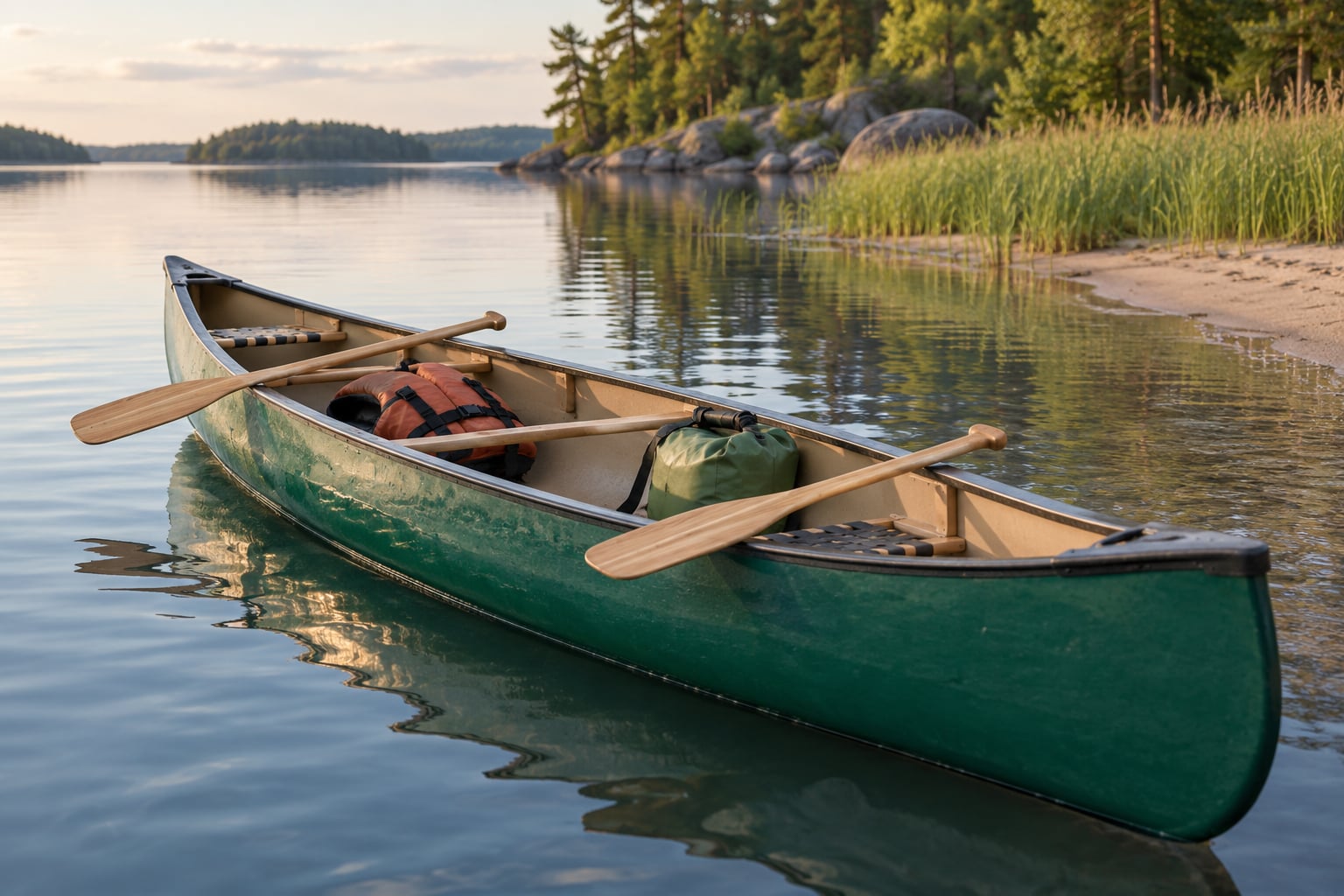
Learning how to canoe with two people comes down to three things: the more experienced paddler sits in the stern, the bow paddler sets a steady pace, and both of you paddle on the same side at the same time. Most pairs get a tandem canoe running straight within an afternoon on a calm lake.
This guide walks the whole workflow, from choosing a boat to carrying it back up the trail, so you are not improvising the launch while standing in water shoes.
Table of Contents
- 1What You Need
- 2Step-by-Step: How to Canoe with Two People
- 3Step 1: Choose a Tandem Canoe and Check the Route
- 4Step 2: Wear Safety Gear and Prepare the Boat
- 5Step 3: Decide Who Sits Where and What Each Person Does
- 6Step 4: Practice the Basic Strokes on Dry Land
- 7Step 5: Launch and Get Balanced
- 8Step 6: Paddle Together and Use Clear Commands
- 9Step 7: Turn, Stop, and Land Safely
- 10Common Mistakes
- 11Frequently Asked Questions
- 12Can two beginners safely canoe together?
- 13Should the person in the bow or the stern steer the canoe?
- 14What is the easiest way for two people to paddle in sync?
- 15How do you stop a canoe with two people?
- 16What should the bow paddler and stern paddler do in a turn?
- 17What should you do if a two-person canoe tips over?
- 18Conclusion
What You Need
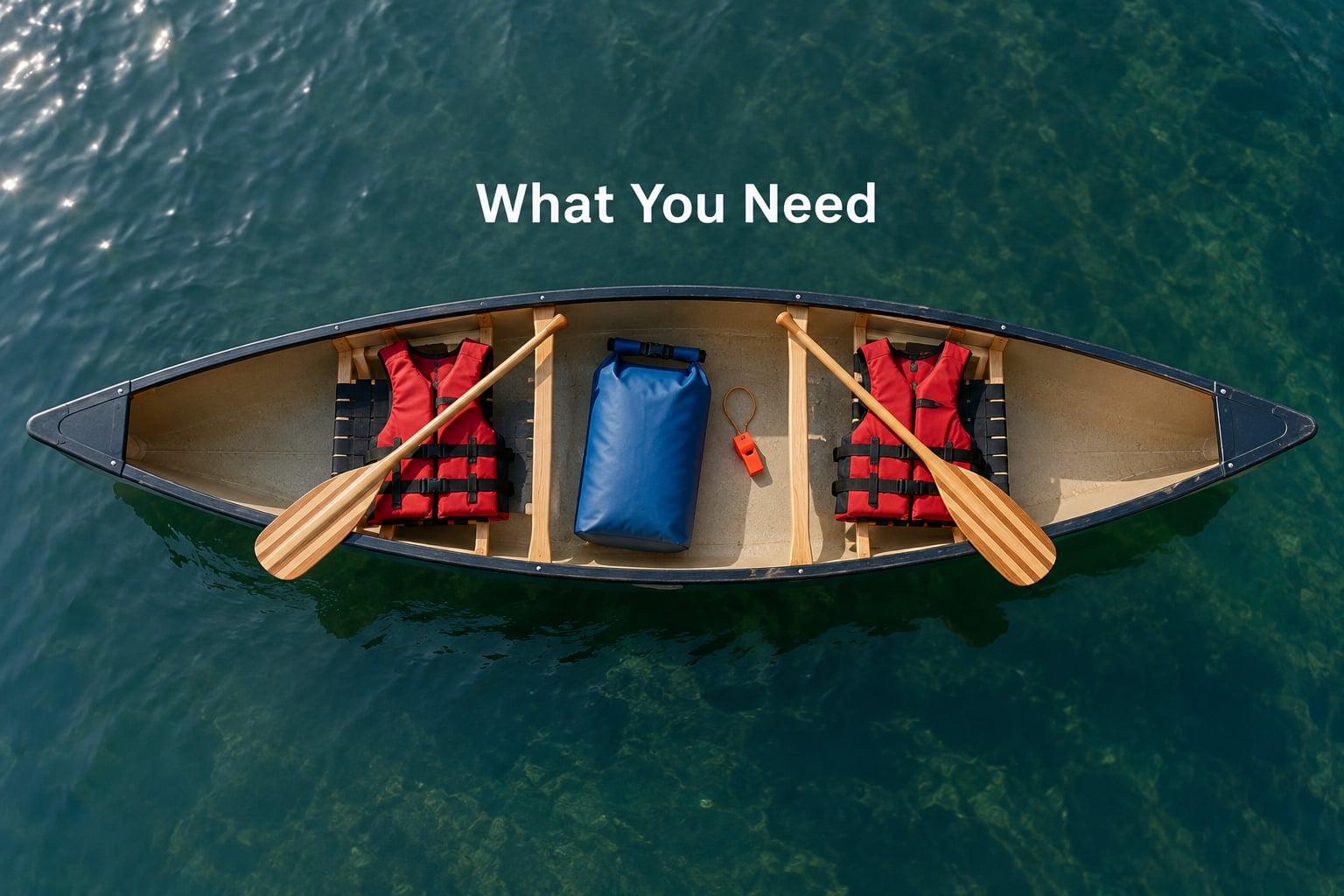
A tandem canoe only works if the two of you agree on a few basic pieces of kit before you touch the water. Here is what matters and what does not.
- A tandem canoe rated for both of you plus gear. Most recreational tandems are 15 to 17 feet long and carry a combined 400 to 500 pounds. A typical two-adult trip with day bags sits well under that, but check the plate on the hull before you load up. A dog plus a cooler is where people find themselves over the limit, and an overloaded boat is a tippy boat.
- Two paddles of roughly the right length. Stand the paddle on the ground beside you, tip forward, and measure from the grip to the ground. That length, or close to it, works for most adults. Slightly short is far better than slightly long, because an overlong paddle jams into your knees and wrecks your stroke.
- A properly fitted PFD for each person. Not a cushion on a boat hook. Wear it from the launch ramp to the landing, in the sun, in the rain, and when you are cold. Swimming ability is not a substitute. Around 85 percent of drowning victims were not wearing a life jacket, and the ones who are in the water are rarely the confident swimmers.
- A bailer or sponge, a whistle, and a bow line. The bailer is a cheap scoop that empties a flooded boat in seconds. The whistle stays on your PFD, not in a pocket, because you will not hear a shout over wind or moving water. The bow line lets you tow or hold the boat at a dock.
- A dry bag for keys, phones, and snacks. Wet electronics end the trip early.
- Water, sun protection, and layers. Paddle craft get cold fast because wind and spray both chill you, even on a warm day.
Before you go, tell somebody the route and your return time. Beginners do not need whitewater, ocean swell, or a strong offshore wind for a first outing. A small lake with a shelter and a beach landing is the right place to learn.
One quick note on boat parts, since the vocabulary trips everyone up: the bow is the front, the stern is the back, the gunwales are the top edges of the side, and a thwart is the crossbar you sit or kneel on. The yoke is the steering attachment on a canoe that has one.
Step-by-Step: How to Canoe with Two People
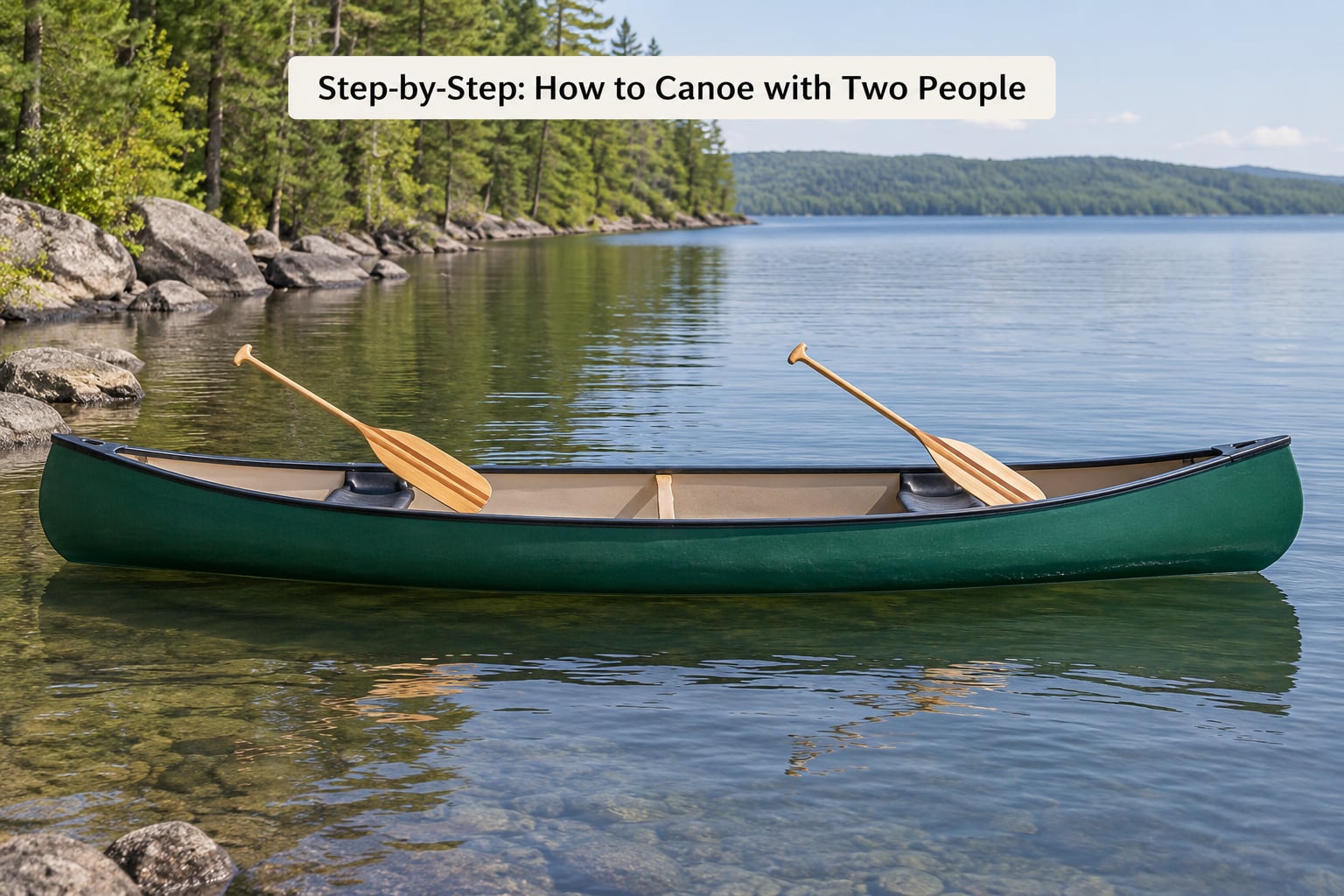
Step 1: Choose a Tandem Canoe and Check the Route
Pick flat, sheltered water with a gentle shoreline and no boat traffic. A lake cove, a slow river with no bends that hide rocks, or a small pond all work for a first trip.
Check the forecast the morning you go, and again an hour before you launch. Wind is the thing that will end your outing early, and it does not need to be strong to matter. A steady breeze across open water pushes a tandem canoe sideways faster than a beginner pair can correct, and a canoe is a very poor boat at holding a line downwind.
Water temperature matters more than air temperature. In the spring or fall, a fall into 50-degree water ends the day and can end more than the day. If the water is cold, wear a flotation suit or a dry top under your PFD and stay close to shore.
One more sizing question comes up constantly: can three people fit in a two-person canoe? Technically the seats and weight rating might allow it, but a third person has to sit on a thwart facing sideways, and that shifts your weight and your trim in ways a beginner pair cannot correct. A third adult in a tandem is a bad idea. A small child in the center, wearing a PFD and never moving, is a different situation and works fine on flat water.
Step 2: Wear Safety Gear and Prepare the Boat
Put the PFD on before you leave the car, and buckle every strap. A PFD riding up over your chin on a canoe is worse than useless, so snug the side and shoulder straps until nothing shifts when you shrug.
Walk the boat before it goes in the water. Check for loose gear, a hull plug, a properly seated keel or shoe, and a thwart that will hold a kneeling paddler. A canoe that was just stored on a trailer can be fine, but a canoe that has been upside down in a bed rack all week is full of water and a surprise for everyone.
The golden rule of canoeing for a beginner is simple: keep the boat under control and keep yourself in a PFD. That means no standing in a moving canoe, no leaning out over the side to look at something, and no switching seats on the water unless the boat is beached and everyone agrees.
Turn the canoe over and drain any water, then check that your bailer is in the boat, not in the car. Set the dry bag amidships low in the hull so a tipping boat does not drag it under.
Step 3: Decide Who Sits Where and What Each Person Does
The experienced paddler sits in the stern, even if that paddler is lighter than the other person. The stern is the control seat: the stern paddler can see the full length of the boat, and the front of a tandem canoe reacts to the bow paddler’s strokes almost immediately, so steering done from the back is far more effective.
This comes up on every paddling forum, usually with a 240-pound partner who has never paddled and a 140-pound partner who has. The answer barely changes. Seat the person who can steer in the stern, then fix the trim with where the heavier person sits and how the gear is stowed.
- Stern paddler: steers, sets the trim, calls the turns, and matches the bow’s rhythm. Needs the forward stroke, reverse stroke, and the J-stroke.
- Bow paddler: adds power, watches for rocks, strainers, shallow water, and boats, and calls out anything the stern paddler cannot see. Needs the forward stroke, reverse stroke, and a sweeping draw for turning.
Weight decides trim. Too much weight in the stern and the boat squats, gets sluggish, and buries its bow. Too much in the bow and the bow rides high, pushing the front down over a wave and making the boat porpoise. The check is easy: sit still and sight down the length of the canoe. The hull should sit level, maybe a touch higher at the bow than the stern, with the bow riding about an inch above the water rather than two.
Now agree on commands before anyone gets wet. Four words cover nearly everything: forward, back, left and right. Use them as statements, not requests. “Left” means the stern paddler paddles a reverse stroke on one side and the bow paddler paddles forward on the other, turning the boat. “Back” means both paddle backward to slow or stop. Keep it to those four and add more later once they feel automatic.
Step 4: Practice the Basic Strokes on Dry Land
You can learn most of tandem paddling with a paddle on a beach, and it is far cheaper than learning it in the boat. Sit on a thwart or an upturned bucket, feet braced, and work through these four.
Forward stroke. Reach forward with the paddle arm straight, plant the blade fully, and pull back to your hip. The secret is the top hand: at the front of the stroke your top hand pushes forward, and at the back your top hand pulls past your hip. Both paddlers use the same stroke, and this is where most of your speed comes from.
Reverse stroke. Same shape, run in reverse. Plant the blade, push toward the bow, and pull back to the front. This is the braking stroke and the most-used steering stroke in the boat, so practice it on both sides.
J-stroke. The stern paddler’s course-correction stroke. Begin as a normal forward stroke, then at the hip, twist your wrist and angle the blade out away from the hull. A canoe naturally veers away from the side the stern paddler is working, so this stroke is how you keep running straight without fussing. A common cue is that your top thumb points down at the front of the stroke when the blade is fully squared.
Draw stroke. A stroke straight out to the side that pulls the boat toward you. The stern paddler uses a draw to hold a line in wind, and the bow paddler uses a sweeping version to swing the bow around in a turn.
Kneel or sit? Kneeling on padded knees gives a longer stroke, more trim control, and far less strain on your back, which is why most experienced tandem paddlers kneel. Sit on the thwart if you are short on time, have a bad knee, or are teaching a small child. Whichever you choose, both paddlers should match so the boat is not being driven from two different heights.
Step 5: Launch and Get Balanced
Make sure the entire canoe floats in the water before anyone gets in. Rest the bottom on a shallow rock or the sandy bottom near shore, hold the bow with your bow line, and push off.
The paddler getting in goes in first, and only if the boat is stable enough for it. The person in the water holds the gunwale with both hands, steps one foot in, drops to a knee on the thwart, and then sits. Keep three points of contact, hands and feet, on the gunwales the whole time. Never step into a canoe that is still rocking under you.
The second paddler does the same once the boat has settled. That is the whole sequence: float the boat, hold it steady, enter one person at a time.
Once both of you are seated, check trim before the first stroke. Look down the boat. If the bow is buried, both of you move forward an inch or two, or the heavier person moves forward, and check again. If the bow is flying, move back.
Both paddlers now have a job in the first thirty seconds: find a heading, pick a landmark on shore, and say it out loud. “That point tree” is a heading. “Forward” is not.
Step 6: Paddle Together and Use Clear Commands
Two paddlers pulling out of time cancel each other out. A stern paddler pulling harder than the bow paddler just spins the boat, and a pair whose blades collide on the same side makes noise and makes no distance.
Pick a cadence and stick to it. Counting works better than talking, because a count gives both paddlers the same length stroke. The stern paddler usually sets the count, since the stern sets the pace, and the bow paddler matches it. Somewhere around 45 to 55 strokes a minute covers a comfortable touring speed; harder counts work fine for crossing a lake in a hurry.
When the boat drifts off line, do not fix it with more power. Fix it with a J-stroke on the side the boat is drifting away from, or a small draw. A stroke held at full power is almost always the wrong answer on a lake.
Communication is where most pairs go wrong, and the failure mode has a name in the paddling world: the divorce boat, a tandem where one partner will not follow the other’s calls and the trip turns into an argument on the water. The fix is boring and effective. Agree that the stern paddler gives the commands, agree that the bow paddler executes them without negotiating, and if one of you dislikes it, say so on shore rather than mid-lake.
Unequal skill is normal and it is not a reason to trade seats mid-trip. Put the stronger paddler in the stern, and let the bow paddler work on following the count rather than on raw strength. Weight difference matters for trim, not for who steers.
Step 7: Turn, Stop, and Land Safely
A tandem turns when the two paddlers work opposite strokes: the stern paddler sweeps or draws toward the turn, and the bow paddler paddles forward on the opposite side. Both paddling forward on the same side will turn the boat, but it turns wide and costs speed. Slow down first, then turn.
To stop, both paddlers switch to reverse strokes and back down. On flat water that stops the boat in a few feet. In current, you will not fully stop, so aim upstream at a shallow angle, keep the bow pointed into the flow, and steer with the current sweeping you past the landing you wanted. Pointing straight across a river just carries you sideways.
To land, paddle toward the shore at a shallow angle rather than straight in, and kill all speed well before you touch bottom. Pick a spot with a gentle bank and no rocks. The person in the bow gets out first, exactly the reverse of getting in, and the person on shore takes the gunwale so the boat does not swing. Keep three points of contact until both paddlers are on the bank.
Carrying it out is the last step people forget to plan. For a short carry, one person takes the bow and one the stern, both crouch, and you lift on a count. For a longer portage, the underhand lift works better: one person at each end, arms under the hull and hands gripping opposite gunwales, then walking in step with the boat kept level. Lift with your legs, agree on the count before you straighten up, and do not try to carry a loaded tandem alone.
Common Mistakes
Almost every frustrating first tandem outing comes down to one of these, and all of them are fixable the same day.
- Paddling out of sync. Fix: the stern paddler calls the count out loud until the pair locks in, then drops to counting silently.
- Leaning into a turn. Both paddlers should rotate from the hips and stay low. If either of you feels a side of the hull going under, stop steering with your body.
- Standing up to stretch or grab something. That single move flips more canoes than wind and current combined. Stay seated or kneeling.
- Weight in the wrong place. Fix: sight down the boat, then shift a seat or move a bag until the bow rides about an inch up.
- Both paddling forward to turn. It works, but it is slow and wide. Use opposite strokes.
- Skipping the check before launch. Drain the boat, check the plug, confirm the PFDs, and pick the heading out loud.
- Swimming with the boat between you and shore. If you go in, stay with the canoe unless you are certain you are the stronger swimmer and it is clearly the safer choice. The boat is a flotation device and a visible target for rescuers.
If the canoe does tip, the recovery is the same every time. Swim to the boat, hold the gunwale or the crossbar, and get your head above water. Everyone in a PFD stays floating, and a floating PFD keeps your face clear. Then empty the boat at the nearest shore with the bow pointed into any wind, before climbing back in. Nobody swims alone, and nobody climbs back into a swamped boat from the side.
Frequently Asked Questions
Can two beginners safely canoe together?
Yes, on calm, sheltered water with a properly sized boat and both paddlers wearing a PFD. A tandem is a wide, stable hull and it is more forgiving than a kayak. Avoid your first outing in wind, current, or cold water, stay within swimming distance of shore, and spend twenty minutes practicing strokes on the beach first.
Should the person in the bow or the stern steer the canoe?
The stern paddler steers. From the back seat you can see the entire length of the boat, and the front of a tandem reacts sharply to whatever the bow paddler does, so corrections made from the stern take effect immediately. The bow paddler’s main jobs are adding power and spotting rocks, strainers, and shallow water ahead.
What is the easiest way for two people to paddle in sync?
Have the stern paddler set a steady count out loud, around 45 to 55 strokes a minute, and have the bow paddler match the length of each stroke rather than the power of it. Synchronize on the catch, the moment the blade enters the water, and the boat will settle into a straight line within a few dozen strokes.
How do you stop a canoe with two people?
Both paddlers switch to reverse strokes at the same time and back down toward the stern. On flat water that stops a tandem in a few boat lengths. In current, no stroke will hold you still, so point the bow upstream at a shallow angle and let the sweep of the current carry you past your landing while you steer.
What should the bow paddler and stern paddler do in a turn?
They work opposite sides. The stern paddler sweeps or draws toward the direction of the turn, and the bow paddler paddles forward on the opposite side, which pulls the front of the boat around. Slow down before the turn starts, and if the turn feels rough, stop, straighten up, and try it again at lower speed.
What should you do if a two-person canoe tips over?
Swim to the boat and grab a gunwale or the crossbar with both hands. Wearing your PFD, you stay afloat while your partner does the same. Then paddle or tow the boat to the nearest shore, empty it with the bow pointed into the wind, and climb back in from the end. Never swim off separately, and never enter a swamped canoe from the side.
Conclusion
Start small: pick a tandem canoe rated for both of you and your gear, put on the PFDs at the car, and choose a calm lake with a beach landing. Put the experienced paddler in the stern, agree on four commands, and practice the forward stroke, reverse stroke, and J-stroke on shore before you ever float the boat.
Then float it, climb in one person at a time, check the trim by sighting down the hull, and paddle the first hundred yards in silence. Once a pair can do that, the rest of tandem canoeing is just longer days on nicer water.