To conserve power when dry camping, you do three things: work out how many amp-hours you burn in a day, strip the biggest loads off that number, and keep the battery bank above roughly half charge the whole time. A two-person weekend with lights, a 12V fridge, phone charging and a water pump can run 30 to 50 amp-hours a day, so the math matters more than the gear list.
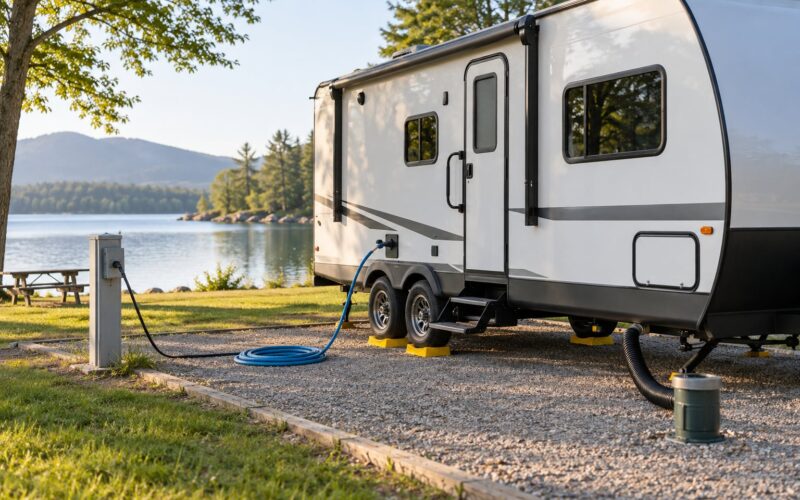
Dry camping means no shore power hookup, no water hookup and no sewer. Everything electrical comes from your battery bank, a portable power station, solar, the vehicle alternator, or a generator. That is the whole difference between dry camping and a regular campsite: nothing gets topped up for free.
Most people who get caught short did not forget a charger. They ran the fridge door open in the sun, charged every device in the truck while the engine idled, and never once checked the battery. The routine below takes about an hour to set up before you leave and about five minutes a day once you are camped.
Table of Contents
- 1What You Need
- 2Power sources
- 3Lighting
- 4Cooking
- 5Water
- 6Devices and backups
- 7Step-by-Step
- 8Step 1: Estimate Your Power Needs
- 9Step 2: Prioritize Essential Safety Power
- 10Step 3: Reduce Daily Consumption
- 11Step 4: Charge and Store Batteries Safely
- 12Step 5: Plan for Low or No Power
- 13Common Mistakes
- 14Frequently Asked Questions
- 15How long can a battery-powered camp lantern last?
- 16Is solar charging practical for a dry camping trip?
- 17Should I bring a portable power station for dry camping?
- 18How can I keep my phone battery from dying in the backcountry?
- 19What should I do if my batteries get wet?
- 20How can I save fuel while cooking at a dry campsite?
- 21Conclusion
What You Need
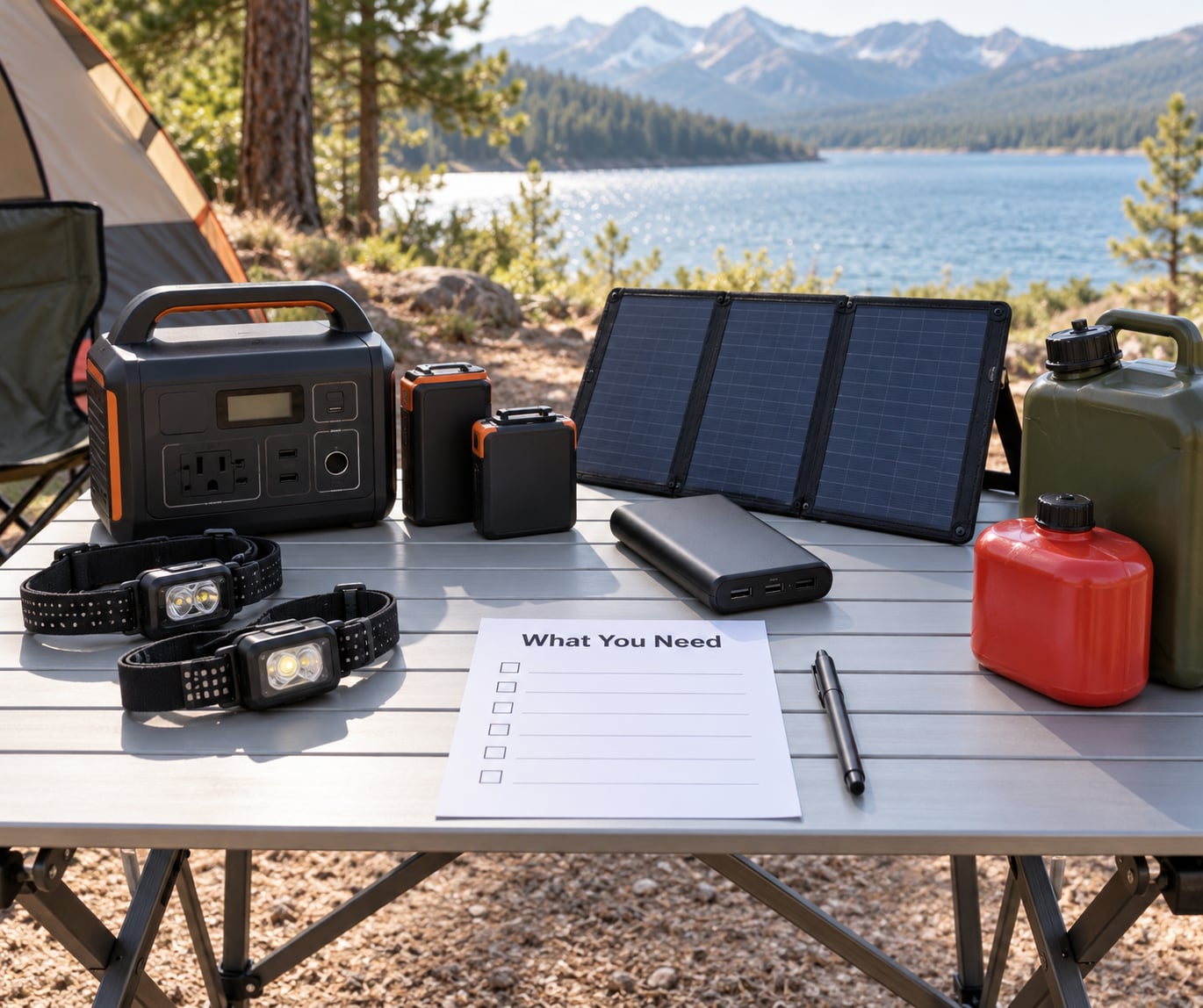
The gear list is short, and most of it is stuff you probably already own. What matters is knowing which piece does which job before you need it at night.
Power sources
- A battery bank — the house bank in an RV or van, or a portable power station for car and tent campers. Note the rated capacity in amp-hours, not just the marketing watt number.
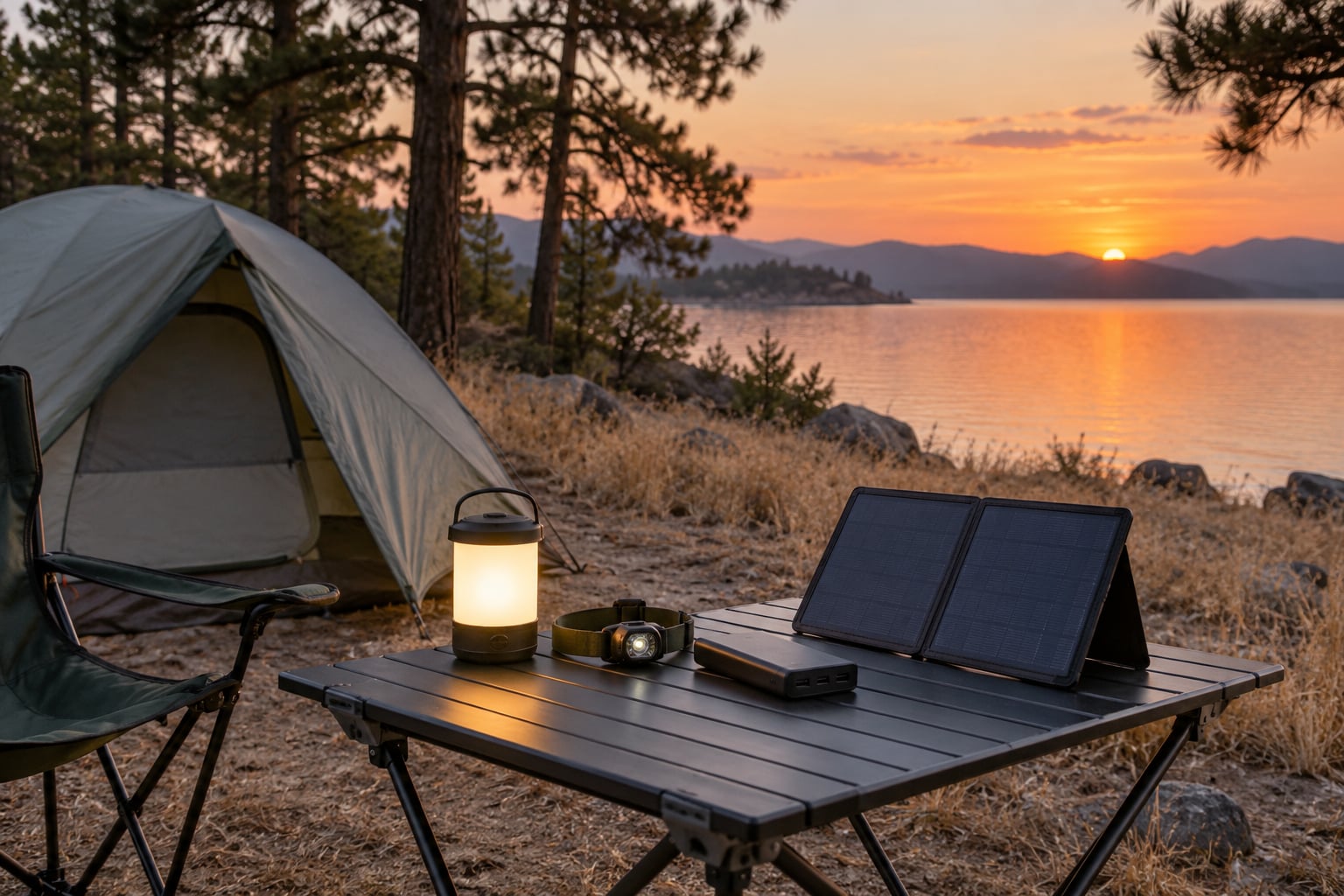
- Solar — a foldable panel for tents and cars, roof panels for rigs, paired with an MPPT charge controller if the panel is fixed.
- A battery monitor — a shunt-based unit with Bluetooth is far more useful than the dashboard voltage gauge most rigs ship with.
- A charging cable for the vehicle so a drive to the trailhead or a grocery store tops the bank back up.
Lighting
One battery lantern for the table and one headlamp per person. Skip the overhead dome light, the reading lamp over the bunk, and anything with an outlet you are tempted to leave on.
Cooking
A propane camp stove, a small pot, a lighter you verified before the trip, and a manual coffee setup. Manual grinders and cone-drip or French press brewing work fine and draw nothing.
Water
A filled water container and the treatment method you already trust. A 12V water pump runs about 3 to 5 amp-hours per fill cycle, so plan on two or three uses a day rather than ten.
Devices and backups
A power bank sized for your phone, spare cells or a hand-crank radio, a paper map, and a compass. The compass is not optional in country where you have no bars.
Step-by-Step
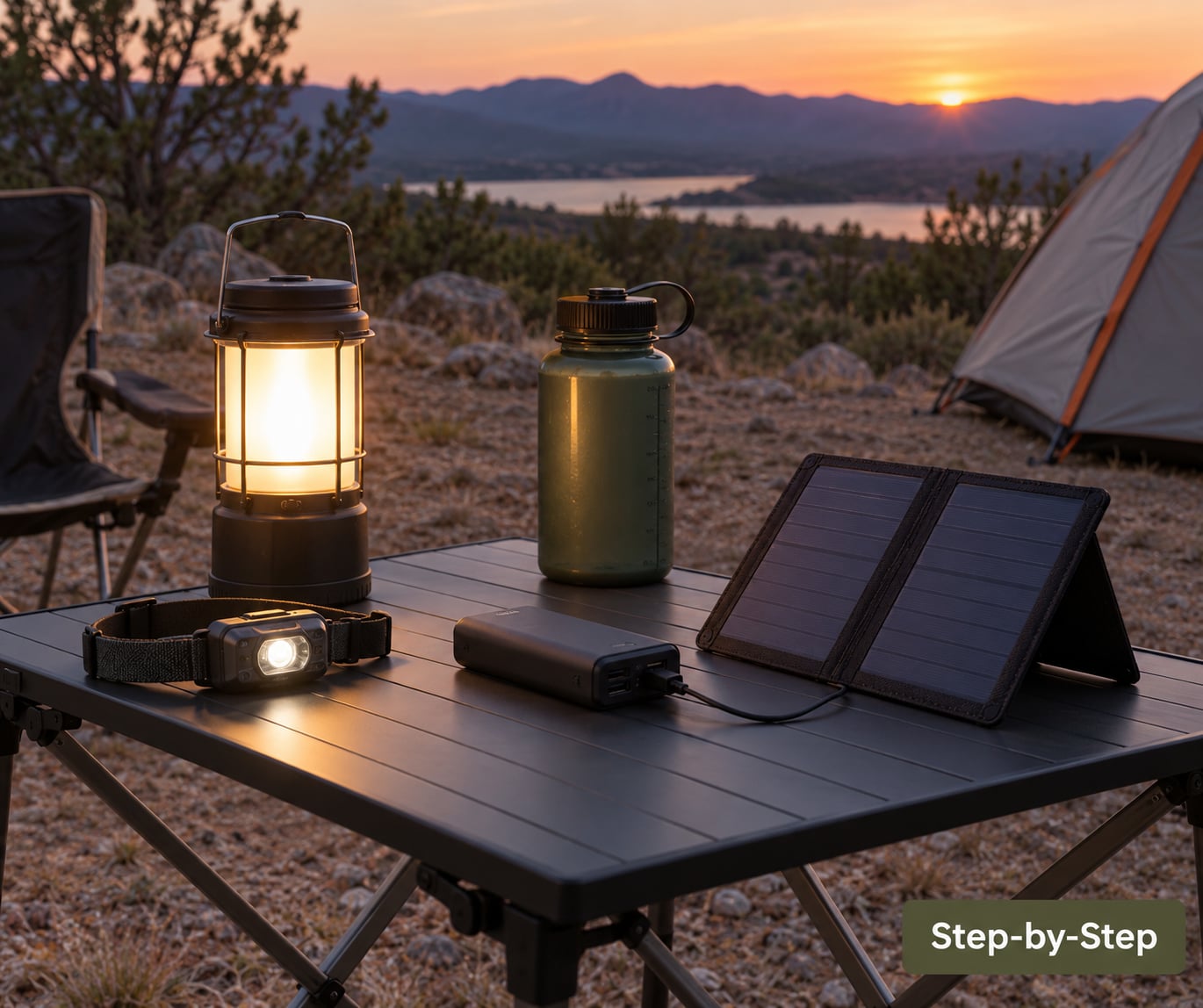
Work through these five steps in order. Each one makes the next one easier, and doing them out of sequence is how people end up with a beautiful power setup that runs flat by day two.
Step 1: Estimate Your Power Needs
This is where most people learn how to conserve power when dry camping, because the numbers decide everything that follows. Write down every device you plan to use, then estimate its daily draw in amp-hours. If it runs on 12V, divide watts by 12 to get amps, then multiply by hours per day. Devices that run on 120V go through an inverter, which adds its own conversion loss on top of the device draw.
Typical daily draws for two people on a normal weekend:
- 12V LED lighting: about 12 amp-hours a day
- 12V compressor fridge: about 20 to 40 amp-hours a day
- Water pump: about 3 to 5 amp-hours per fill cycle
- CPAP machine: about 20 to 30 amp-hours a night
- Phone and camera charging: roughly 10 amp-hours a day
- 12V fan or vent fan: about 8 to 15 amp-hours a day when it runs hard
Now mark each line essential, optional, or replaceable by hand. A CPAP machine is essential. The second overhead light is replaceable by a headlamp. Add up the essential column and you have your daily floor.
Step 2: Prioritize Essential Safety Power
Protect a reserve you will not touch for convenience. Headlamps, a whistle or signal mirror, a charged phone for navigation and emergency calls, a compass and map, water treatment, and any medical device all sit in this category, along with whatever keeps you warm or cool in real weather.
A workable rule is to reserve 30 percent of your usable capacity for this group. On a 100 amp-hour lithium bank that means about 30 amp-hours per day that you simply do not budget for lamps and screens.
Step 3: Reduce Daily Consumption
Turn brightness down a notch or two on every light and shut the ones you are not using off rather than dimming them. Devices in standby still draw current, so unplug the coffee maker and the USB chargers at the wall.
Batch your charging into one session with the power bank instead of trickle-charging all day, and set a screen time limit on anything that is not a map. Skip streaming video on cellular entirely; it will hunt for a signal the whole time and drain the battery for nothing.
Run the fridge on its lowest setting with the door shut, and pre-cool it before you leave by running it off shore power for an hour or two. Park in shade, especially on a lakeshore where afternoon sun hits the side of the rig directly. A compressor fridge also works harder when the air around it is already warm, so leave clearance behind the cooling unit.
For heat, cross-ventilation beats the air conditioner almost every time: crack a window on the shaded side and one opposite it, then run a 12V fan. For cooking, boil water once for coffee and for dinner on the same boil. Switch any electric blanket to a propane heater, and never run a combustion heater inside a closed space.
If you do own an inverter, treat wattage as a hard limit rather than a suggestion. A modified sine wave unit runs cheaper and will hum noticeably on sensitive electronics, while a pure sine wave unit is quieter and safer for laptops, medical devices and camera batteries. Size the inverter for the largest single load you plan to run, not the sum of everything, since a coffee maker or hair dryer can pull 1,000 watts or more on its own and needs the headroom for startup surge.
Weather changes the plan more than any other factor. In summer heat, the fridge is working hardest and shade is the cheapest win available. In fall and winter, cold weather cuts usable capacity hard, so a bank that comfortably carried three days in September may only carry two by November. Plan overcast multi-day trips by assuming the panels produce a third less than the forecast suggests, and pack as if the recovery day will not happen.
Step 4: Charge and Store Batteries Safely
Charge from a source you trust: the shore power connection at home, a properly rated solar controller, or the vehicle with the engine running. Do not leave a pack on a charger in direct sun, because heat is what kills lithium cells faster than almost anything else.
Keep batteries dry and off the ground. Wipe off condensation in the morning, because morning dew settles on everything at a lakeshore campsite. Label each pack with its chemistry and rated capacity so you are not guessing in the dark. Follow the manufacturer’s instructions for the charge voltage and the maximum charge rate rather than a generic setting from a forum post.
For lead-acid, keep it charged during storage and top up electrolyte on flooded batteries as the manual directs. Lithium does not need the same attention, but it does need to sit at a partial charge rather than empty for weeks at a time.
Step 5: Plan for Low or No Power
Assume the bank will get lower than you planned. That means a backup plan you can execute at 2 a.m. without thinking: spare cells for the headlamp, a hand-crank or battery radio, a paper map plus compass, a full water container that does not need the pump, and a candle or other non-powered light.
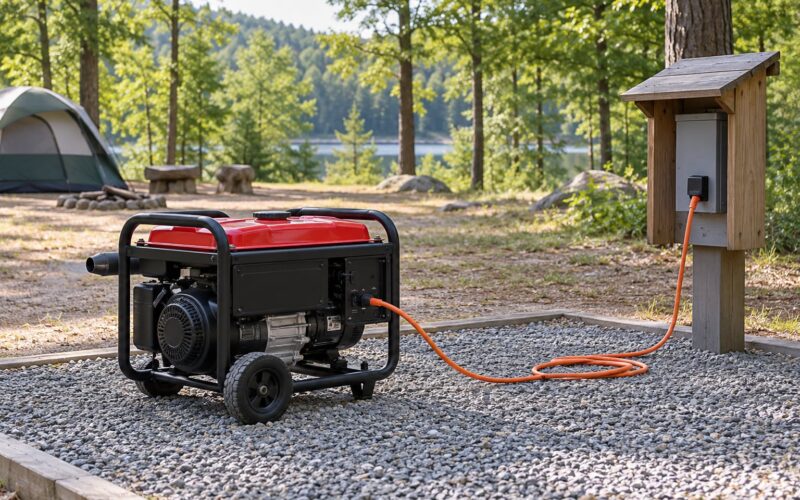
Know your recovery options too. If the bank drops too low, you can drive the vehicle an hour to a hookup, run a generator for 20 minutes to put charge back in, or ask a neighboring campsite for a jump. On a three-day trip, one camper on a forum described running 200 watts of solar with a 100 amp-hour lithium battery, and that setup held for two people with disciplined use.
That is the right way to think about conserving power when dry camping: assume a shortfall and build the kit for the shortfall, not for the best case.
Common Mistakes
The most common dry camping power mistake is running the vehicle engine while you sit inside charging devices. It burns fuel and it rarely charges the house bank the way people expect, because the alternator is sized for the starting battery, not the house bank.
Second is leaving the fridge in battery mode when propane is available. A compressor fridge and a propane absorption fridge draw very different amounts of power over a day, and knowing which one you have changes your budget completely.
Third is trusting the dashboard voltage gauge. It lies, it is calibrated for a starting battery, and it shows a reading taken under load. Read the battery after everything is switched off, and use a real monitor if you can.
Fourth is deep discharging. Running a lead-acid bank below 50 percent state of charge shortens its life, and sulfation from sitting at low charge is the main thing that kills stored batteries between trips.
Fifth is forgetting heat and cold. A battery sitting at 32F holds roughly 80 percent of the capacity it has at 80F, which is why fall trips catch people off guard. Insulate the battery box and keep the batteries as warm as practical.
A few tips that make the difference without touching safety gear: run your biggest loads between 10 a.m. and 2 p.m. when the panels are producing; charge devices from the bank in one batch instead of all day; carry a thermometer for the fridge and open the door only when you need something; and if you do own more solar than you need, shade the panel at midday rather than accepting a bad charge.
Frequently Asked Questions
How long can a battery-powered camp lantern last?
It depends almost entirely on brightness and battery size. A small LED lantern on its low setting runs for 30 to 60 hours on a set of alkaline cells, while the same lantern on high may manage 8 to 15 hours. A rechargeable lantern drawing about 0.5 amps from a 100 amp-hour bank runs for roughly 200 hours. For a weekend, run it low and switch it off whenever nobody is moving around the table.
Is solar charging practical for a dry camping trip?
Yes, with realistic expectations. A 100 watt panel returns roughly 30 to 40 amp-hours per day in average sun, and less on overcast mornings, so solar is a supplement rather than a replacement. Members on RV forums commonly pair 200 to 400 watts with a lithium bank for multi-day trips. Foldable panels work well for tent campers because you can move them to follow the sun.
Should I bring a portable power station for dry camping?
Bring one if you are car or tent camping and want more than a power bank for phones. A 500 watt station around 500 amp-hours covers a fridge, lights, a pump and device charging for two or three days on one charge. Check the continuous output rating before plugging anything in, and remember that most small stations idle at 5 to 10 watts even when nothing is running.
How can I keep my phone battery from dying in the backcountry?
Turn on low power mode, drop the screen brightness, and close every app running in the background. Carry a small power bank instead of charging from the rig overnight, since a full charge from a power bank costs you far less than keeping the campsite lit for it. Download offline maps before you leave, because a phone searching for bars drains quickly and helps nothing.
What should I do if my batteries get wet?
Do not use a battery that is wet, swollen or warm to the touch. Move it away from anything flammable, do not charge it, and let it air dry in shade at normal temperature. Salt water and mud carry corrosion into terminals and connectors, so rinse with fresh water and clean the contacts with a baking soda solution once it is fully dry. Lithium packs that take water should be replaced, not tested.
How can I save fuel while cooking at a dry campsite?
Cook once and eat once rather than firing the stove up for every task. Bring a pot big enough to boil water for coffee, instant oats and the evening meal on a single boil, and cover it so heat stays in. Members on RV forums report meaningful savings by switching from an electric coffee maker to a cone drip or French press, and by using a hand grinder instead of a powered one.
Conclusion
Start with a number, not a purchase. Write down every device you plan to use and how long it runs each day, add up the amp-hours, and compare that figure against your usable battery capacity. Most dry camping power problems show up in that subtraction.
Then protect the safety gear. Headlamps, navigation, communication, water treatment and any medical device get first call on the bank, and a 30 percent reserve protects them on a bad-weather day. A realistic power budget plus a backup plan you can execute at 2 a.m. is what turns an ambitious night outdoors into a trip you can repeat next month.