To remove a tick properly, grasp it with clean, fine-tipped tweezers as close to the skin’s surface as possible, pull straight up with steady, even pressure without twisting, then wash the bite and your hands. The whole job takes about a minute.
A tick is a small arachnid that latches onto skin or clothing and feeds on blood. It can carry bacteria behind Lyme disease, Rocky Mountain spotted fever and other tick-borne illnesses, and the longer it stays attached the more time it has to pass them along. That is why prompt removal matters more than a perfect extraction.
If you have been fishing the lake edge, wading through tall grass or hiking in brush, do a full-body check the same evening. The fear of leaving the head behind is the biggest reason people put off pulling a tick, and putting it off is the one thing that actually raises risk.
Table of Contents
- 1What You Need
- 2Step-by-Step: How to Remove a Tick Properly
- 3Prepare the Area
- 4Grasp the Tick Close to the Skin
- 5Pull Straight Up with Steady Pressure
- 6Check the Bite and Clean the Skin
- 7Dispose of the Tick and Monitor the Bite
- 8Common Mistakes
- 9Frequently Asked Questions
- 10Should you twist a tick when pulling it out?
- 11What do you do if the tick’s mouthparts break off in your skin?
- 12Does alcohol or petroleum jelly help get a tick off?
- 13How can you tell how long a tick has been attached?
- 14What should you put on a tick bite after pulling the tick out?
- 15When does a tick bite need medical attention?
- 16Conclusion
What You Need
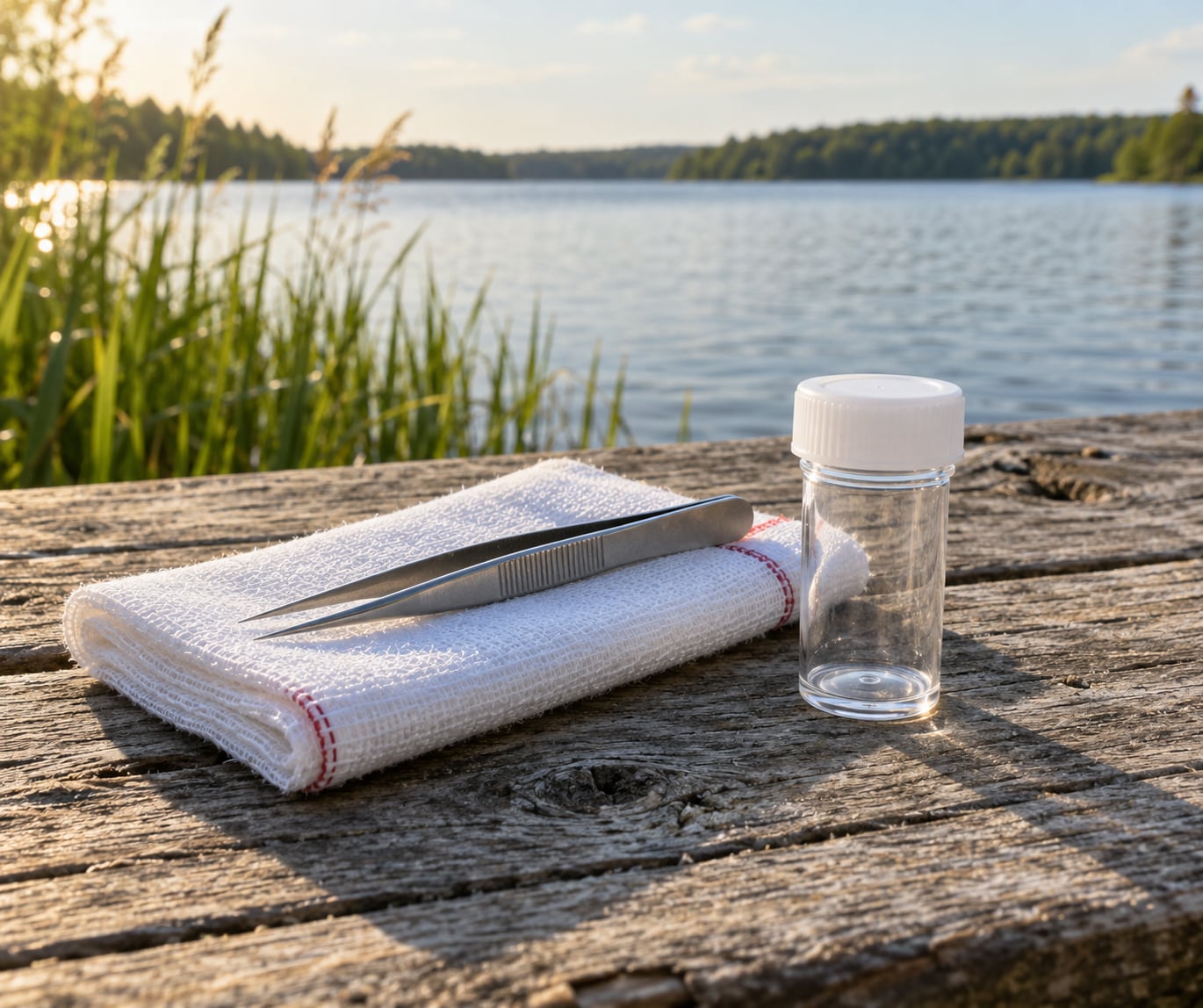
Most households and tackle boxes already have everything that matters. Gather it before you touch the tick, because you only get one clean chance at this.
- Clean hands and soap and water. Wash before and after, even if you plan to wear gloves.
- Fine-tipped tweezers. The narrow, pointed kind, not flat cosmetic tweezers with wide tips.
- Gloves if you have them. Nitrile or latex. Not for your protection from the tick so much as to steady your hand.
- Bright light. A headlamp or phone flashlight makes a tick in a hairline much easier to find.
- A clear bag, vial or small jar. For saving the tick if you want it identified later.
- An antiseptic wipe or soap. For the bite site afterward.
A magnifying glass helps but is not required. If you genuinely have no tweezers, a clean tissue or a paper towel works, and experienced hikers on outdoor forums regularly do exactly that with no trouble. Get the tick off now and do not delay while you hunt for a better tool.
Step-by-Step: How to Remove a Tick Properly
Prepare the Area
Wash your hands and the skin around the tick, then put on gloves if you have them. Good light matters more than most people expect, especially for a small nymph in the scalp or behind an ear.
Find the tick and look at where it meets the skin. You are aiming for the point of attachment, the mouthparts, not the round engorged body at the top.
Grasp the Tick Close to the Skin
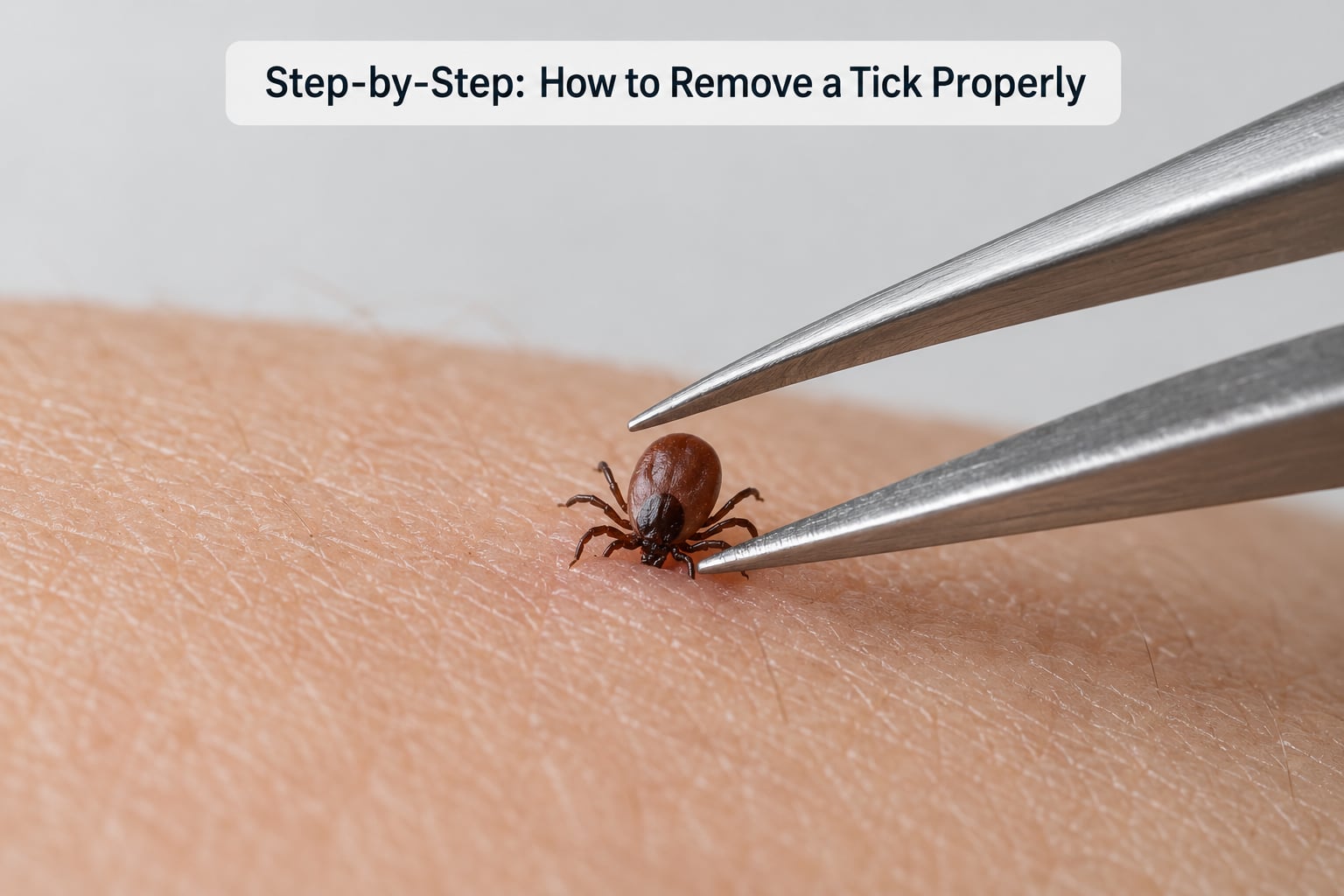
Place the tips of the tweezers as close to the skin surface as you can and pinch the mouthparts or the head end firmly enough that it will not slip. Squeezing the swollen abdomen can force fluid into the bite and leave more of a mess behind, so grip low and firm instead of pinching the whole body.
Pull Straight Up with Steady Pressure
Pull upward with slow, steady, even pressure. Do not twist, do not rotate and do not jerk, because those movements tear the body away from the mouthparts instead of lifting the whole tick out.
Hold the tension until the tick lets go. It usually releases in a second or two, and the resistance you feel is the tick’s mouthparts, not a sign that something is wrong. Then put the tick somewhere safe before you deal with the bite.
Never smother it with petroleum jelly, Vaseline, oil or nail polish, and never hold a lighter or a hot match near it. Those methods take longer than tweezing and can leave the tick partly attached.
Check the Bite and Clean the Skin
Look at the site. A tiny dark speck or red dot in the center is normal and often is just the mouthparts or a bit of dried blood, not a tick still lodged in you. Wash the area with soap and water and pat it dry.
A raised red bump that shows up hours later is common local irritation from the bite itself, not proof of any illness. Cool compresses and an over-the-counter anti-itch cream can take the edge off. Leave the skin alone otherwise, and do not pick at the scab that forms.
Dispose of the Tick and Monitor the Bite
Wash your hands again. Flush the tick down the toilet, seal it inside a zip bag and throw it away, or drown it in rubbing alcohol if you want to preserve it. Keeping the tick in a sealed container is worth doing if you want a clinician to identify the species, especially if the bite site keeps expanding or symptoms show up later.
Then keep an eye on the site for about 30 days. Call a healthcare professional if redness spreads, the area grows warm, swells or drains, or if you develop fever, chills, headache, muscle aches, swollen lymph nodes or joint pain. An expanding rash, particularly one that looks like a bull’s-eye, deserves a same-day call rather than a wait-and-see approach.
Do not take antibiotics as a precaution on your own. Whether a preventive dose is right depends on the tick species and how long it was attached, which is a conversation for a clinician.
Common Mistakes
Most failed removals come down to one of a handful of mistakes, and every one of them is easy to avoid once you know it.
- Twisting the tick. It tears the body from the mouthparts and leaves fragments in the skin.
- Crushing the body. Squeezed fluid goes into the bite. Grasp low and close to the skin instead.
- Covering it with petroleum jelly, oil, nail polish or soapy cotton balls. None of these get the tick off faster, and the waiting time is wasted time.
- Using heat. A hot match or a heated tool does not improve the odds and can burn the skin.
- Pulling from the top of the body. Gripping the round part rather than the mouthparts is why heads get left behind.
- Waiting for a better tool. If you have no tweezers, a tissue or paper towel is fine. Pull it now.
If the mouthparts stay in the skin, leave them alone. The area will look like a small dark spot and your body pushes it out over the next few days, much like a splinter. Trying to dig it out with a needle or tweezers drives it deeper and risks a real infection.
Prevention is easier than removal. After any hike, hunt, paddle, fishing session or trip through brush, check yourself and anyone traveling with you, including the scalp, behind the ears, waistband, groin, behind the knees and inside the legs. Long sleeves, pants tucked into socks and an EPA-registered repellent with DEET or picaridin applied to exposed skin all help. Treat the gear and the dog with a tick product too, because a tick that rides home on your boots was still attached to something.
Tick activity follows temperature rather than the calendar, so a warm spell in February can be busier than a cool April. Adults are most active in spring and fall, and nymphs are the ones most likely to bite you because they are small enough to miss, which is a good reason to check thoroughly rather than quickly.
Frequently Asked Questions
Should you twist a tick when pulling it out?
No. Twisting or rotating the tick tears the body away from the mouthparts and can leave fragments in the skin. The CDC method is a straight upward pull with slow, steady, even pressure. Keep the tension constant until it lets go, which usually takes one or two seconds. If it will not release, hold the pressure a little longer instead of adding a twist.
What do you do if the tick’s mouthparts break off in your skin?
Clean the area with soap and water and leave the mouthparts alone. The small dark speck that stays will usually work its way out on its own within a few days, the same way a splinter does. Do not dig at it with a needle or tweezers, since that drives fragments deeper and raises the chance of a local infection. Contact a clinician if redness spreads or the site becomes swollen and tender.
Does alcohol or petroleum jelly help get a tick off?
No. Vaseline, petroleum jelly, oil, nail polish, lighter fluid and soapy cotton balls all circulate as home methods, and none of them remove a tick faster or more cleanly than tweezers. They simply delay removal while the tick stays attached, and the delay is the part that matters. Pull it out with fine-tipped tweezers, then wash the bite site and your hands with soap and water.
How can you tell how long a tick has been attached?
Use engorgement as your guide. An unfed nymph is about the size of a pinhead and is easy to miss. A tick that has been feeding a few days looks gray, blue-gray or olive and is a little larger, while one that is fully engorged can swell to the size of a small pea. Timing is rough, so save the tick in a sealed container if you want a clinician to make a better estimate.
What should you put on a tick bite after pulling the tick out?
Wash the site and your hands with soap and water, then pat dry. An antiseptic wipe is fine if you have one. For itch and swelling, a cool compress or a thin layer of over-the-counter hydrocortisone cream helps. Resist the urge to dig at the bite or scratch, and take a photo of the site on the day you remove the tick so you have a reference point if it changes over the following weeks.
When does a tick bite need medical attention?
Call a clinician if redness spreads beyond the bite, the area grows warm, firm, swollen or starts draining, or if you develop fever, chills, headache, muscle aches, joint pain or swollen lymph nodes within about 30 days. An expanding rash, especially one shaped like a bull’s-eye, deserves a same-day call. Get urgent help for chest pain, trouble breathing, palpitations or weakness that spreads, which can point to tick paralysis.
Conclusion
The method is simple: stay calm, clean your hands, grip the tick with fine-tipped tweezers as close to the skin as you can, pull straight up with steady pressure and no twisting, then wash the bite and dispose of the tick.
Do not wait for the perfect tool, do not smother it with petroleum jelly and do not go digging if the mouthparts stay behind. If symptoms show up or you are simply unsure, call a healthcare professional. And check yourself and everyone with you after every trip through brush, tall grass or lake edge.