To purify water while camping, use one of four proven methods: boil it, filter it through a 0.1 micron microfilter, treat it with chlorine dioxide or iodine, or expose it to UV light. Boiling kills every pathogen including viruses. Filters strain out bacteria and protozoa. Chemicals and UV need clear water and the correct contact time.
Untreated backcountry water is not “probably fine because it looks clean.” It can carry Giardia, Cryptosporidium, E. coli, Salmonella, norovirus and hepatitis A, and you cannot see or smell any of them. Giardiasis in particular hangs around for weeks, and dehydration from diarrhea is what actually ends trips.
So the real skill is matching the method to the water you have. This guide walks through the four methods, what each one does not remove, how to treat water safely in storage, and what to do when you have no gear at all.
Table of Contents
- 1What You Need
- 2Step-by-Step: How to Purify Water While Camping
- 31. Assess the Water Source
- 42. Choose the Right Purification Method
- 53. Treat the Water
- 64. Check and Store the Treated Water
- 7Common Mistakes
- 8Frequently Asked Questions
- 9How long should I boil water while camping?
- 10Do water filters or UV purifiers remove viruses and chemicals?
- 11How does altitude affect the boiling time needed to purify water?
- 12Are water purification tablets safe for drinking water?
- 13Can I use a campfire to boil and purify water?
- 14What should I do if the water may be contaminated by chemicals or algae?
- 15Conclusion
What You Need
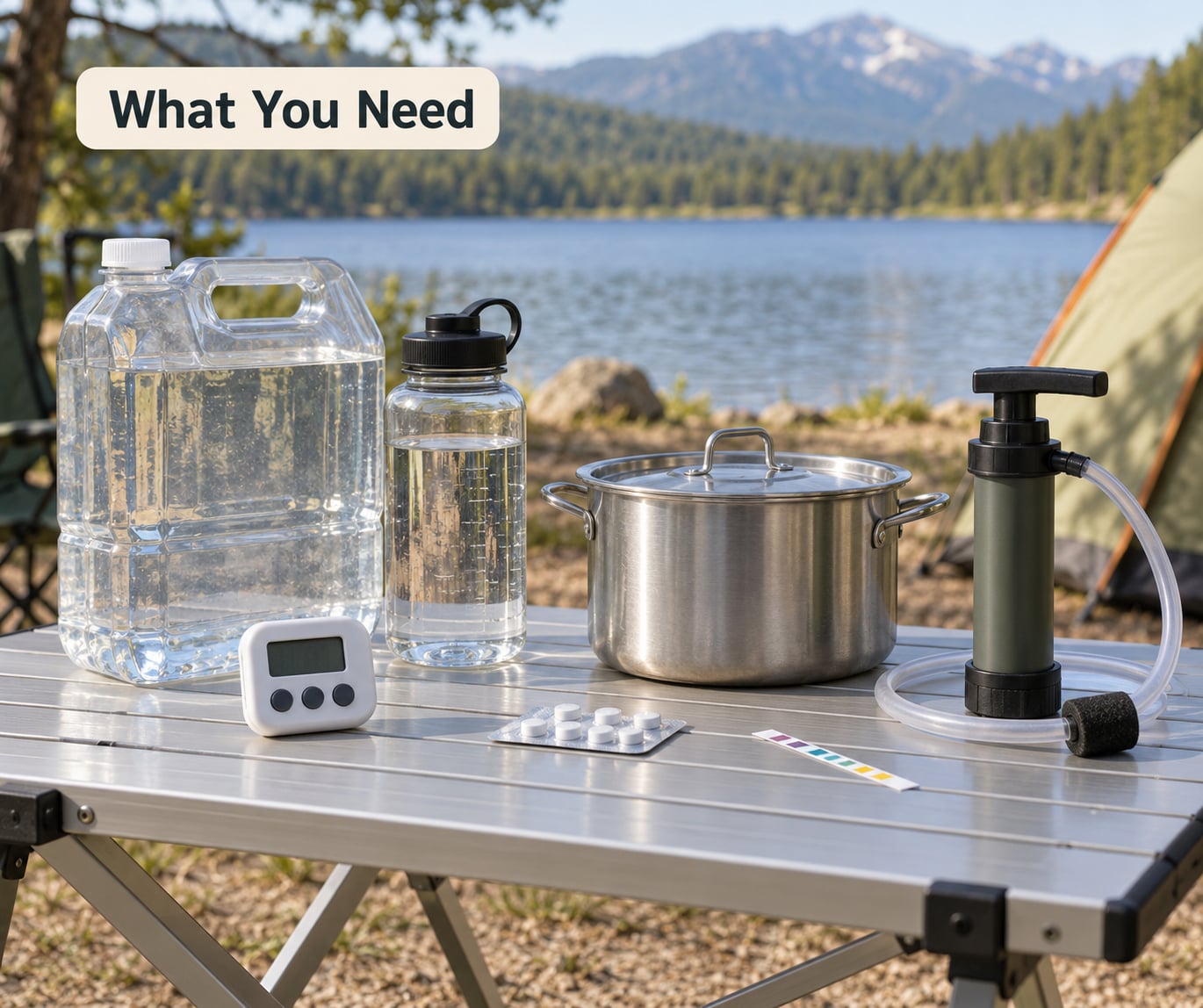
Before you collect a drop, work out what you are dealing with. The gear that matters changes completely depending on whether the risk is microbes, viruses or chemicals, and no single method covers all three.
- A way to judge the source. Look at where the water comes from, not just how it looks. You need eyes and a walk upstream, nothing more.
- Food-grade containers. Two narrow-mouth bottles you can drink from straight, plus a lidded pot or collapsible jug for treated water in camp.
- Collection tools. A small foldable water carrier or a scrubbed detergent bottle works; a dedicated scoop with a flat end reaches shallow water without stirring up the silt.
- A timer. Phone alarms count, but a cheap kitchen timer survives the cold and does not need a charge. Boil timing and chemical contact time are not things to eyeball.
- Your primary treatment. A hollow-fiber microfilter handles the widest range of backcountry sources for the least fuss.
- A verified backup. Chlorine dioxide drops or iodine tablets weigh almost nothing and cover you when a filter freezes, cracks or clogs.
- A cloth or coffee filter. For pre-filtering silt out of cloudy water before it reaches your filter or UV unit.
- A fuel source for boiling. Necessary when viruses are the concern, because most filters will not touch them.
That last item is where people cut corners. A filter that handles bacteria and protozoa is not a purifier, and viral risk is exactly why hikers on the American Hiking Society forums keep carrying a second, independent method.
Step-by-Step: How to Purify Water While Camping
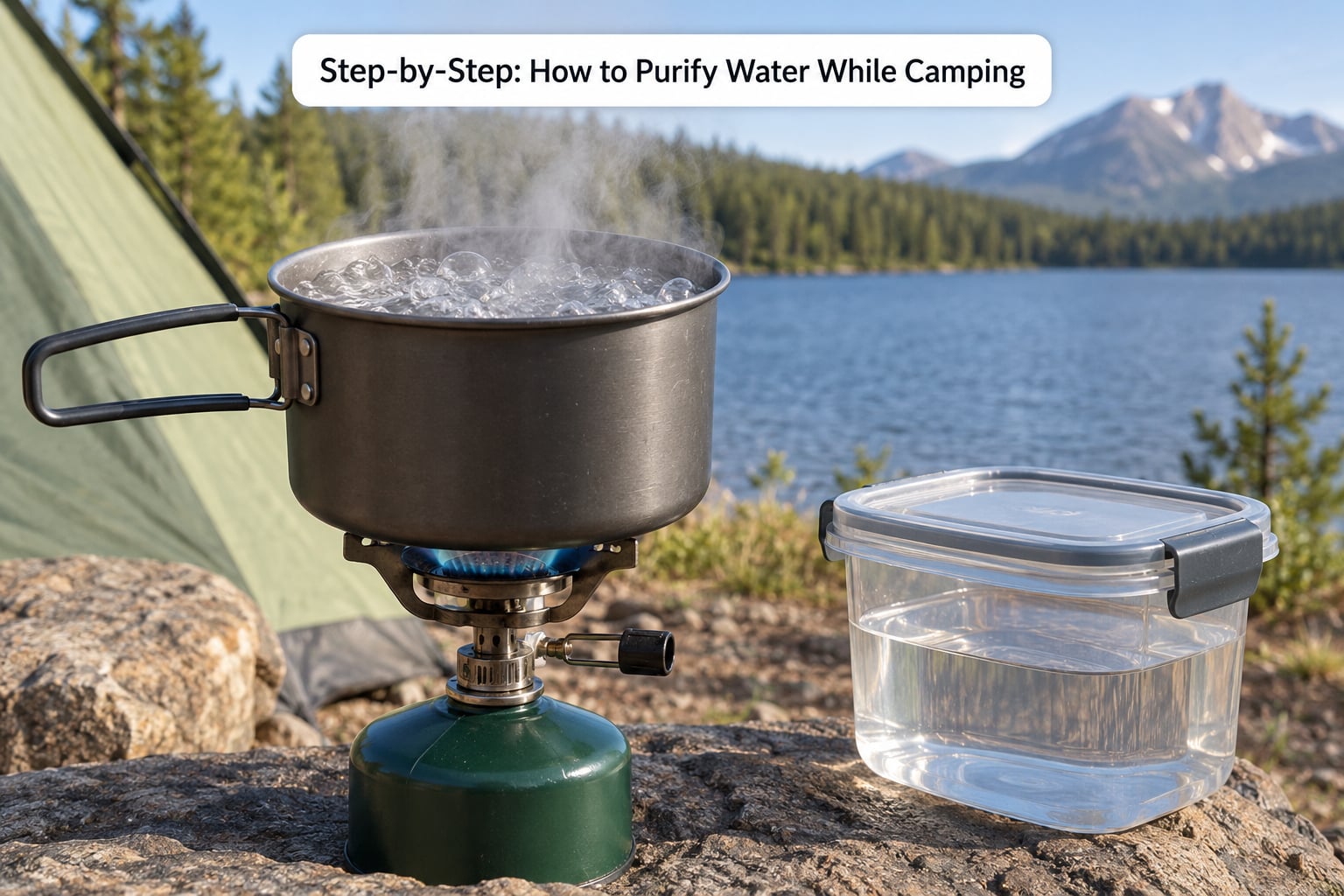
The process is always the same four moves, whatever treatment you choose: assess the source, pick a method that matches the likely contaminants, treat it properly for the full stated time, then store it so it stays clean.
1. Assess the Water Source
The fastest way to avoid treatment headaches is to walk 30 to 50 metres upstream before you scoop anything. Flowing water that has not passed a campsite, a stock tank or a beaver dam is almost always easier to treat than anything standing.
Look at the bank. Water running past animal concentration, dead vegetation or an eroded bank is loaded with the organic material that carries Giardia and Cryptosporidium cysts. Treat the water and also avoid the bank within a hundred metres or so of where animals congregate.
Walk away from water near sewage outflows, mines, industrial sites and heavy agriculture. Agricultural runoff and mining drainage are chemical problems, and neither boiling, filters, tablets nor UV will fix them. If the water smells of petroleum, has an unnatural colour or sits under a foam line, that is a no-drink water, not a treat-it-later water.
Lake and pond water deserves more caution than stream water. It is warm, slow and full of sunlight-fed growth, which is exactly the profile for cyanobacteria. When you see a green or mustard-coloured scum mat, or a surface with tiny bubbles trapped in it, walk away and find a flowing inlet instead. A scum mat is not a free nutrient source; you do not know what it is concentrating.
Rainwater is usually low in pathogens but picks up whatever it washed over on the roof or ground. Snow and ice are usually clean but carry whatever was in the layer they formed from. Clear water, clean smell and no visible debris tell you nothing about safety.
2. Choose the Right Purification Method
Two words get confused constantly. A filter strains out bacteria and protozoa. A purifier does the same and also inactivates viruses, usually by adding an iodine or silver layer to the membrane. If viruses are plausible in your water, only boiling, a chemical treatment or a genuine purifier will do.
| Method | Bacteria | Protozoa (Giardia, Crypto) | Viruses | Chemicals | Sediment | Wait time | Works in cold or cloudy water |
|---|---|---|---|---|---|---|---|
| Boiling | Kills | Kills | Kills | No | No | 1 min, 3 min above 6,500 ft | Yes, but slower to heat |
| 0.1 micron hollow-fiber filter | Removes | Removes | No | No | Yes | None | Yes, if not frozen |
| Chlorine dioxide drops | Kills | Kills | Kills | No | No | 30 min, longer when cold | Partly, needs extra time |
| Iodine tablets | Kills | Weak against Crypto | Kills | No | No | 30 min to 4 hours | Weakly |
| UV pen | Inactivates | Inactivates | Inactivates | No | No | About 1 min | Needs clear water |
| Improvised cloth and sand layers | Unreliable | Unreliable | No | Partly | Yes | Hours of settling | No |
That table is the whole decision in one view. Water is clear and you have time: boil it. Water is clear and you are moving fast: filter it. Water is cold, silty or you are worried about viruses: use chlorine dioxide and give it real time. Water is crystal clear and you have twenty spare seconds in the morning: UV. Nothing in that row removes chemicals, so a chemical-contaminated source is never a treatment problem.
Now match the method to the trip. A solo hiker carrying two litres a day is best served by a squeeze filter with tablets as backup. A family at a car camp does well with a gravity filter feeding a clean jug, plus tablets. A group of six cooking dinner over a fire needs volume, and a pump or gravity unit rated for it beats six people passing a bottle around. Winter campers should assume their filter will freeze at some point and plan a chemical backup. And anyone above 6,500 feet needs a longer boil.
3. Treat the Water
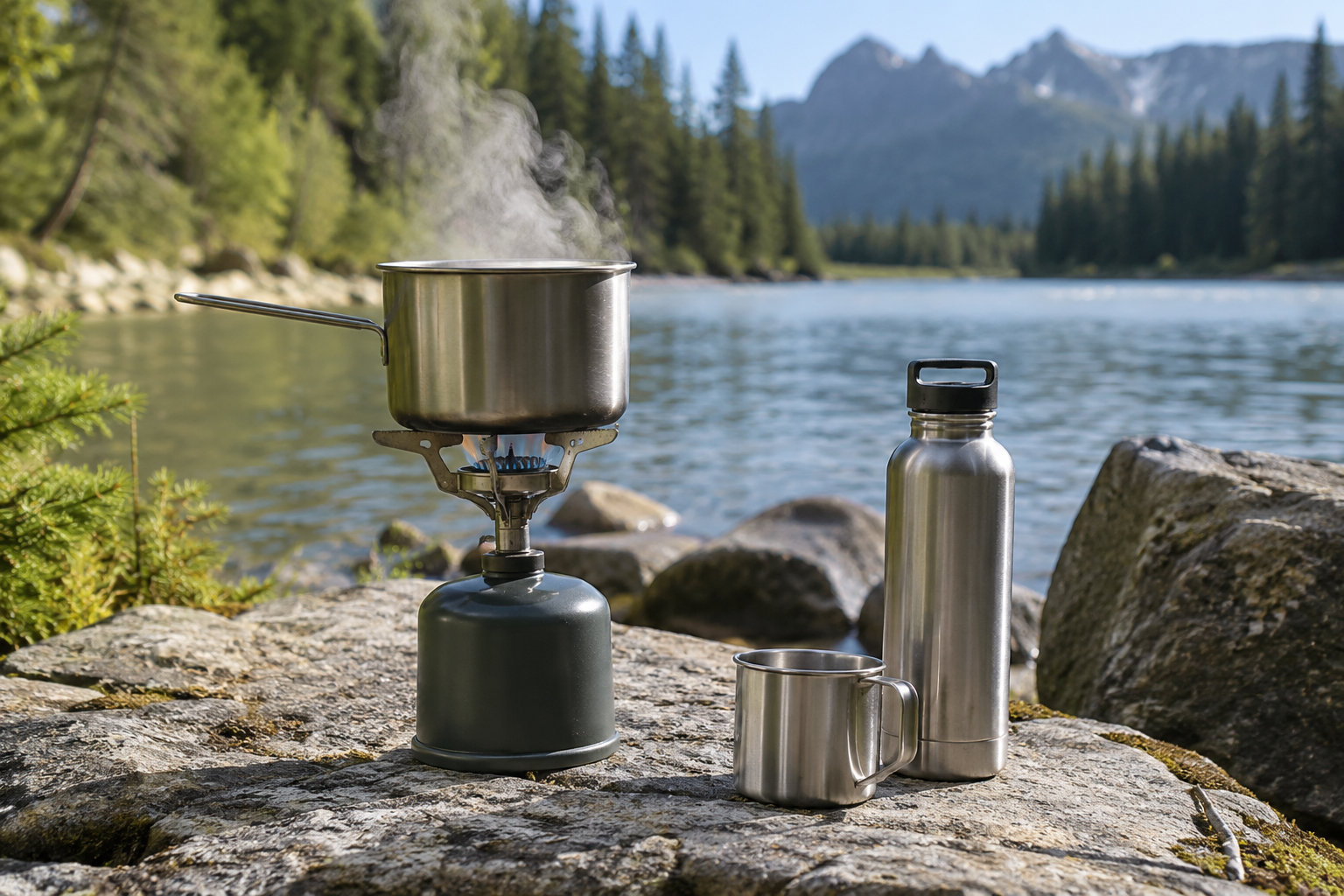
Boiling. Bring the water to a full rolling boil and hold it there for one minute. Above 6,500 feet, boil for three minutes, because water boils cooler up high and a short treatment will not kill everything. That one and three minute rule is the CDC’s standard guidance for backcountry water.
Start the timer when bubbles rise vigorously and are breaking the surface, not when you first see steam. While it boils, pre-filter anything cloudy through a bandana or coffee filter so you are not drinking silt. Boiling kills every pathogen, but it does not remove sediment, salt or chemicals, and the flat taste people complain about comes from the boiled-off air. Let the water sit uncovered in the wind for an hour or two and the taste comes back on its own.
A campfire works if you can hold the pot steady and keep it at a rolling boil, but blowing embers into the water and scorching it is its own problem. A stove with a controlled flame is cleaner and more predictable.
Filtration. Fill the dirty bag or bottle from a source that is not stirring up silt, then squeeze or pump through a 0.1 micron hollow-fiber element into a clean bottle. Aim for a slow, steady stream. Force it and you will get water faster but with more particulate carrying bacteria past the membrane, plus a much shorter filter life.
When the flow slows noticeably, backflush it. Disconnect the element, attach the supplied syringe or a clean squeeze bottle to the clean side, push water backwards through the membrane for 20 to 30 seconds, then reconnect and test the flow. A rusted or flattened membrane backflushes badly and is usually finished.
Freeze damage is the filter failure people complain about most. Ice crystals can split hollow-fiber elements and a filter that leaks afterwards looks fine while letting bacteria through. Keep it on your body or in your sleeping bag, not in a pack that sits overnight in the cold, and drain it after each use.
Chemical treatment. Follow the label exactly. Add the drops to a clear bottle of water, cap it immediately, shake and wait. Chlorine dioxide needs about 30 minutes in warm water and considerably longer in cold or cloudy water, and it kills viruses, which is why it is the standard backup to a filter. Iodine tablets take longer and do not reliably kill Cryptosporidium. Neither removes chemicals, and both leave a taste people dislike. Dose the bottle smaller if you are sensitive, and let it sit sealed before drinking.
Iodine is the one people ask about twice. It works, but it is not recommended in pregnancy, for anyone with a thyroid condition, or repeatedly over long periods. Boiling is the safe answer if iodine is your only option and someone in the group falls into those categories. As a last resort, CDC guidance allows unscented household bleach at a rate of 1/8 teaspoon per gallon for clear water, doubled for cloudy water, standing 30 minutes. Get the concentration right; over-dosing makes the water undrinkable.
UV. A UV pen works by disrupting the DNA of bacteria, viruses and protozoa, so it needs clear water. Push any silt or algae through a coffee filter or cloth first, or you are just shining light at mud. Fill the pen to the marked line, switch it on, submerge it completely and stir slowly with the other hand for about a minute. Watch for the dose indicator that shows the lamp is delivering power, since a tired battery or dead lamp fails silently.
No gear at all. Let silty water settle in a bucket for several hours, decant the clear water off the top, then pass it through a cloth, then through a layer of clean sand and a layer of activated charcoal. Honest verdict: this removes sediment and improves taste, and it may reduce bacteria somewhat, but nothing you improvise reliably stops viruses or Giardia. Treat it with tablets or UV afterwards if you have them, boil it if you have a fire, and move to a cleaner source if you can. A solar still makes a litre a day at best and is a survival exercise, not a plan.
4. Check and Store the Treated Water
Ask yourself one question: did I follow the full treatment time without cutting it short? Boiled water should have been at a rolling boil for the whole minute or three. Filtered water should have looked clear going in and run without stopping. Treated water should have sat for the full contact time with the bottle sealed. If you are unsure of any of that, treat it again. It costs fuel or one tablet.
Pour treated water into clean containers only. Never pour potable water into a bottle that held untreated water the same day, and rinse the pot after you collect in it before you boil in it. Label the container with the water source and the time you treated it, so at 2am in the rain you know which bottle is done.
Keep containers sealed, shaded and off the ground. Heat and light encourage growth in anything you did not treat properly, and a wide-mouth jug sitting open overnight will collect insects and airborne dirt. Use treated water within a couple of days, then treat fresh.
Plan for more water than drinking. Most campers need around 2 to 3 litres a day for drinking and cooking, and washing, coffee and hot weather push that higher. For a car camp, check the flow rate printed on a gravity filter housing and make sure it covers your group over the hours you are there.
Common Mistakes
Starting the timer too early. A simmer is not a rolling boil. Water must be bubbling vigorously enough to break the surface for the whole minute.
Boiling for one minute at 8,000 feet. Boil for three minutes above 6,500 feet. A short boil up high is the single most common way treated water still makes people sick.
Expecting a filter to remove viruses. A 0.1 micron microfilter strains out bacteria and protozoa; viruses are smaller than the pores. Carry tablets, a purifier or the ability to boil.
Expecting filters or UV to remove chemicals. Neither does, and boiling does not either. Chemical contamination from runoff, mines or industry means find another source.
Underdosing or under-waiting with tablets. Too few drops or drinking before the full contact time is the same as not treating it. Cold and cloudy water both stretch the wait.
Storing treated water in a dirty container. A backwash that filled the bottle at the source and the clean water you poured into it later can undo the whole job. Rinse, use separate containers, cap it.
Carrying one method. Filters freeze, membranes crack, batteries die and you misread a dose. Carry two independent methods that fail differently, such as a filter plus chlorine dioxide drops, and use them correctly every single time.
Frequently Asked Questions
How long should I boil water while camping?
Bring water to a full rolling boil and time it for one minute, or three minutes above 6,500 feet, following CDC guidance for backcountry water. Start the timer when bubbles break the surface, not when steam appears. Boiling kills bacteria, protozoa and viruses, but it does not remove sediment or chemicals, so pre-filter cloudy water and let the flat taste air out afterwards.
Do water filters or UV purifiers remove viruses and chemicals?
A standard 0.1 micron microfilter removes bacteria and protozoa such as Giardia and Cryptosporidium, but most viruses pass straight through. A purifier adds a chemical stage to inactivate viruses. Neither filters nor UV remove chemical contaminants, and boiling does not either. Only boiling, a genuine purifier, or chemical treatment addresses viruses.
How does altitude affect the boiling time needed to purify water?
Water boils at a lower temperature at altitude, so a short treatment is less effective up high. The CDC recommends one minute at a rolling boil below 6,500 feet and three minutes above that. Filters and drops work normally at altitude, but chemical treatments need longer contact time because the water is colder.
Are water purification tablets safe for drinking water?
Chlorine dioxide and iodine tablets are used widely on backcountry trips and are safe when dosed as labelled, with the full contact time observed. Iodine is not recommended in pregnancy, for thyroid conditions, or for repeated long-term use, so carry another option. Tablets do not remove chemicals, do not reliably kill Cryptosporidium, and taste noticeably of chlorine.
Can I use a campfire to boil and purify water?
Yes, if you can hold the pot at a full rolling boil for the full minute or three. Embers can blow into the water and scorch it, so set the pot in the coals rather than across flames and keep it stable. A stove gives more control, uses less fuel and leaves no ash in the water, which matters when you are boiling for a whole group.
What should I do if the water may be contaminated by chemicals or algae?
Do not drink it. No purification method removes chemical contaminants, and an algal bloom with surface scum or trapped bubbles may mean cyanobacteria, which boiling concentrates rather than destroys. Move to a flowing inlet upstream of camps, livestock and developed ground, and if no clean source exists within a reasonable walk, carry the water you need from a treated supply.
Conclusion
Start with the source, because the best treatment is the one you never need to run at full strength. Walk upstream of camps and livestock, move away from mines, industry and algal scum, and pick the method that matches what you actually found: a filter for clear water, a longer boil for viruses and high altitude, chlorine dioxide when you want a fast second opinion.
That is how to purify water while camping without turning it into a project: judge the source, pick the treatment, follow its full timing, and never store treated water in anything dirty.
Carry two methods that fail differently. That combination is what gets you drinking safely at camp instead of spending the night with a stomach problem.