To fish a jig for bass in a lake, match the jig weight to the depth and clarity of the water, cast to the nearest edge of cover such as a dock, drop-off or rock shelf, and work it back with a steady lift-and-pause cadence while watching the line. Most beginners lose fish in the first ten minutes to slack line and a hookset made too early, and both problems are easy to fix once you know what to look for.
A jig is simply a weighted head with a hook, a skirt and usually a soft plastic trailer. That is the whole trick behind the lure: the head sinks it to the strike zone, the skirt gives it a pulsing vibration, and the trailer supplies the flash and movement a feeding bass reacts to. Anglers who are new to jigs tend to overcomplicate it, so this guide walks the process in six repeatable steps, from matching the jig to the water to diagnosing the cast that produced nothing.
Table of Contents
- 1What You Need
- 2Step-by-Step: How to Fish a Jig for Bass in a Lake
- 3Step 1: Match the Jig to the Water Conditions
- 4Step 2: Rig the Jig for Reliable Bites
- 5Step 3: Where to Fish a Jig for Bass in a Lake
- 6Step 4: Cast Tight and Work the Jig with Purpose
- 7Step 5: Detect the Bite and Set the Hook
- 8Step 6: Land the Bass and Adjust for the Next Cast
- 9Common Mistakes
- 10Frequently Asked Questions
- 11What is the best beginner jig setup for fishing a lake?
- 12What weight jig should I use for bass in deep water?
- 13Can I catch bass with a jig in cold water?
- 14What fishing line is best for jig fishing around rocks and weeds?
- 15How do I know when a bass missed the jig?
- 16Conclusion
What You Need
The whole setup fits in one rod case. Everything below is something a beginner actually uses, and nothing on the list is optional except the electronics and the second rod.
Rod and reel. A 7-foot to 7-foot-6-inch medium-heavy spinning rod is the standard lake jig setup, and a 7-foot medium-heavy baitcasting rod works too. Medium-heavy gives you enough backbone to pull a bass off a rock shelf and enough tip sensitivity to feel a subtle bite. Pair it with a size 2000 or 2500 spinning reel in a 7.1:1 or faster ratio, so one turn of the handle covers a lot of water when you swim a jig along a dock shade line.
Line. Fluorocarbon in the 10 to 15 pound range is the safest all-around choice in clear or stained water, because it sinks faster than mono and stays nearly invisible in sunlight. Braid in the 16 to 20 pound range is tougher and better for working heavy timber, but it floats and casts a visible shadow in clear water. Many anglers run braid in spring when the fish are aggressive and drop to fluorocarbon in the fall.
Jigs. Start in the 3/8 ounce range, which forum regulars on bass boards still call the most versatile beginner weight. Carry a 1/4 ounce for shallow, clear, pressured water and a 1/2 ounce for deep water, current and windy conditions. A medium-heavy or heavy action diving jig keeps the lure in the strike zone through the fall, while a light or medium action jig sinks slower, which is useful in stained water and for suspended fish.
Trailers. A craw or creature-bait trailer in a contrasting color adds bulk and vibration, and a double-tail grub or straight grub adds a longer, softer action for cold water. Match the trailer to what the lake actually holds: if there are crawfish, use a craw, and if the lake is full of shad, use a white or pearl grub.
Terminal tackle and safety. A pair of split-ring pliers, a line trimmer, spare hooks and a jig you don’t mind losing are standard issue. Always carry a personal flotation device, a horn and a whistle, plus a first-aid kit, and wear a properly fitted life jacket on every trip regardless of skill.
Step-by-Step: How to Fish a Jig for Bass in a Lake
Work through these six steps in order on your first few trips. The order matters, because each step feeds the next one and skipping ahead is what leaves beginners fishing the wrong lure in the right water.
Step 1: Match the Jig to the Water Conditions
Jig weight is a depth tool, not a preference. Heavier jigs fall faster and reach deeper structure before a bass watching the bottom can spook, so depth is the first thing to check. Clarity decides the rest: the clearer the water, the smaller and more natural you want the package to look.
In clear water, stay in the 1/8 to 3/8 ounce range and choose natural colors such as green pumpkin, brown, watermelon or a bluegill pattern, since bass can see a bright lure from a long way out in low light penetration. In stained or murky water, step up to 1/2 ounce or heavier and use higher contrast, because a dark silhouette against dirty water gives the fish something to lock onto. Anglers working flooded vegetation and heavy timber often go as heavy as 3/4 ounce to punch through and keep the hook out of the wood.
Season follows temperature. In cold water below about 50 degrees, go light on weight and slow on cadence, because bass are metabolically slow and want an easy meal. Once water climbs through the mid-60s and beyond, heavier jigs and faster, harder snaps pay off because the fish are aggressive and chasing baitfish. Jig fishing for bass is really a method of adjusting to how fast the fish are moving, and temperature is the best clue you have.
Color is a secondary dial. The green pumpkin jig with orange or red accent strands is the most consistent starting point across regions, and black and blue works well in stained water and low light. Keep two or three colors in the box rather than the whole rack.
Step 2: Rig the Jig for Reliable Bites
A jig is rigged out of the box, so the only real work is the knot and a few minutes of tuning. Tie a fluorocarbon knot or a Palomar knot to the eye of the head, wet the knot, pull it down snug, and leave a small amount of tag. Braid needs an improved clinch or an FG knot because a standard knot on slick superline will slip.
Trim the skirt to roughly the length of the hook shank, cutting all the strands round so they flare evenly. Bunching and cutting the tips to the same length is what stops the jig from spinning. Open the hook gap a touch with pliers, roughly ten percent wider than the factory setting, so the hook point clears the skirt and the trailer on the fall, and check that the hook point extends past the skirt once the jig is rigged.
For a heavier feel and a vibration a fish can feel through the water, bend the hook about ten degrees to the side of the line. That is the single most useful modification for a new jig, and the same pliers and a few seconds of work do it.
Thread a trailer on the hook and push the hook point through the body a quarter inch so the trailer sits straight. A trailer that is crooked or riding too far back makes the jig swim crooked, and the fish notice that. Set the hook and give the jig a swing in open water. A correctly rigged jig falls straight, the skirt pulses open and closed, and the trailer trails behind without spinning. If it wobbles from side to side like a propeller, fix the skirt or the trailer before you cast again.
Step 3: Where to Fish a Jig for Bass in a Lake
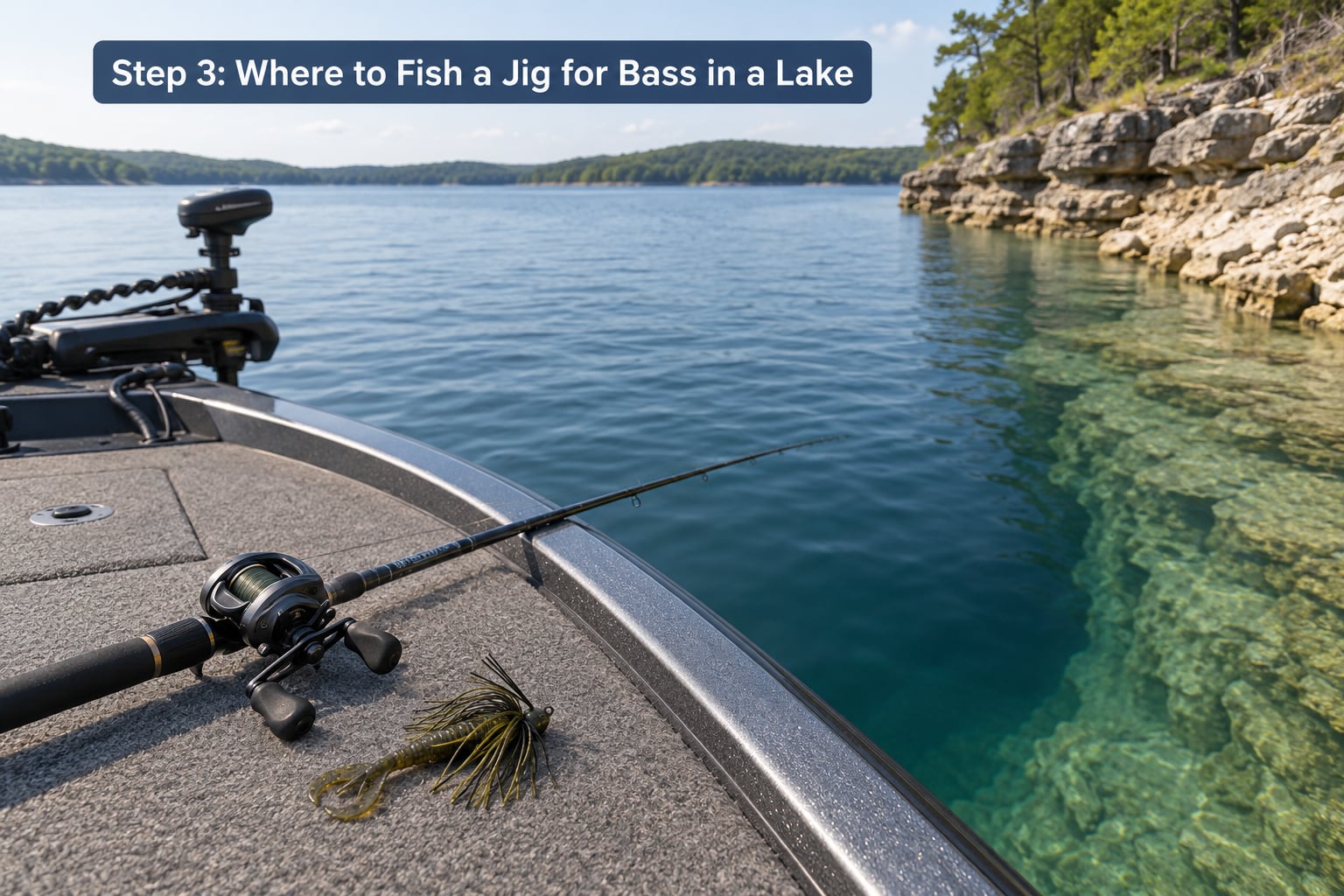
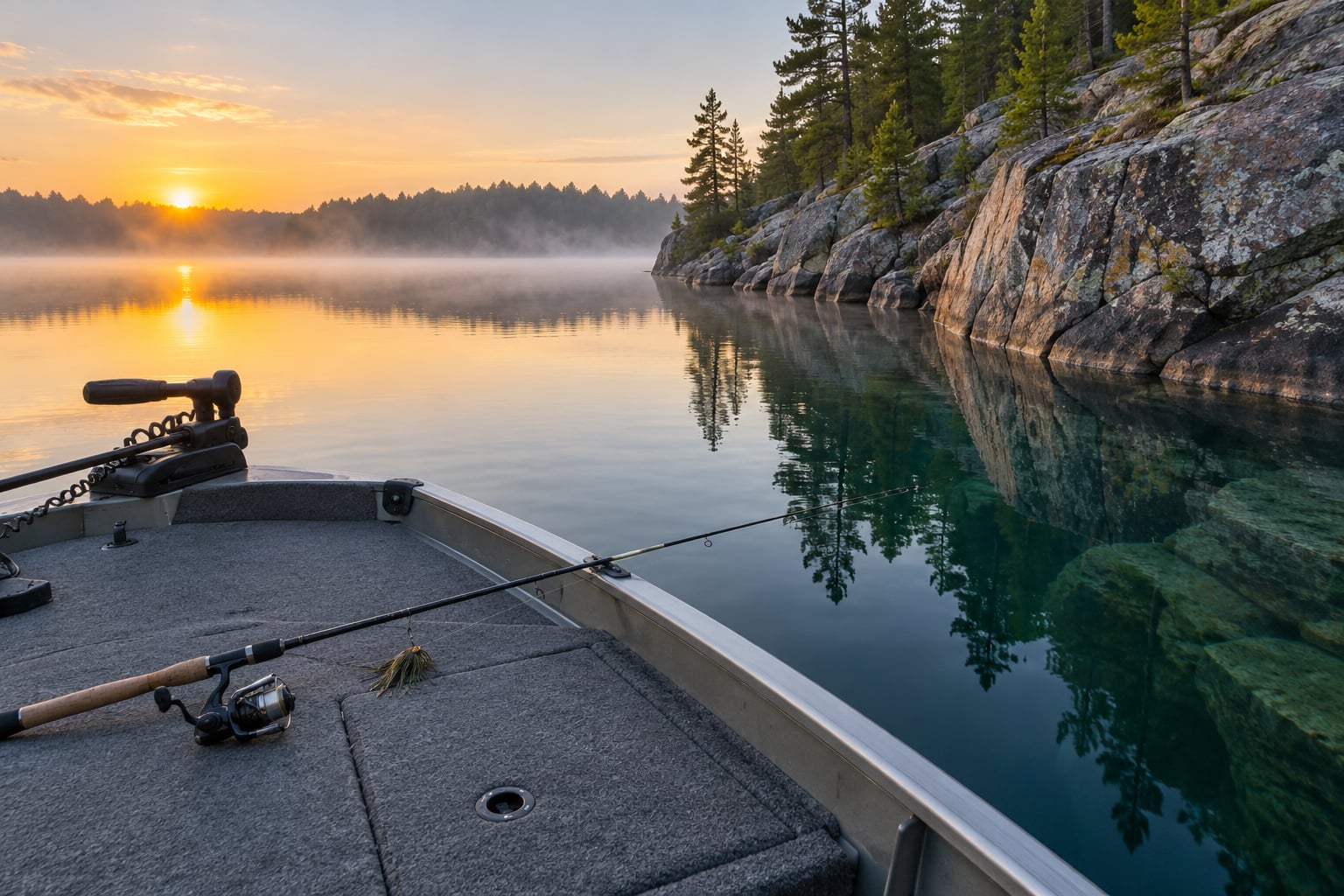
Learn to fish a jig for bass in a lake by targeting structure that creates a change, because bass station themselves at the edge where deep water meets shallow water and where cover meets open water. The nearest edge of any feature is almost always better than its center. Beginners cast to the middle of a rock pile or a brush pile and wonder why nothing happens, when the fish were hugging the shadow line the whole time.
Work down this list in order, and it covers most of the productive water on a typical lake:
- Docks and boat lifts. The shade line along a dock is the single best beginner target, and swimming a jig a foot off the pilings is a good first test of a new spot.
- Drop-offs and rock ledges. Cast beyond the lip and let the jig fall past the break, then work it back along the face.
- Creek channels and creek mouths. Bass stack in the channel where warm water and bait funnel in, especially in spring.
- Timber and brush piles. Work the edges with a heavier jig and a quick snap to keep it from burying.
- Weed edges and grass mats. The boundary between dense vegetation and open water holds feeding fish, and a lighter jig avoids tearing through the mat.
- Seasonal transition points. As water cools, fish slide from the grass to the rock and timber. As it warms, they move the other way.
From a boat, use a depth finder to mark the break in depth, then run it twice before you start casting. From shore or a kayak, look for the clues you can see: a sudden change in bottom color from dark mud to light rock, a bank that runs out into deeper water, exposed tree limbs in open water, or a wind line pushing surface debris toward a point. Those signs are how you fish a jig for bass in a lake without a motor.
Step 4: Cast Tight and Work the Jig with Purpose
Accuracy beats distance. Cast to the closest edge of the structure rather than to its middle, and stop the lure just past the shadow line. Control the fall the whole way down; a jig that lands flat, lands hard, or bounces off the bottom before you start working is a jig the fish never got a look at.
There are three retrieves worth knowing, and each one belongs to a different situation.
Dragging suits rocky points, drop-offs and anything where the bottom is solid. Let the jig touch down, then reel steadily, feel for bumps, and pause when the bottom changes. Hopping suits grass, timber and docks. Lift just enough to move the jig through the water column, pause, and let it fall back. Swimming suits a jig built for it, usually with a swept or wide head, and it is the most productive pattern along a dock in wind because the moving boat pushes the jig toward the structure.
A simple lift-drop-drag cycle covers most beginner needs: a small lift, a short fall, a drag, a pause. Match the pace to the water temperature. Slow down in cold water and let the jig sit motionless for a beat, since a slow fish will not chase anything that hurries. Speed up in warm water and add a hard snap after the fall, which is called stroking, because it triggers a reflex strike from fish that were not going to commit.
Keep the rod tip low and watch the line. The first thing a beginner should build is the habit of looking at the line rather than the water.
Step 5: Detect the Bite and Set the Hook
Detecting a bite is the skill that separates anglers who catch fish on jigs from those who watch a strike happen and never react, and it takes practice, not gear. Four things give a strike away, and a beginner should learn to read all four.
A tick or tap on the line is the classic giveaway. Line that moves sideways instead of straight down means a fish is carrying the jig. A load on the line that you did not cause means something took it, whether a fish or a branch. A sudden slack line often means the fish turned away at that instant, and a fish pulling away left the weight free, so the lure is dropping. None of these are dramatic. A dramatic feel means you were already late.
When you feel one, sweep the rod to the side and upward in one firm motion, lifting the rod tip above your head. Do not set the hook straight down at the weight, and do not reel in hope. Sweep, hold, and reel. Timing matters less than commitment, and a half-hearted set loses fish that were already committed.
A few things make bites easier to feel. A taut line does, so never fish with more slack than you need to absorb the jig’s fall. Rod tip in the water also helps, because the tip gives up the jig’s weight as it settles and makes the load of a pickup easier to register. Tightening the drag just enough that the spool will not give up line on a hard pull keeps the bite from disappearing into slack.
Step 6: Land the Bass and Adjust for the Next Cast
Land the fish, then treat the next cast as a data point, because the real skill in jig fishing is diagnosing what just happened rather than hooking everything that shows interest. Secure hook placement, keep the rod pointed at the fish, and let a jumping bass tire itself out rather than wrenching it in the air. Wet your hands, grip the lower jaw behind the corner of the mouth, and favor a quick photo and release: take the shot, pop the jig, and give the fish time to recover before it goes back.
Diagnose in this order:
If you get nothing at all for several casts, step up in weight, move the jig deeper, or move to a different type of structure before you change anything else. If you get nothing but short strikes, open the hook gap, trim the skirt again, or slow the fall with a lighter jig. If you get bumps but no hookups, you are likely striking the bottom, so lift a little more and watch the line harder. If you catch small fish consistently, you are probably working the right water too hard and pressing them with a heavier presentation than they need. If you hook the fish and lose it, the hook gap is likely still too narrow, or the hookset was soft and landed on the tip of the hook.
Change one variable at a time, and keep notes in your phone. After a dozen trips you will know your lake far better than any generic guide can tell you.
Common Mistakes
Almost every beginner problem with jigs has a specific fix. These are the ones that come up again and again on bass fishing forums and from beginners on the water.
Fishing too light. A 1/8 ounce jig in 20 feet of water over a rock shelf is spending most of the cast getting there. Go up a size until the jig reaches the bottom within about two seconds.
Working slack line. Slack line swallows bites whole, and a fish can reject a lure during the second or two it hangs there. Keep the rod tip low and the line as straight as the conditions allow.
Casting to the whole feature. Fish are on the edge, not the middle. Move the target to the shadow line where cover meets open water.
Ignoring water temperature. The temperature drives the weight and the cadence. Below 50 degrees, go lighter and slower; above 65 degrees, go heavier and snap harder.
Setting the hook on the fall. The jig lands, the angler reacts, and the hook goes through the trailer. Let the jig reach the bottom and make the first movement of the line the cue.
Changing jigs with no plan. Switching between five jigs in ten minutes tells you nothing about any of them. Pick one variable, make one change, and give the new combination ten full casts before you judge it.
Never tuning the jig. A straight skirt, an opened hook gap and a side-bent hook improve the hookup ratio more than any upgrade to the rod, and it costs nothing but a minute and a pair of pliers.
Two habits cover most of the rest. Watch the line instead of the water, and give the jig time. Jigs take patience to learn, and most of the anglers who describe themselves as bad at jigging are simply not giving a quiet spot enough attention.
Frequently Asked Questions
What is the best beginner jig setup for fishing a lake?
Start with a 7-foot medium-heavy spinning rod, a size 2000 or 2500 reel with a 7.1:1 or faster ratio, 10 to 15 pound fluorocarbon line, and a 3/8 ounce medium-heavy jig with a contrasting craw or grub trailer. That single combination handles most of the depth, clarity and cover a beginner meets on a lake. Add a 1/4 ounce for clear shallow water and a 1/2 ounce for deep water before buying anything else.
What weight jig should I use for bass in deep water?
For bass holding in 20 to 40 feet, a 1/2 ounce medium-heavy or heavy action jig is the standard choice because it falls fast enough to reach the strike zone before the fish can spook. Go heavier in current, wind or heavy timber, where 3/4 ounce is common. Keep a lighter jig in the box for fish that are up shallow or feeding in very clear water, where a heavy lure looks unnatural.
Can I catch bass with a jig in cold water?
Yes, and jig fishing is a legitimate winter method on lakes, especially on sunny calm days when the water warms a few degrees above the surrounding air. Slow everything down: use a lighter jig, a slow drag, long pauses, and a smaller trailer with softer action. Fish the deepest structure and the closest cover to the boat, and expect fewer, larger fish. The most common cold-water mistake is working a jig too fast.
What fishing line is best for jig fishing around rocks and weeds?
For rocks and heavy timber, braided line in the 16 to 20 pound range resists abrasion and gives you the sensitivity to feel structure and bites at the same time. In clear water, or anywhere the fish can see your line, fluorocarbon in the same weight range is harder to detect and sinks faster. Many anglers keep both on separate rods so they can switch as clarity and cover change through the season.
How do I know when a bass missed the jig?
A miss usually shows up as a tap on the line, a short sideways movement, or a sudden loss of tension as the fish turns away and the jig weight falls free. The jig is often still on the bottom, and the hook may be bent open from the fish pushing it aside. If misses repeat, open the hook gap, trim the skirt a little further, or slow the jig’s fall with a lighter weight, which gives the fish more time to track it down.
Conclusion
To fish a jig for bass in a lake, pick one medium-weight jig in a proven color, tune the skirt and hook gap, and spend your time on the nearest meaningful edge rather than the middle of a feature. Work it with a controlled lift-drop-drag, watch the line instead of the water, and sweep the rod upward the moment you feel a tap. When the result is poor, change one thing at a time and give it ten casts. That process, repeated honestly, is what turns a beginner into an angler who knows the lake.