Camping with toddlers at a lake works when the trip is built around one small child rather than around the campsite. Pick a drive-in site with a bathroom and a shallow, gradual shoreline, keep your toddler within arm’s reach of the water, and copy the nap and bedtime rhythm you already have. It takes about two days of practice to feel normal, and the first evening is always the hardest part of the trip.
A lakeside campground gives a toddler something no backyard does: real water, sticks, mud and long daylight hours. That same water is the reason the safety rules below matter more than any gear list. This guide covers how to camp with toddlers at a lake from the packing stage through the first night, and it is written for families with a child roughly 12 months to 3 years old.
Table of Contents
- 1What You Need
- 2Step-by-Step
- 3How to Camp with Toddlers at a Lake: Choose the Right Site
- 4Check the Forecast and Lake Conditions
- 5Pack Two Days of Essentials
- 6Set Up a Safe Base Camp
- 7Build a Simple Daily Rhythm
- 8Make Meals Low-Stress
- 9Keep Water and Sleep Safe
- 10End Each Day with an Easy Reset
- 11Common Mistakes
- 12Frequently Asked Questions
- 13Are swim diapers safe enough for toddlers at a lake?
- 14How can toddlers nap successfully while camping?
- 15What should a family pack for its first lake camping trip?
- 16How do you keep toddler meals safe at a campground?
- 17What should a toddler wear for an evening at a lake?
- 18What should parents do if rain interrupts a lake camping trip?
- 19Conclusion: Start with a Short Test Camp
What You Need
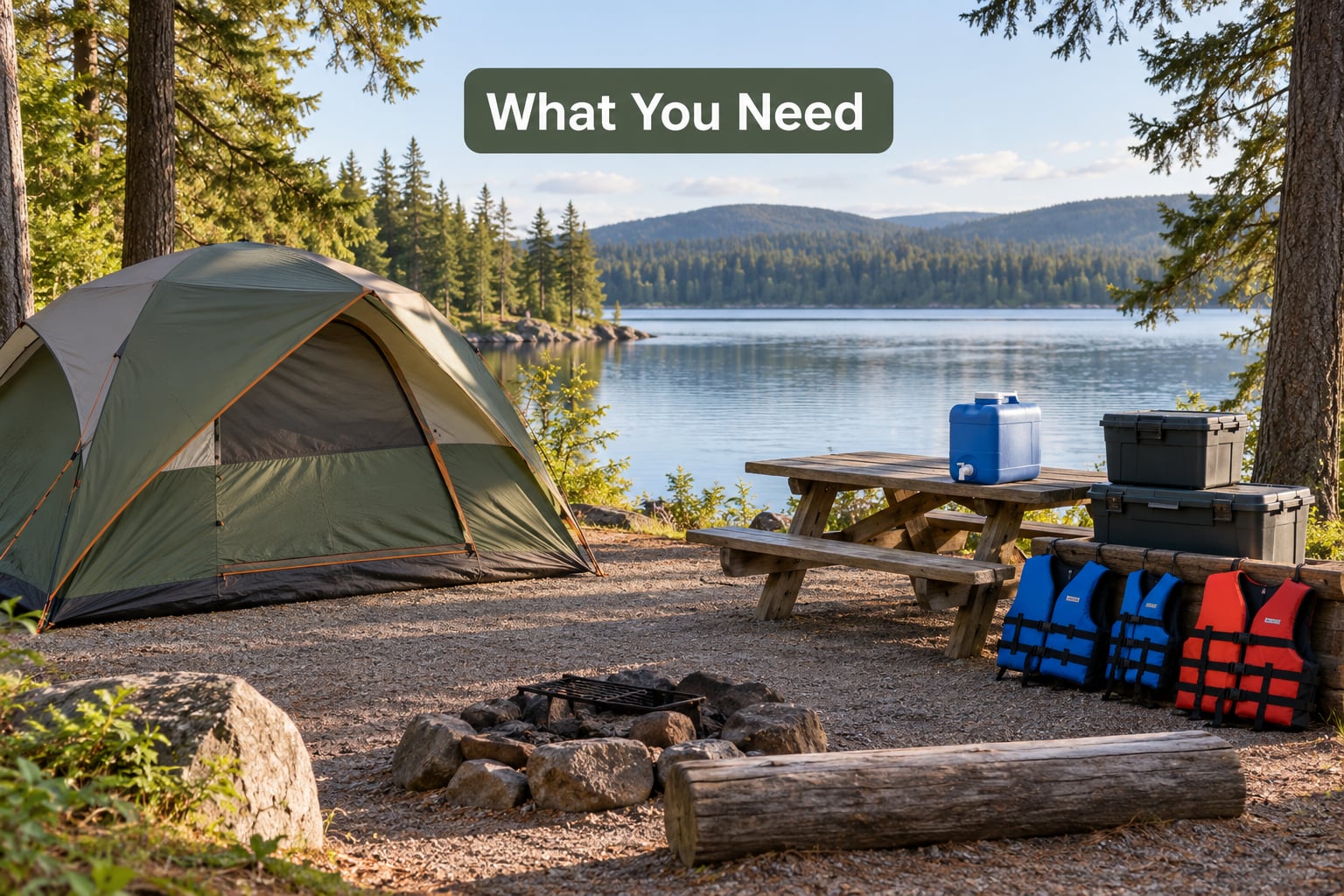
The gear you need falls into seven buckets. Pack each one in its own bag or bin so that at 6 p.m. on arrival you are not opening the trunk in the dark.
- Campsite and shelter: a reservation confirmation, a tent or vehicle you have already set up once at home, a tarp or footprint, and extra stakes and guy lines.
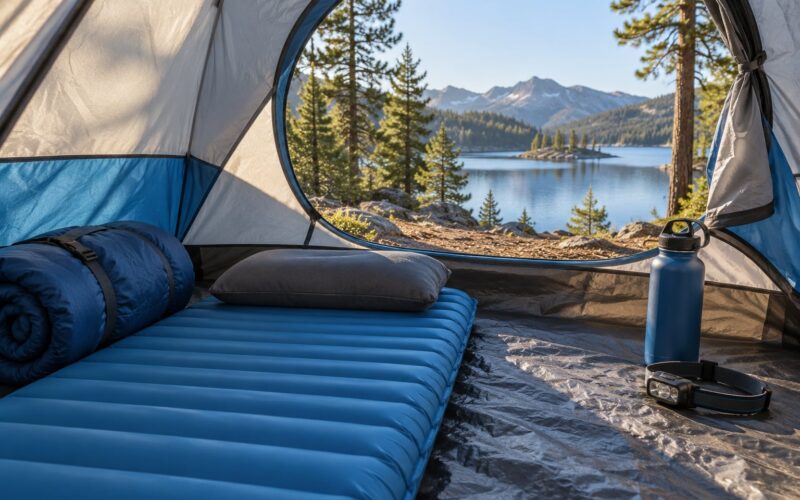
- Sleep setup: a cot or pack ‘n play for under three, or a self-inflating mattress for older toddlers, plus a sleeping bag rated about 5 to 10 degrees colder than the forecast overnight low.
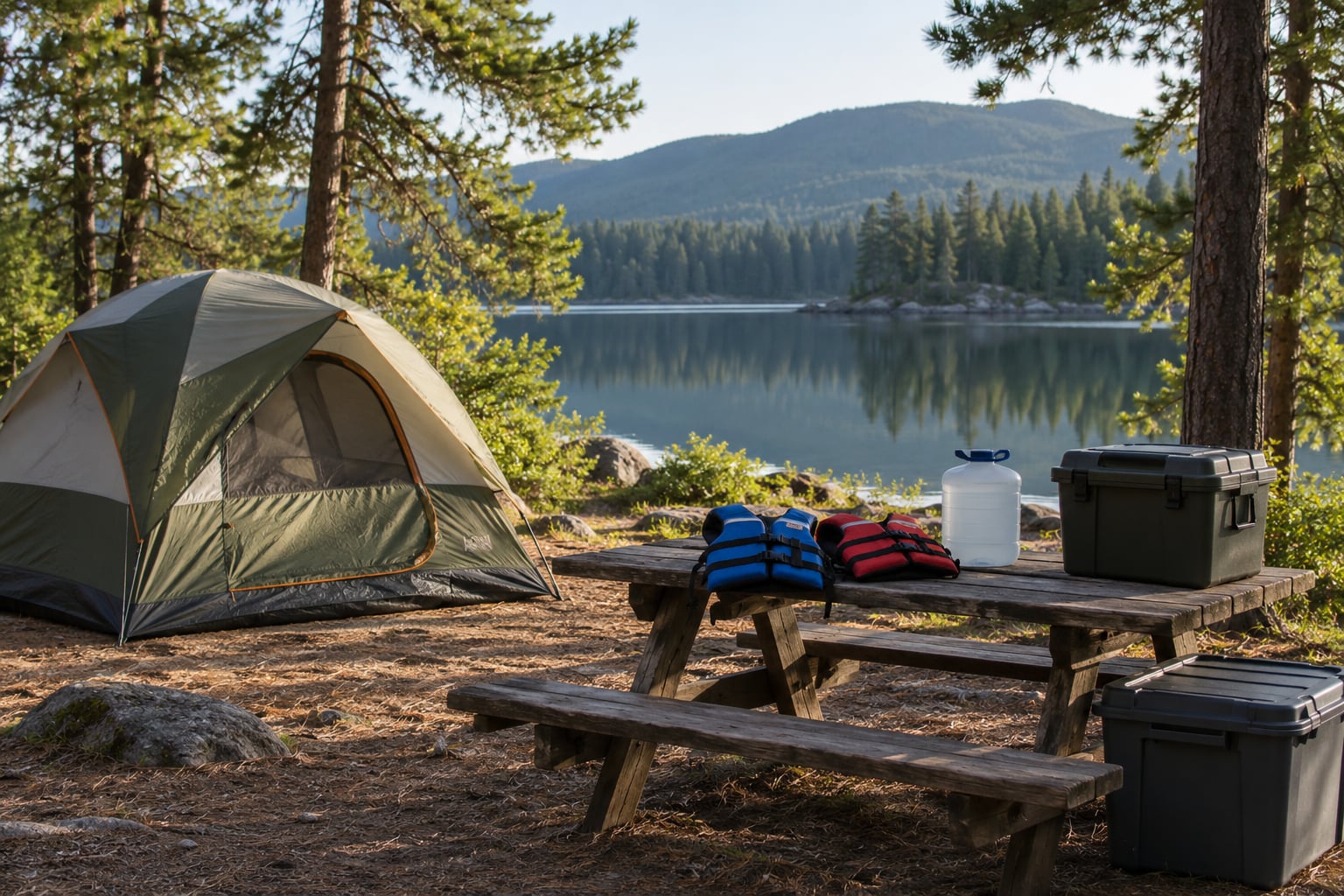
- Water safety: a USCG-approved life jacket in the child’s current weight range, fitted and buckled before you leave home, and a spare set of dry clothes in a waterproof bag.
- Layers: one warm mid-layer, a rain shell, two full changes of clothes including socks, a hat and gloves for cool evenings, and sleepwear that is not the same outfit worn to dinner.
- Sun and water protection: broad-spectrum SPF 30 or higher, a hat with a brim, and enough water for drinking plus refilling bottles.
- First aid and hygiene: a small first-aid kit, any regular medications, spare diapers and wipes, hand sanitizer, a changing mat, and a bag for used diapers.
- Food and comfort: a cooler of familiar foods, a manual hand-washing setup, and two comfort items from home, such as a blanket and a stuffed animal.
Parent trip reports on r/camping and WhatToExpect threads repeat the same regret: people over-packed and then discovered a gap once they arrived. The most common missing items are a second set of clothes that actually fits, dry socks, and a real plan for where to change a diaper when the bathroom is full.
Step-by-Step
How to Camp with Toddlers at a Lake: Choose the Right Site
A good toddler campsite has flat ground, a bathroom within a short walk, vehicle access close to the pitch, and a shoreline that shelves gradually instead of dropping off. Walk the site yourself before unloading, at the time of day you expect to be at the water, and you will know within a minute whether the pitch is manageable.
Look for a legal, well-marked site away from unprotected water, steep banks, road traffic, isolated trails and loud neighbour pitches. You want to be able to see your child from the picnic table and hear them from inside the tent. If the walk from the car to the tent passes through a neighbour’s pitch, choose a different one.
The result you are aiming for is a site your toddler can learn as a small map: tent, car, bathroom, dock. Parents on r/toddlers say recognising that route is what makes the second and third night calmer than the first.
Check the Forecast and Lake Conditions
Check the forecast, heat index, wind, storm timing, water levels, fire restrictions, swimming closures and campsite availability the day before you leave. Post-sunset temperature drop is the detail most families underestimate, because wind off open water and evening humidity strip warmth faster inland.
Then decide your backup plan in advance. A drive-in campground within a short drive gives you the option to postpone without losing the reservation. If thunderstorms are forecast every afternoon, plan to camp around them rather than hoping they pass.
Pack Two Days of Essentials
Use one container per category: shelter hardware, sleep gear, clothing layers, food and water, diapering and first aid, and activities. Label each one, and load them into the car in the order you will unload them.
Two days of essentials is the practical minimum because gear gets wet, spills and needs replacing. Sand, water and sunscreen mean that any single item can be unusable by evening. Pack one full change of clothes for your toddler per day, plus one extra set that stays dry in a sealed bag.
Set Up a Safe Base Camp
Set up your base camp so a toddler can move through it without help. Pitch the tent upwind when the forecast calls for it, keep a clear path between the tent, the vehicle, the picnic area and the bathroom, and secure coolers, tools and firewood where they cannot be pulled or rolled.
Then define the shoreline boundary before anyone gets near the water. Pick a visible marker, such as a specific rock or a rope line strung between two posts, and treat it as a hard edge. Most lake drownings happen within a few minutes of a casual visit to the dock, not during planned swimming.
Build a Simple Daily Rhythm
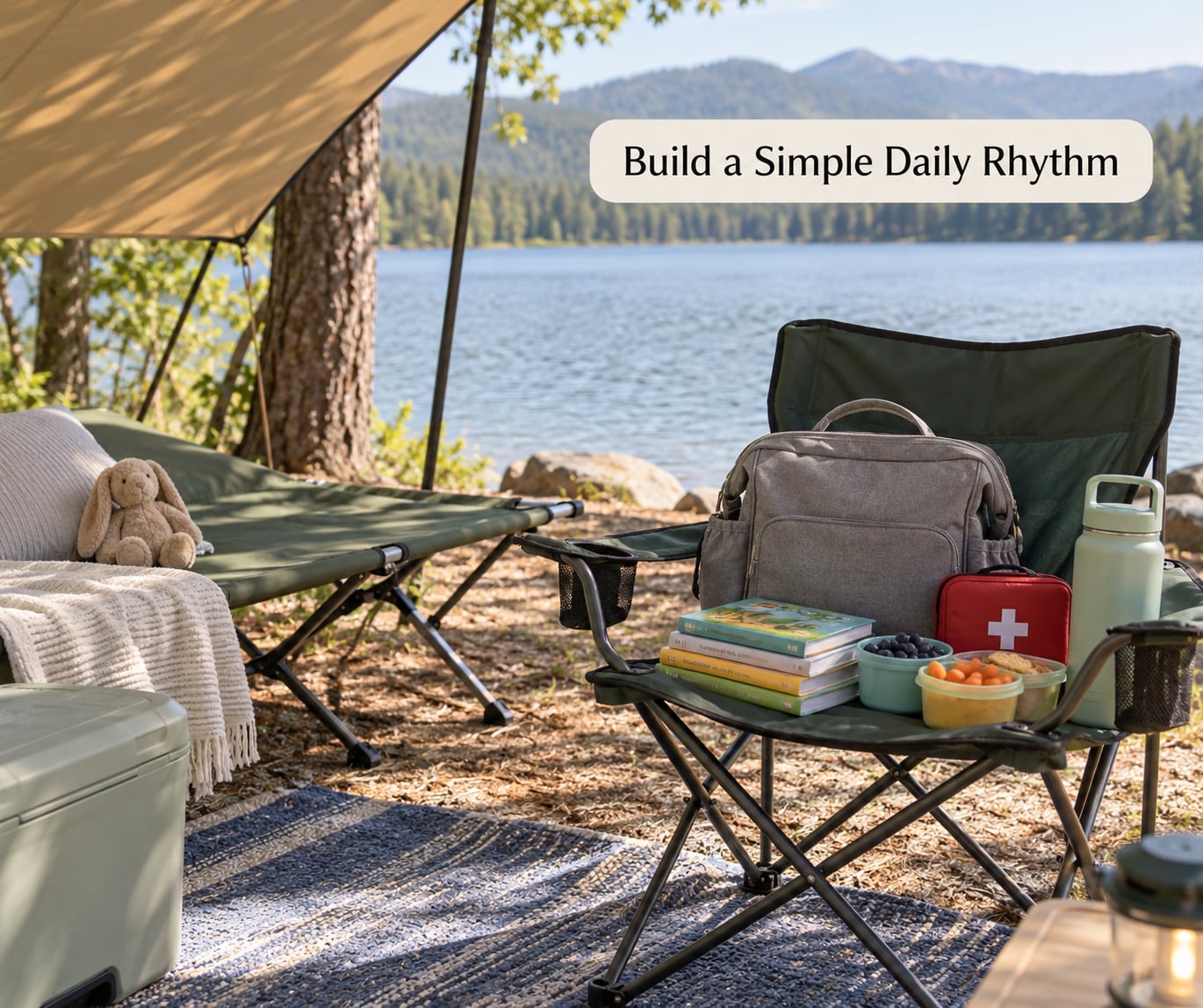
A workable day has three anchors: a nap, two substantial meal times and a bedtime you copied from home. Everything between them stays flexible. The adult version of the schedule is more important than the toddler’s, because you are the one who decides when to change a diaper or pack up the beach toys.
Write the schedule on paper and keep it on the picnic table. Parents describe the first few days as a rhythm rather than a plan, and a visible plan is what stops a three-day trip from turning into a series of small crises.
Make Meals Low-Stress
Camp meals should be assembly, not cooking. Sandwiches, fruit, oatmeal made with hot water, pasta from a pre-cooked container, and prepared foods your toddler already eats at home will cover most days without a stove.
Keep perishable food at or below 40 degrees Fahrenheit in a cooler with plenty of ice, and re-heat it to steaming before serving. Cook poultry to 165 degrees Fahrenheit, ground meat to 160, and whole cuts and fish to 145. If the ice melts faster than you expected, switch to shelf-stable foods for the rest of the trip rather than guessing.
Handwashing before every meal matters more at a lake than at home, because children put sand and lake water in their mouths constantly. Bring a jug of potable water for that job specifically, and keep it separate from drinking water.
Keep Water and Sleep Safe
Stay within arm’s reach of any child near the water, which pediatric guidance calls touch supervision, and treat it as a job rather than a glance. A correctly fitted life jacket helps; it does not replace an adult in the water’s edge.
Fit the jacket by weight range, then test it: buckle everything, lift the child by the shoulders of the jacket and check that the shoulders stay in place and the chin does not tip forward. Choose a USCG-approved vest rather than an inflatable toy, which children often pull off in the water.
Cold water shock is the reason to avoid early-season swimming even when the air is warm. A child can become hypothermic in water that feels cool on an adult, and the shock response can impair breathing before anyone realises what is happening.
For sleep, follow the same safe-sleep guidance you use at home: firm flat surface, on the back, nothing loose in the sleep space, and the same room-sharing arrangement for babies under one. Manage temperature with layers and a sleeping bag rated about 5 to 10 degrees below the overnight low, and check the tent by touch rather than by forecast.
End Each Day with an Easy Reset
Ten minutes at the end of the day does more for the next morning than an hour of tidying in the morning. Store all food and scented items in the required bear-proof locker or canister, wash dishes, bag rubbish, check the toilet, hang wet gear on a line, and run a short shoreline sweep for anything your toddler carried there.
Used diapers go in the campground’s designated receptacle where one exists. Where it does not, seal them in a bag and follow the site’s disposal rules exactly. The campsite should look emptier than it did at noon.
Common Mistakes
Most problems on a first toddler camping trip come from a handful of repeated mistakes, and each one has a simple fix.
Overpacking without a system. Parents often report bringing nearly everything and still lacking dry socks and a clean outfit. Assign every item to a labelled container and stop adding once each container has what it needs.
Choosing a remote or walk-in site. Carrying a sleeping child and gear from a parking bay to a walk-in pitch is a poor first trip. Book a drive-in site for the first outing.
Splitting adult attention near water. One adult cooking while another watches the child is how near-misses happen. The adult closest to the water is the designated watcher, with no phone and no task, until the child is out of the water or out of the immediate area.
Scheduling every hour. Toddlers cancel plans. Leave large gaps, keep one reliable activity within reach, and accept that a quiet afternoon in the tent is a successful afternoon.
Skipping the weather backup. Know before you go where you will shelter, what the cancelling threshold is, and where you will eat if the picnic table is soaked.
Leaving supplies scattered. A clear path and closed bins mean fewer trips across the pitch, fewer trips to the car in the dark and a campsite your toddler can move through safely.
Treating a swim diaper as flotation. Swim diapers are designed to keep the water out of a nappy, not to keep a child above water. Use a fitted life jacket for every boating, dock and shoreline water activity.
Two habits help most. Rehearse the routine at home by setting up the tent in the yard, packing the car using the same containers and running one full day on the written schedule. And do a night visit to your own bathroom with a flashlight in hand before the trip, so you know what the trip actually looks like after dark.
Frequently Asked Questions
Are swim diapers safe enough for toddlers at a lake?
No. A swim diaper is designed to keep water out of a nappy, not to keep a child buoyant, and it adds bulk that can make a child less stable in water. For any boating, dock or shoreline water activity, put your toddler in a USCG-approved life jacket matched to their current weight, buckled and fitted before they go near the water. Keep an adult within arm’s reach at all times.
How can toddlers nap successfully while camping?
Keep the nap time and place identical to home. A travel cot or pack ‘n play in a shaded corner of the site works better than a bed roll on cold ground, and the same comfort item from home signals sleep time. Draw the curtains or hang a sheet, lower the temperature with a fan before the nap rather than after, and accept that a shortened nap on day one is normal.
What should a family pack for its first lake camping trip?
Seven categories cover most first trips: shelter hardware, a sleep system rated about 5 to 10 degrees below the overnight low, a fitted life jacket, two full changes of clothes per day plus one dry spare, SPF 30 or higher sunscreen and a hat, a small first-aid kit with regular medications, a diaper and hygiene kit with a hand-washing jug, and a cooler of familiar foods. Pack each category in its own labelled container.
How do you keep toddler meals safe at a campground?
Keep perishable food at or below 40 degrees Fahrenheit with ice packed around it, and re-heat before serving until steaming. Cook poultry to 165 degrees Fahrenheit, ground meat to 160, and whole cuts and fish to 145. Wash hands with potable water before every meal, keep raw and ready-to-eat food separate, and switch to shelf-stable meals such as fruit, crackers and nut-free spreads if the ice melts faster than expected.
What should a toddler wear for an evening at a lake?
Dress in layers you can add or remove without a fuss: a long-sleeved shirt, fleece or sweater, a rain shell, long trousers and closed shoes, plus a warm hat once the sun drops. Lake evenings cool quickly with wind off the water, so carry a spare dry layer in the same bag as the life jacket. Bring sleepwear as a separate outfit from what was worn at dinner.
What should parents do if rain interrupts a lake camping trip?
Treat rain as part of the trip rather than a failure. Have one indoor fallback ready before it arrives: the car, an interpretive centre, a campground shelter or a tent with a floor mat and board games. Move meals inside, keep a dry change of clothes in a sealed bag, and check the tent for pooling water. If conditions are unsafe, most drive-in campgrounds will let you move to a hard-surface site or rebook.
Conclusion: Start with a Short Test Camp
Start small. Book one night at a familiar drive-in lake campground close to home, choose the easiest site on the map, and run the full routine using your own packing containers. Test the schedule, the sleep setup and the meal plan before you commit to a longer trip or a more remote shoreline.
After that first night, change only what failed. Most families end up with a shorter gear list, a steadier daily rhythm and a much clearer idea of how far their toddler can roam, and that is exactly what makes the second trip better than the first. For any question about your own child’s health, sleep or temperature tolerance, check with your pediatrician before you go.