Keep kids entertained at a campsite by packing one activity bag per child, giving them camp jobs, running a simple loose daily rhythm, and always having one weather-proof backup ready. Most boredom is a planning problem, not a supply problem, and it shows up hardest in the gap between arriving at 2pm and dinner at 7pm. In 2026 we still see the same pattern: families arrive full of gear, then hand over a tablet by hour three.
The fix is smaller than it sounds. Most of what works costs nothing, runs on the campsite itself, and does not need you hovering. What follows is the system we use: a few anchor points in the day, four buckets of activities, and one rain plan you actually open the lid on.
Table of Contents
- 1What You Need
- 2Step-by-Step: How to Keep Kids Entertained at a Campsite
- 31. Build a Simple Daily Rhythm
- 42. Pack Familiar and New Activities
- 53. Create a Nearby Nature-Scavenger Hunt
- 64. Set Up Easy Screen-Free Games
- 75. Plan Creative and Hands-On Projects
- 86. Build a Rainy-Day Backup Plan
- 97. End the Day with a Calm Wind-Down
- 10Common Mistakes
- 11Frequently Asked Questions
- 12What activities keep kids entertained at a campsite without screens?
- 13What can kids do at a campsite when it rains?
- 14How do you keep children entertained at a campsite with different ages?
- 15What games are safe and easy for a busy campsite?
- 16How can parents prevent kids from getting bored while camping?
- 17Should children be allowed to use screens at a campsite?
- 18Conclusion
What You Need
You need far less than a packing list suggests. Campers who bring fifteen toys per child usually end up with bored kids by the second morning, because the toys sit in a tote under a table. Bring activities that can be carried, spread out and put away in under two minutes.
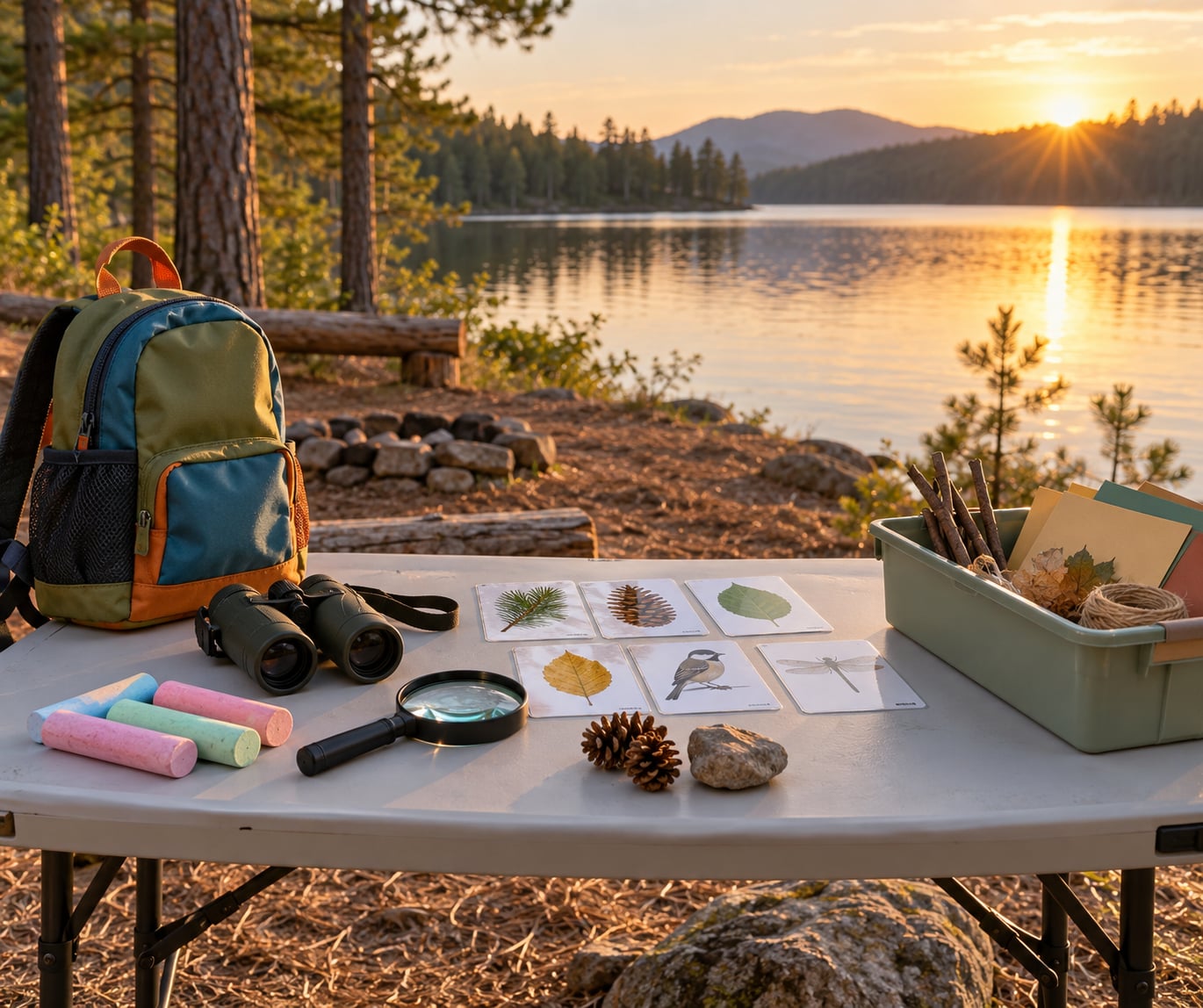
The activity bag. One small backpack per child with their own things inside. A five-year-old carrying their own bag feels capable, and a bag that belongs to them gets used instead of fought over.
- Familiar favorites: two or three things they know cold from home
- One craft bin: paper, washable markers, stickers, tape, a few pipe cleaners
- Nature kit: binoculars, a magnifier, a small field guide, a notebook for sketching
- Sidewalk chalk or washable paint markers for pavement and site surfaces
- A quiet bin: stickers, magnetic tiles, a compact puzzle, a deck of cards
- Movement gear: a soft ball, a flying disc, a jump rope
- Comfort items from home: one stuffed animal or blanket, worn in
- A rain-day duffel that stays packed in the vehicle
Child-safe navigation tools. A whistle on a lanyard, a bright bandana per kid so you can spot them in tall grass at dusk, and a headlamp for each child old enough to walk to the bathroom after dark. These are the items you will be most grateful for, and they cost a few dollars each.
Backup entertainment. The rain duffel needs new content, not the leftovers from the craft bin. Audio stories downloaded before you leave, a magnetic puzzle, sticker books, and a deck of cards are enough to cover a full wet afternoon with a toddler and an eight-year-old.
A game list your older kids run. Write three games on an index card and hand it to the kids who claim to be too old. Teenagers engage far more readily when they choose and lead instead of being assigned something.
Step-by-Step: How to Keep Kids Entertained at a Campsite
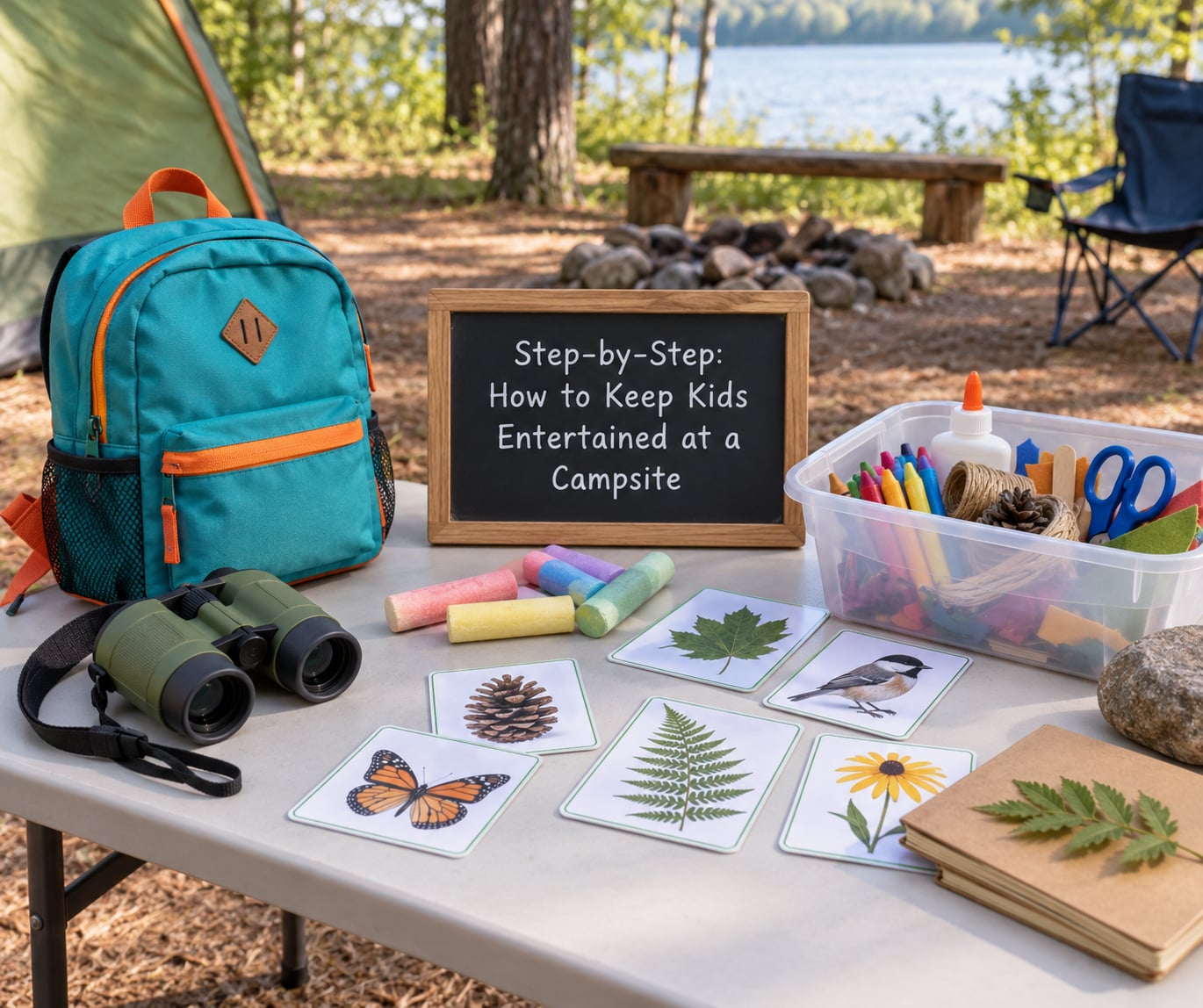
The seven steps below build a week of campsite entertainment without turning your trip into a schedule. Most families use them in order once, then improvise from there.
1. Build a Simple Daily Rhythm
Camping days go better when they have a few fixed points and lots of space between them. Anchor breakfast, lunch, free play, dinner and bedtime. Skip the rest.
A full color-coded itinerary is a trap at a campsite. Weather changes it, kids nap when the plan says they shouldn’t, and you end up refereeing a schedule instead of camping. Two anchors in the morning plus two in the afternoon usually holds a trip together.
Give kids two choices per transition rather than an order. “Chalk or scavenger hunt?” gets a yes far faster than “We’re doing the scavenger hunt now,” and it takes about four seconds to deliver.
Leave one wide-open block each day with nothing assigned. Unstructured play is what parents underestimate and kids remember most — digging, building a fort out of chairs, inventing a game with no rules. Our rule is that nothing gets scheduled between 10am and noon except meals.
2. Pack Familiar and New Activities
Split what you pack into four buckets so the trip does not lean on a single idea. Familiar favorites anchor the arrival, new choices keep day three from sagging.
- Familiar favorites: two or three things they already love. These carry the arrival-to-dinner window, the hardest stretch of the day.
- Portable learning: bird guide and binoculars, a scavenger hunt you printed at home, a nature bingo card, a cooking task at camp.
- Creative projects: pinecone animals, painted rocks, painted sticks, a group mural on a scrap of cardboard.
- One or two genuinely new items: a new card game, a kite, a metal detector, a waterproof puzzle.
Pack fewer toys than you want to. A bag that fits in one hand forces a choice, and choice is what keeps kids playing past the first twenty minutes. Leave room in the vehicle for the stuff you will buy or pick up on the way, usually a kite or a second ball.
Save screen-free audio for evenings, not as a default. Download a few story sets before you leave home because campsite signal is unreliable, and treat them as the wind-down, not the daytime filler.
3. Create a Nearby Nature-Scavenger Hunt
A scavenger hunt works best when it stays inside a boundary you set out loud. Walk the site first, note what is reachable, then write a list your children can actually finish.
Adjust the list by age. A two-year-old can look for two things, and finding them fast matters more than finding everything. An eight-year-old can take on twelve items plus a counting challenge. A teen might prefer to lead the hunt rather than be handed a list.
- Toddlers and preschoolers: find a pinecone, find a smooth stone, find something yellow, find a leaf bigger than your hand.
- Ages 4 to 7: five birds, three different bark textures, an animal track, a flower, a seed pod.
- Ages 8 to 12: find a tree with roots above ground, spot three kinds of insect, match a bird to its sound, find ten things of the same color.
- Teens: identify and photograph five plants using a field guide, log the weather at three set times, map the site.
Give out the finish line as soon as the list goes out. Kids hunt harder when the reward is immediate: five minutes of the adult’s choice of activity, or choosing the next game for everyone.
Keep it noncompetitive where you can. First-to-finish turns a nature walk into a race, and a race at a campsite with sticks and rocks is how injuries happen. Keep the collected items, leave live creatures and campground plants where they are, and pack out everything you unpack.
4. Set Up Easy Screen-Free Games
The best campsite games need nothing from home. Everything below uses the site itself: pavement, trees, rocks, a wall, a stick, a ball.
- I Spy: one player names something in view with a clue, everyone else guesses. Works at any age and needs no setup.
- Follow-the-leader: moves get more ridiculous as the afternoon goes on. Good for toddlers and mixed groups.
- Campsite bingo: a grid with ten campsite events: a fire built, a fish spotted, a bird named, a tent pitched, a cloud shaped like something.
- Find five in a minute: everyone picks an object category — leaves, rocks, yellow things — and races to collect five. Fast, quiet, easy to reset.
- Animal charades: no cards needed, just guessing from a nod. Good in a tent with the rain coming down.
- Rock skipping and log jumping: the classic lakeside contests, with a clear distance limit on the log.
- Nature hide-and-seek: hide behind trees and boulders instead of counting to thirty. Extremely popular with children five and under.
- Tennis ball bocce: a soft ball and a couple of cheap foam balls, with an empty water bottle as the jack.
- Boundary tag: agree on a set, tag everyone outside it. Burns energy without running into the road or the water.
Match the game to the group, not the other way around. A mixed group of two, six and eight works best with something everyone can attempt without losing constantly — think I Spy, nature hide-and-seek, and a campsite bingo they share.
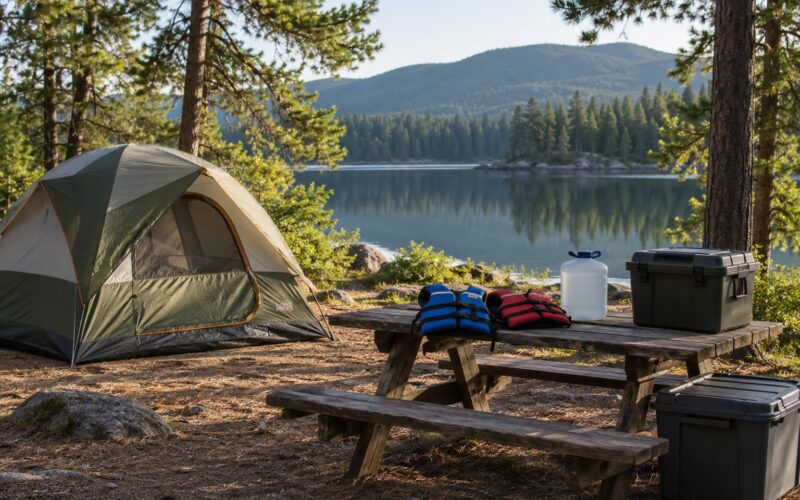
On a lake site, water play fills hours by itself: skipping stones, sand forts, a floating ring game, or paddling together in a canoe or on a paddleboard. Anything on the water goes with a life jacket and stays within the site rules. If the campground restricts swimming, treat the shore as a fishing and wading spot instead.
Build one big game into the middle of the day and let it run long. A water balloon fight or a big scavenger hunt takes an hour and does the work of three small ones, which matters because setup time is where most days actually go.
5. Plan Creative and Hands-On Projects
Campsite crafts fail when they need scissors, glue and a table you do not have. Choose projects that survive a picnic table, a folding chair and a patch of grass.
- Painted rock collection: one rock per person, acrylic paint from a small bottle, a rinse in a water bottle. They keep the trail home.
- Pinecone creatures: pinecones, a few dry-cleaned berries or bits of craft fluff, a finger of glue. Younger kids just stack and glue pinecones into piles.
- Campsite mural: one big piece of cardboard on the picnic table, everyone contributes one section. Best with a mixed-age group.
- Nature rubbings and bark prints: paper and wax crayons pressed against bark and rocks. Fits on a clipboard.
- Painted camp flag or stick markers: a stick and a strip of cloth or paper, painted with washable markers and tied to a backpack.
Give every age its own job in a group project. The three-year-old glues, the eight-year-old cuts shapes with a blunt pair of travel scissors, the teen paints the lettering. Nobody stands around waiting to be told what to do.
Set up crafts at a folding table or the picnic table, never on a tent floor. Grit finds everything you own, and a camp with a designated messy zone stops being a problem.
6. Build a Rainy-Day Backup Plan
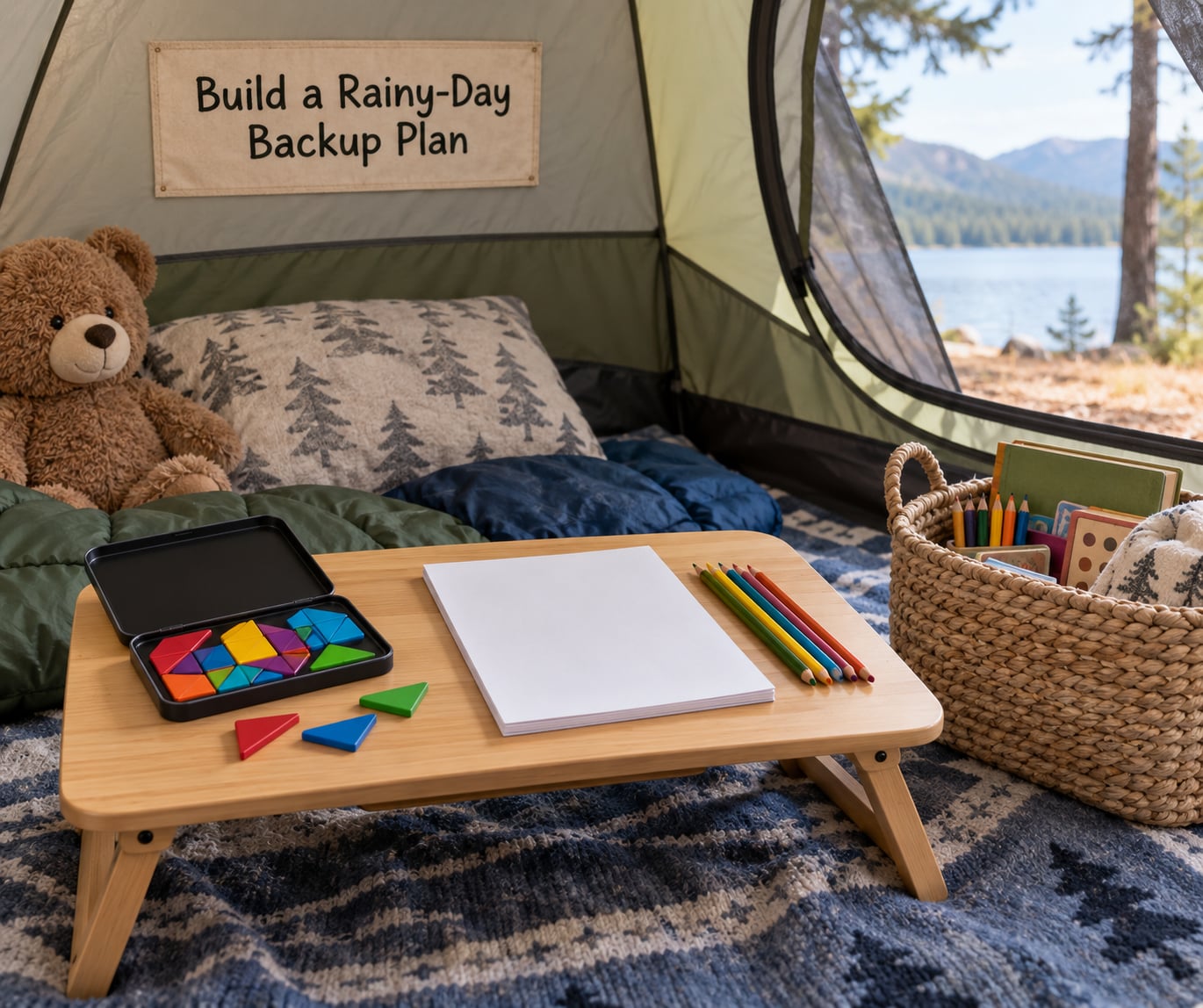
Rain does not ruin a camp day when the backup is already open. Rainy day plans live in the vehicle, not in your memory during a downpour.
Inside the tent or car: magnetic tiles and a compact puzzle, paper and pencils, sticker books, a deck of cards, a card game that works two players, audio stories, and sleeping bag naps for the small ones.
Cooking-based learning: let one child own breakfast. Measuring, timing and heat safety give a wet morning a purpose, and the result gets eaten. Dough or pancakes work well for a group.
Inside the car when it is not raining yet: a scavenger hunt of a different kind — identify trees, spot birds, log weather changes. Twenty minutes gets kids through the worst of a storm front.
Keep the quiet bin genuinely quiet. Loud backup activities defeat the purpose, and a tent with a nine-year-old doing a puzzle in the dark at 9pm is a hard reset. Save the high-energy stuff for once the sky clears.
Rainy days at a lake site are often the best fishing of the trip. That is a reasonable trade: wet hands for a few hours beats two adults managing cranky boredom on a tarp.
7. End the Day with a Calm Wind-Down
Most campsite meltdowns happen at 8pm, not 2pm. Wind down in a fixed order so the transition stops being a negotiation.
A short sequence works: wash up, one story, then lights out in that order every night. Keep a bedtime checklist on a card by the tent — clothes in the bag, water bottle filled, teeth brushed, stuffed animal located — so the routine is visible and the arguing stops.
Outside, stargazing takes ten minutes and feels like an event. Lie on a blanket and ask them to find the Big Dipper or the North Star first, then let them hunt. Campgrounds with no light pollution show you more stars than a kid expects, which is usually the moment they go quiet on their own.
Ask one reflection question at dinner: what was the best thing you found today, or what should we do again tomorrow. It takes twenty seconds and it gives the evening a shape instead of a drift.
Early risers are the other sleep problem. Agree on a wake-up rule the night before — nobody leaves the tent alone before breakfast, and there is a book or puzzle in the sleeping bag — so the 5:30am shift does not turn into a wake-up-the-whole-camp situation.
Common Mistakes
Packing entertainment like you are moving house. More toys means a longer unpacking and a bigger cleanup, not a happier child. Cut it to one bag each and let the campsite supply the rest.
Filling every minute. A packed schedule produces a group that is exhausted by day two and fights bedtime every night. Plan two anchor points per half day and leave the rest wide open.
Expecting one activity to suit a two-year-old and a twelve-year-old. Pick a shared activity for together time and run parallel activities for the rest. That is normal family camping, not a failure of planning.
Ignoring campsite rules and site boundaries. Show the family the site boundaries on arrival, then the neighbor’s site, the road and the water. Most campsite mishaps are boundary confusion, not wildness.
Relying on electronics. A tablet on a weak signal is a worse plan than a bad one — it runs out of downloads halfway through. Bring offline games if you plan to use one, but treat it as a scheduled item, not an opening bid.
Ignoring weather. Check the forecast each morning and keep the rain duffel somewhere you can reach it from the tent without unpacking. Assume you will need it once on a three-night trip.
Two extra habits pay off more than any gear. First, give kids real camp jobs: collecting firewood, filling the water jug, washing dishes, hanging the food. Chores that a kid owns read as play, and they remove the sense that camp is something happening around them.
Second, put something on the agenda for the ten minutes your tent takes to pitch. A folding table with a coloring sheet and a chalk line drawn on the driveway covers setup, and pack-down gets a scavenger hunt at trash time. Those two windows are where the 5pm crankiness comes from.
If you camp with other families, hand out jobs rather than activities. Each family owns one block of the day, which spreads supervision and gives kids something social to do without an adult running it.
Frequently Asked Questions
What activities keep kids entertained at a campsite without screens?
Pack four kinds of activities and rotate them. Familiar favorites cover the arrival window, nature exploration fills the middle of the day with no gear at all, camp jobs like firewood and dishes give kids ownership, and screen-free evening options such as stargazing or audio stories handle wind-down. Free campsite games like I Spy, animal charades and nature bingo need nothing but the site itself.
What can kids do at a campsite when it rains?
Keep a rain duffel in the vehicle with a quiet bin: magnetic tiles, a compact puzzle, paper and pencils, sticker books, a deck of cards and downloaded audio stories. Let one child own a simple breakfast for cooking-based learning. At a lake site, rain often means better fishing. Save loud group games for when the sky clears, since they are hard to wind down from inside a tent.
How do you keep children entertained at a campsite with different ages?
Run parallel activities instead of one shared program. Set a base game everyone can attempt, like I Spy or a nature hide-and-seek, then give older children a job within it: leading the scavenger hunt list, timing the water balloon fight, or naming the birds the younger ones are spotting. Shared time first, split time second, and rotate which age leads.
What games are safe and easy for a busy campsite?
Pick games that stay inside a boundary you walk out loud on arrival: I Spy, follow-the-leader, campsite bingo, find five in a minute, animal charades and boundary tag. Avoid tree climbing, chasing games near roads or water, and tag games that cross into neighbouring sites. Skip rock skipping on slippery lake rocks, and keep every water activity within the site rules with a life jacket on.
How can parents prevent kids from getting bored while camping?
Boredom shows up first in the arrival-to-dinner window, so plan that stretch before you leave home. Give two choices per transition, keep one activity bag per child, and check the forecast each morning so the rain option is already packed. Giving kids camp jobs they own, and leaving one wide-open block of the day unplanned, removes most of the friction.
Should children be allowed to use screens at a campsite?
It works best as a scheduled item rather than a default, because weak signal turns a screen into a dead end halfway through a game. If you allow it, download offline games and audio before leaving home and pick a time window, such as the drive or the first hour at site. Screen-free days work well for younger kids, while teens often need some device time to accept the trip.
Conclusion
Keeping kids entertained at a campsite comes down to a system, not a supply: a loose daily rhythm, four buckets of activities, real camp jobs, clear boundaries and one rain plan that lives in the vehicle. The campsite itself is the toy — pavement, trees, rocks, water and a fire do most of the work.
Before you pack, choose two familiar activities for the arrival window, one outdoor activity that needs no gear, and one weather backup. Put them in one bag each and start there. Everything else on this list can wait for trip number two.