Knowing how to pack for a first camping trip is simpler than most checklists make it sound: you need shelter, a sleep system, food and water, layered clothing, light, and a small safety kit, and that is genuinely it. Most beginners overpack, not underpack. Set aside about an hour the week before, work through the categories below in order, then set your gear up in the backyard or living room to find out what you actually forgot.
Table of Contents
- 1What You Need
- 2Step-by-Step: How to Pack for a First Camping Trip
- 31. Check the Forecast, Camp Rules, and Trip Length
- 42. Pack Shelter, Sleeping, and Lighting Essentials
- 53. Choose Clothing and Footwear for Changing Conditions
- 64. Pack Food, Water, and Camp Kitchen Supplies
- 75. Assemble a First Aid, Hygiene, and Safety Kit
- 86. Organize the Bag and Do a Practice Setup
- 9Common Mistakes
- 10Frequently Asked Questions
- 11What should a beginner bring when camping?
- 12What do most people forget to pack for camping?
- 13Should I rent or buy camping gear for my first trip?
- 14What should I pack for camping with kids?
- 15Can I camp in the rain with a tent?
- 16How do I keep food from animals at a campsite?
- 17Conclusion
What You Need
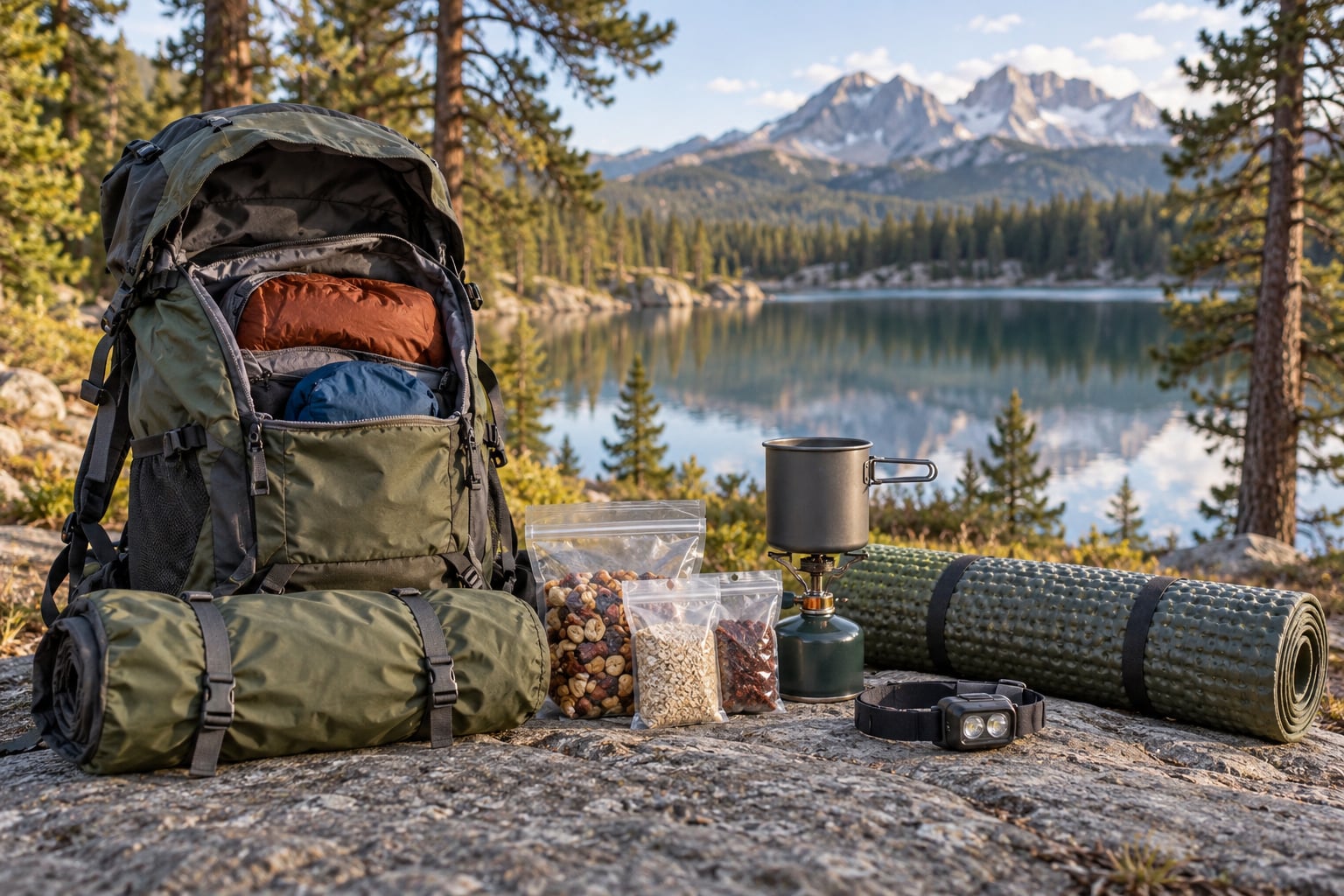
Beginners do best when they pack into categories instead of one long list. Eight buckets cover almost every camping trip, and you check them off one at a time rather than staring at a hundred-item checklist.
- Shelter: a tent or tarp, stakes, and a groundsheet
- Sleep: a sleeping bag, a sleeping pad, and something for your head
- Light: a headlamp, plus a second light source
- Food and water: meals, storage, and a way to carry or treat drinking water
- Clothing: layers for daytime, nighttime, rain, and insects
- Kitchen: a stove or no-cook setup, cookware, and a cleanup kit
- Safety and hygiene: a first-aid kit, medication, sun and bug protection, toiletries, and a trash bag
- Comfort and camp living: chairs, a table, a book or cards, and a map
Two things change your list before anything else: how many nights you are out and what the weather will do. A single warm night lets you cut hard. Three nights means duplicate clothing, more food, and a second fuel canister as a backup.
Weather sets the rest. Cold nights change your bag rating and add insulation. Rain means a reliable rainfly and sealed dry bags for clothing. Heat means extra water capacity, a light-colored tarp, and more sun protection.
Everything above is required to camp comfortably and safely. The last bucket is where comfort lives, and comfort is the first thing to cut when people need to save space or weight.
Step-by-Step: How to Pack for a First Camping Trip
Work through these six steps in order rather than opening a bag and throwing things in as you think of them. The order matters because the early steps decide what you need, and the last step is where you catch mistakes.
1. Check the Forecast, Camp Rules, and Trip Length
Before anything goes in a bag, check the forecast for the nights you will be out, not just the daytime high. Campsites are usually colder overnight than the nearest town, and a clear afternoon can turn into a cold night fast.
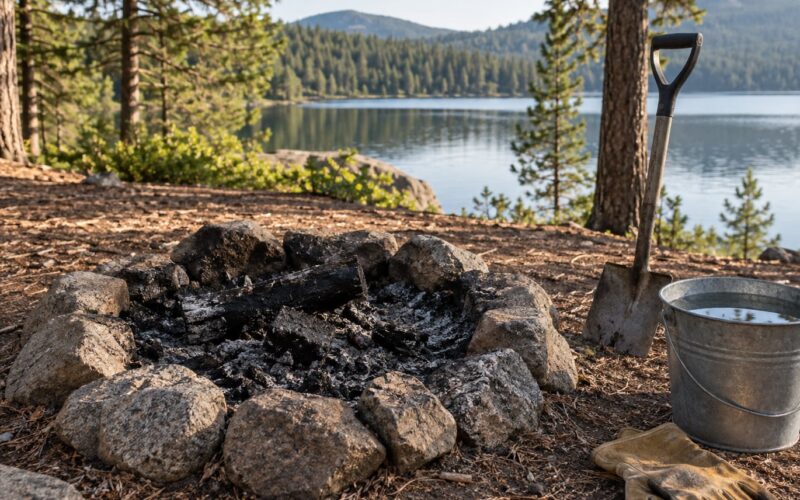
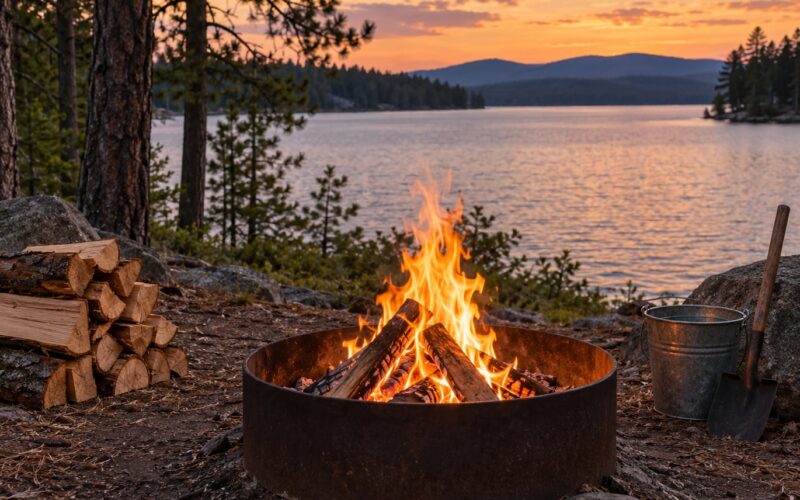
Then read the campground rules. They tell you whether a campfire is even allowed, whether food must go in a bear locker or a certified canister, and what facilities exist. A developed campground with flush toilets, potable water and picnic tables saves you real weight. Dispersed camping means you carry every one of those things yourself.
Count your nights. A weekend car-camping trip and a week in a tent are different packing jobs, and the second one is where first-timers get buried.
2. Pack Shelter, Sleeping, and Lighting Essentials
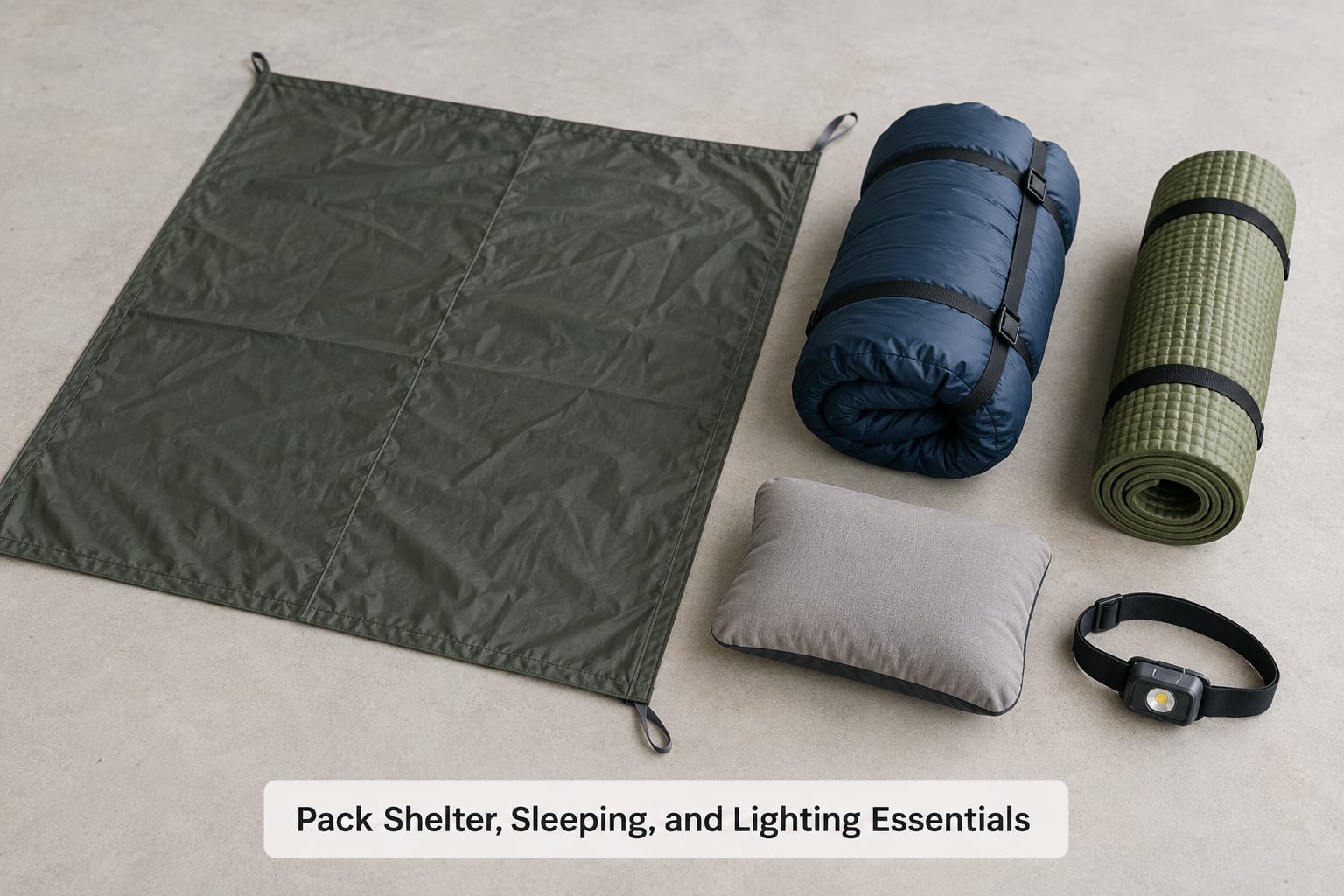
Your shelter is the anchor of the whole load. For a first trip, a freestanding tent is worth the extra packed weight, because it stands up on its own and you can put it together in the dark without fighting poles through fabric.
For sleep, treat the bag, the pad, and the ground cloth as one system. The bag keeps you warm in the air. The pad keeps the ground cold from stealing that warmth. Get the pad wrong and a good bag will still leave you shivering.
For warm-weather ground camping, a pad with an R-value around 3 handles typical summer ground. Cold ground pushes that number up, and a basic closed-cell foam pad is the cheap insurance if you will be on dirt or rock.
Add a simple inflatable pillow or a stuff sack you can wedge under your shoulders. Then pack a headlamp with a red-light mode, a spare battery, and a small handheld light as backup. Headlamps fail in cold because their batteries lose capacity, so the spare is not optional.
3. Choose Clothing and Footwear for Changing Conditions
Pack layers instead of one heavy outfit. Camp days swing a long way, and you cannot predict exactly how warm it feels until you are standing in the sun at a site you have never seen.
- A moisture-wicking base layer for daytime and sleeping
- A mid-layer fleece or light puffy jacket for cool evenings
- An insulated outer shell and rain jacket for wind and wet
- A warm hat and a pair of gloves, because you will use them at breakfast
- Quick-dry pants or shorts for daytime and muddy trails
- One pair of camp shoes and one pair of trail shoes
Avoid cotton. It absorbs sweat, dries slowly, and stays cold overnight. The same puffy jacket that feels excessive in the afternoon is often the one you reach for at 5am walking to the restroom block.
People routinely bring far more footwear than they use. Two pairs per person is plenty for a beginner trip.
4. Pack Food, Water, and Camp Kitchen Supplies
Plan meals you can make half-asleep in the dark with one burner. Pasta, canned soup, foil-packet meals, sandwiches, and breakfast foods that need only boiling water all work. Plan one hot meal a day and keep the rest cold or no-cook.
Most campgrounds have potable water at a spigot, but verify it on the campground page or call ahead. If you are drawing from a lake or stream, bring tablets or a filter. A gallon jug per person per day is the usual planning figure, plus what you need for cooking and cleanup.
Your kitchen kit covers a stove, fuel, a lighter and backup matches, a pot or pan, a pot lid that works as a pan, utensils, a cutting board, a sponge, dish soap, and a basin for washing up. If you are not allowed a fire, bring a ready-to-eat meal plan instead.
Food storage follows the campground rules exactly. A hard-sided cooler only works where lockers are provided or where food must simply stay sealed and out of sight. Bear canister rules are not a suggestion, and a cooler’s worth of scent will pull wildlife from a long way off.
5. Assemble a First Aid, Hygiene, and Safety Kit
Buy a basic first-aid kit or assemble one yourself, then add the things that matter for your group: your personal medications, any allergy supplies, blister treatment, and a small emergency blanket.
Pack sun and insect protection together, since they live in the same pocket. Sunscreen, lip balm with SPF, and insect repellent all get used daily, and repellent is the single most forgotten item on beginner lists.
Bring a fire-starting kit that has two independent methods, such as a lighter plus waterproof matches. A pocket knife or multitool earns its space for tent repair and camp chores, and a small roll of repair tape solves more problems than most beginners expect.
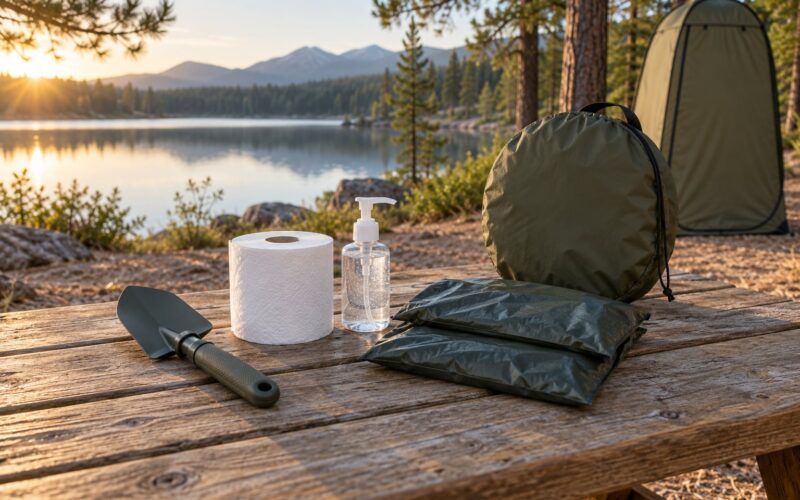
Carry toilet paper, a trowel, hand sanitizer, a small towel, and two heavy-duty trash bags. Pack out what you pack in, and never leave food scraps or wet towels at a site.
Finally, carry emergency information offline: a paper map, the site address, the ranger station number, and a charged phone with the contacts you would call.
6. Organize the Bag and Do a Practice Setup
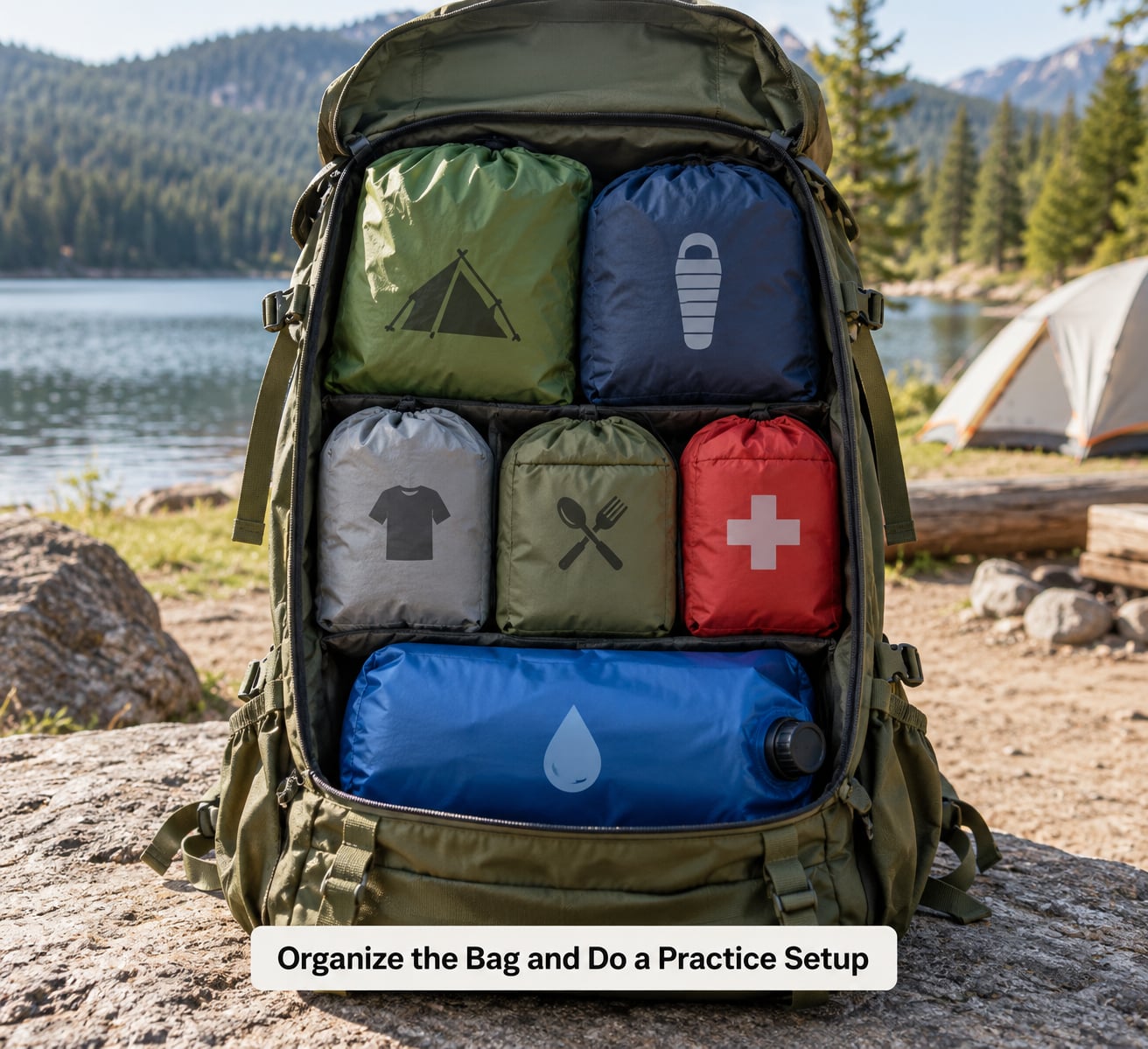
Packing cubes or clear bags turn a pile into an inventory. Use one per category, and label them so you can check a category without unpacking the rest.
Then set your own rules. Keep the headlamp, water, and one warm layer where you can grab them without digging. Keep the stove and fuel away from the tent body so a leak never touches your shelter.
Now do the part most people skip: the practice setup. Pitch the tent in a yard, driveway, or living room. Stake it out. Blow up the pad. Unpack the sleeping bag. Light the stove and boil a cup of water.
Write down what was missing or awkward. That list is worth more than any checklist, because it comes from your gear, your hands, and your habits. Do it two weeks out and again the night before, then remove whatever you added out of nerves.
Common Mistakes
Packing for a scenario that never happens. One warm weekend does not need four pairs of shoes and a full second wardrobe. Start from the actual forecast and add only for known conditions.
Packing for the daytime high and ignoring the night. Most cold nights trace back to one warm afternoon. Check the overnight low, rate your bag below it, and carry the fleece and hat you will not need until 11pm.
Trusting a single light source. One headlamp with a weak battery is the reason people fumble around the campfire in the dark. Carry a backup light you can reach without unpacking, and keep batteries somewhere warm with your clothes rather than in the cooler.
Bringing the wrong footwear for the ground. Flip-flops and smooth-soled sneakers do fine on a paved pad and fall apart on the mud that follows two days of rain. Trail shoes for walking, camp shoes for the fire ring, and dry socks in a sealed bag is the whole setup.
Storing food the convenient way instead of the legal way. A cooler is not bear storage. Where canisters are required, use them for anything scented, including condiments and trash, and check the current rules each trip since they change by season and site.
Packing the wrong kit. The most common omission is a camp stove, followed closely by tent stakes. Put both in the first bag you pack, then check the list against the actual load.
Skipping the practice setup. First-time tents often have a pocket that assumes you already know the process. Pitching yours at home takes twenty minutes and prevents the arrival-time scramble that ruins an evening.
Forgetting trash bags. They are the hardest thing to improvise. Pack two, keep them accessible, and use one as a wet-bag for damp clothing.
Rain is normal and a well-pitched tent handles it. Seam sealing, a footprint, and guy lines on all four sides matter more than waterproof ratings printed on a package.
Big items like tents and stoves are also normal to rent for a first trip, and borrowing works fine for one weekend. Bedding is the exception: buy the pad, since comfort and fit are personal and hard to judge briefly.
Set up the tent before dark, drink water while you still have energy, and keep the first night easy. Nobody expects a first camping trip to be perfect. You will still have packed well if you set up in daylight and slept warm.
Frequently Asked Questions
What should a beginner bring when camping?
A first trip needs ten things: a tent with stakes, a sleeping bag rated a little cooler than the forecast low, a sleeping pad, a headlamp with spare batteries, a shelter footprint, layered clothing, a first-aid kit with your medications, food for your number of nights, water and a treatment method, and a trash bag. Everything else, chairs, tables, games, a hammock, comes after those ten work.
What do most people forget to pack for camping?
The stove is the classic one, and plenty of people only notice when they open the food bin. Tent stakes, a lighter plus matches, a trash bag, insect repellent, sunscreen, and toilet paper are close behind. Sleeping bag liners and a backup light get missed too. Pack these last, right before you load the car, so they are fresh in your mind.
Should I rent or buy camping gear for my first trip?
Rent or borrow the tent, stove, chairs, and cooler for a first outing. They are bulky, stored awkwardly, and easy to buy later once you know what you like. Buy the sleeping pad and layers instead, because fit and comfort are personal and you will use them on every trip after this one.
What should I pack for camping with kids?
Pack more warm layers than you think, one comfort item per child, and familiar snacks. Choose a site with a restroom and running water, and check that the tent fits everyone plus gear without touching. Keep the first-aid kit accessible rather than buried. The most useful addition is a simple activity for the two hours after dark, because that is when everyone gets restless.
Can I camp in the rain with a tent?
Yes, and most campsites will see some rain during your trip. Pitch on higher ground, use the footprint, and stake out guy lines on all four sides so wind does not lift the rainfly. Keep clothing in dry bags, and swap wet socks and shoes for dry ones rather than trying to dry what you have. Rain is usually an annoyance, not a failure.
How do I keep food from animals at a campsite?
Read the rules for the specific campground first, because requirements differ by location and season. Where lockers are provided, use them every time, including for condiments and trash. Where canisters are required, use a certified canister for anything scented. At sites with no requirements, keep everything sealed in hard-sided containers and washed out of sight before you arrive.
Conclusion
Start by choosing your trip conditions, not your gear. Know the nights count, the overnight low, and the campground rules, then pack the core categories: shelter, sleep, clothing, food, water, and safety. Finally, set the whole thing up at home once before you leave. That single practice run is what turns a nervous first camping trip into a good one.