Learning how to keep bugs out of a tent comes down to three layers: seal every physical opening, treat the tent and your gear with permethrin, and remove whatever is attracting insects in the first place. Most campers only do the third one, spray themselves at dusk, and then wonder why something is still buzzing against the zipper at two in the morning. Set all three up at once and the tent does most of the work for you.
Bugs get into tents through a short, boring list of openings. A door zipper that never made it all the way down. A gap where the rain fly meets the groundsheet. A torn panel of mesh. A bathtub floor corner that lifted when you pitched the tent on soft ground. Fix those four points first and you have solved most of the problem before you unpack a single sleeping bag.
The rest is campsite choice and behaviour inside the tent, and on lake trips that part matters more than people expect. Mosquitoes breed in still water, so a launch ramp or a marshy shoreline is the worst pitch you can pick in the buggy season.
Table of Contents
- 1What You Need
- 2The Nine-Step Bug-Proof Setup
- 3How to Choose a Bug-Free Campsite
- 4Inspect and Clean the Tent Before Setup
- 5Set Up the Tent on Protected Ground
- 6Seal Gaps and Close Entry Points
- 7Keep Bugs Out of a Tent With Screens and Mesh
- 8Apply Repellents Before Dark
- 9Use Light, Fan, and Clothing Strategies
- 10Keep Food, Trash, and Sweat Away
- 11Do a Final Nighttime Check
- 12Common Mistakes That Let Bugs Into a Tent
- 13What Does Not Work
- 14Frequently Asked Questions
- 15What is the best way to keep bugs out of a tent?
- 16Will a tent fan keep mosquitoes away?
- 17Should I spray insect repellent on my tent?
- 18How do I stop flies from getting into a tent?
- 19How can I keep bugs out of a tent with a baby or young child?
- 20Why are bugs still getting inside my tent?
- 21Conclusion
What You Need
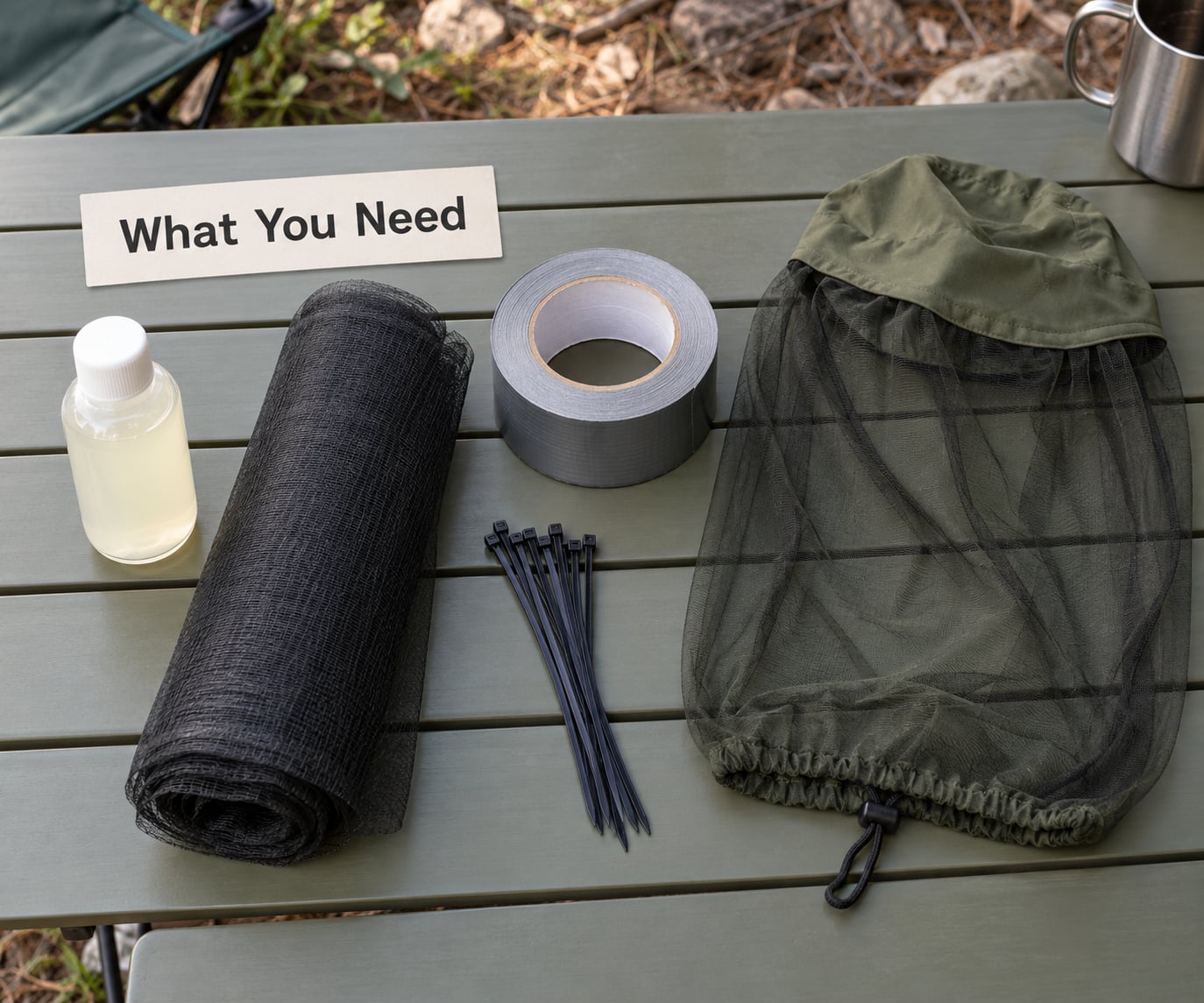
Most of this is cheap and light. The only item that genuinely cannot be substituted is something to close a hole with, because a treated tent with an open panel is just an expensive sieve.
| Supply | What it fixes | Essential or upgrade |
|---|---|---|
| Patch kit, duct tape, zip ties | Torn mesh, split seams, loose guylines, lifted floor corners | Essential |
| Permethrin fabric treatment | Insects that land on the tent or your clothing | Essential in buggy country |
| Picaridin or DEET | Bites on exposed skin, not fabric | Essential |
| Fine no-see-um netting or a small mosquito net | Small biting midges that slip through standard mesh | Essential where no-see-ums live |
| Unscented soap and a wash basin | Removes the sweat and soap scent that draws insects | Essential |
| Small battery fan | Moves air so mosquitoes struggle to reach you | Upgrade, best in still air |
| Head net | Mosquitoes and midges around the face while you sleep | Upgrade, worth it in heavy conditions |
| Repellent lantern or plug-in repellent | A low-area buffer around the tent door | Upgrade, never a substitute for sealing |
One clarification before anything else, because people mix these up constantly. Skin repellent and fabric treatment are not interchangeable. DEET and picaridin go on skin. Permethrin goes on fabric, and it kills insects on contact instead of repelling them, which means it does nothing to an insect that never lands.
| Treatment | Where it goes | Best at | Lasts |
|---|---|---|---|
| Permethrin | Clothing, tent fabric, screens, gear | Anything that flies or lands on the tent | Several washes, then re-treat |
| Picaridin | Exposed skin | Mosquitoes and biting midges | Several hours |
| DEET | Exposed skin | Reliable mosquito and tick protection | Longer at higher concentrations |
| Oil of lemon eucalyptus | Exposed skin | Light duty, short trips | A couple of hours |
| Citronella candles | Outside, within a few feet | Almost nothing at distance | Minutes |
The Nine-Step Bug-Proof Setup
Work through these in order. The first four take about twenty minutes and decide whether the rest of the trip is comfortable.
How to Choose a Bug-Free Campsite
Look at the ground before you look at the tent. Campsites near standing water, marsh edges, drainage channels and old tree wells carry the heaviest mosquito pressure, and so do sites under dense low growth where the air sits still. Walk ten paces in a circle and pick the highest, driest, most open pitch with the most airflow.
On a lake trip, add two rules. Stay back from the shoreline and the boat launch ramp where possible, since the water is the whole reason the mosquitoes are there, and avoid pitching right beside reeds and cattails. Check whether the site is on a current local mosquito advisory before you commit to two nights there.
You also want to know what is behind the tent at head height. Ants follow scent trails straight to a tent, and raccoons and bears are far more interested in your food than in you.
Inspect and Clean the Tent Before Setup
Shake the tent out at home or at the truck. A tent that spent the last trip in a garage is carrying spiders, carpet beetles and a family of ants, and pitching it in that condition starts you behind.
Then hold it up to the light and check the mesh panel by panel. Run a finger along every seam looking for holes, and pay attention to the areas nobody looks at: the mesh behind the gear wall, the ceiling panel, the strip under the bathtub floor lip and the seam where the floor meets the wall. Hold a light behind the fabric and you will see everything a bright morning would have brought in anyway.
Patch every hole before it goes up. Mesh tape or a square of no-see-um netting held with fabric tape works better than tape alone, which peels off after a few trips in the sun.
Set Up the Tent on Protected Ground
Campsites move around. Walk the pitch for rocks, sticks and pine cones first, because a ground sheet with a sharp edge under it cuts the bathtub floor and creates the exact gap you are trying to avoid. Lay the groundsheet or footprint flat and give it a generous overlap under the tent walls.
Stake the tent first and the guylines second, pulling the lines taut enough that the fabric pulls away from the ground rather than lying on it. Every place the tent fabric rests against soil is a place bugs walk in under.
If the ground is wet or the site is low, choose a sheltered pitch that is not a hole full of decaying plant matter, and check for nests before you clear brush. Disturbed anthills and wasp nests send a colony straight at you.
Seal Gaps and Close Entry Points
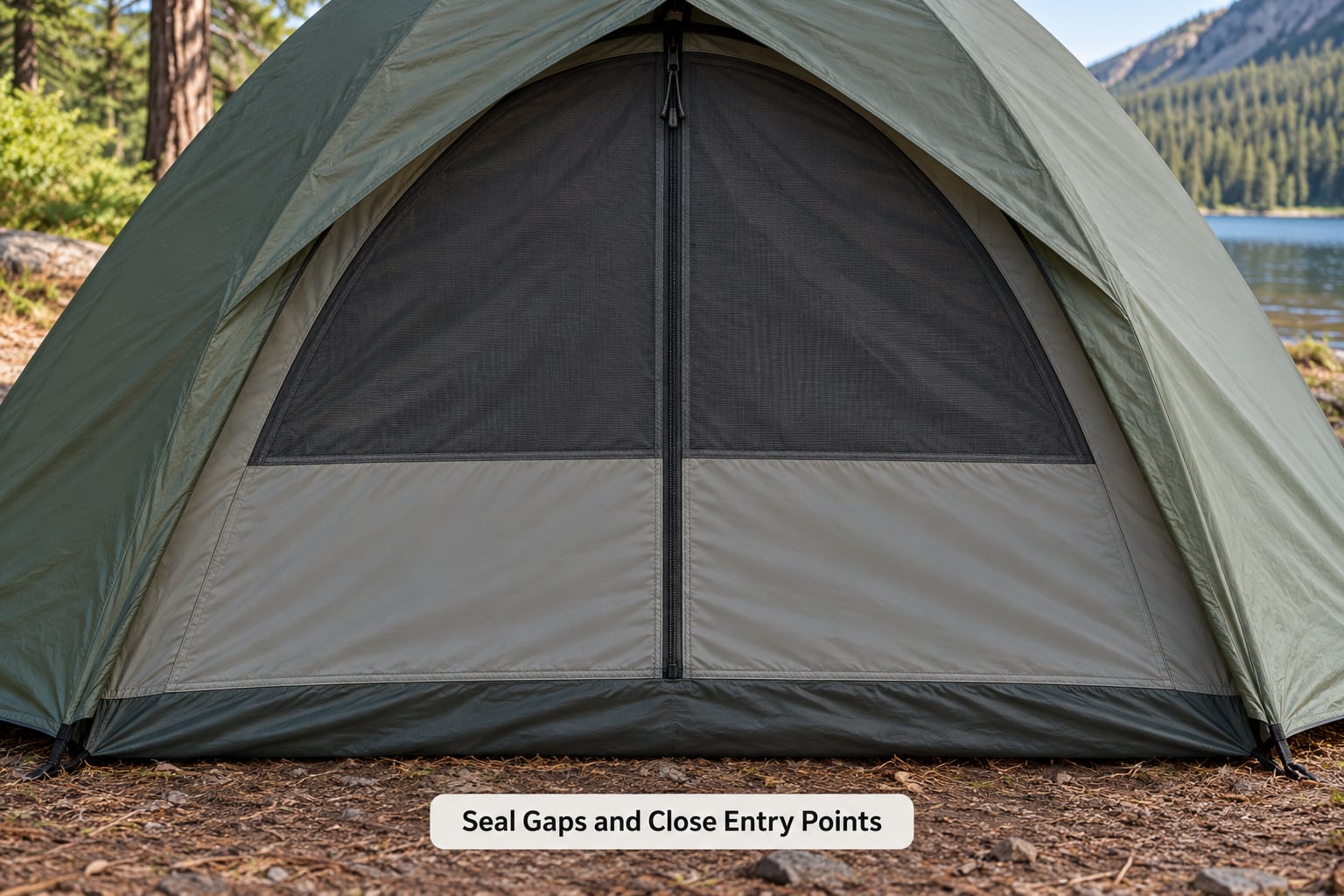
This is the step that does the most work. Pull the rain fly all the way down so it reaches the ground on every side, then weigh the corners with rocks or stake them out. If the fly ends halfway up the wall, you have built a ramp.
Check the four breach points in order. The door zipper runs to the ground, not to a fold. The bathtub floor is tucked or staked so no corner can lift. The mesh has no holes. The gap between fly and floor is closed along its whole length.
Zip ties and a short length of velcro close small gaps cheaply, and velcro is worth checking every night because hooks lose their grip once they get dusty. Do not leave a roll-up door flap open because you left in a hurry. One open flap is a highway.
Keep Bugs Out of a Tent With Screens and Mesh
Keep mesh zipped whenever you are not walking through it, including the upper mesh vents on hot nights. Airflow that comes through a wide-open mesh panel is airflow with bugs attached to it.
Be aware of what your mesh can and cannot hold back. Standard mosquito mesh stops mosquitoes and most flies, but biting midges are small enough to pass through some of it. For no-see-um country, look for netting rated around 180 holes per square inch, or hang a fine mesh panel inside the door or over your sleeping bag.
Then handle the door as a two-stage operation. Open the vestibule flap, unzip the inner door, hold both fully clear of the frame, and wait about thirty seconds while the insects that were hovering at the entrance drift away. Then step in and close it behind you in one motion. Forum campers say this small pause removes more bugs than any product they have bought.
Apply Repellents Before Dark
Start before it gets dark, because that is when activity peaks and it is much easier to apply product in daylight than by headlamp.
Put permethrin on the tent fabric and on your clothing. Follow the label dilution exactly, a common dilution for concentrates is one vial to roughly a quart of water, spray onto dry fabric outdoors, and let it dry fully before you pitch or sleep. Over-concentrated permethrin degrades nylon and polyester and can leave a tent that leaks, which is a poor trade for a bug problem.
Permethrin never goes on skin, and it is toxic to cats and fish, so keep treated fabric away from pets that will lick it and out of any water body. Then put picaridin or DEET on exposed skin and follow the label, thin coats first and reapply on schedule rather than re-spraying heavily. Apply sunscreen first and repellent second.
Use Light, Fan, and Clothing Strategies
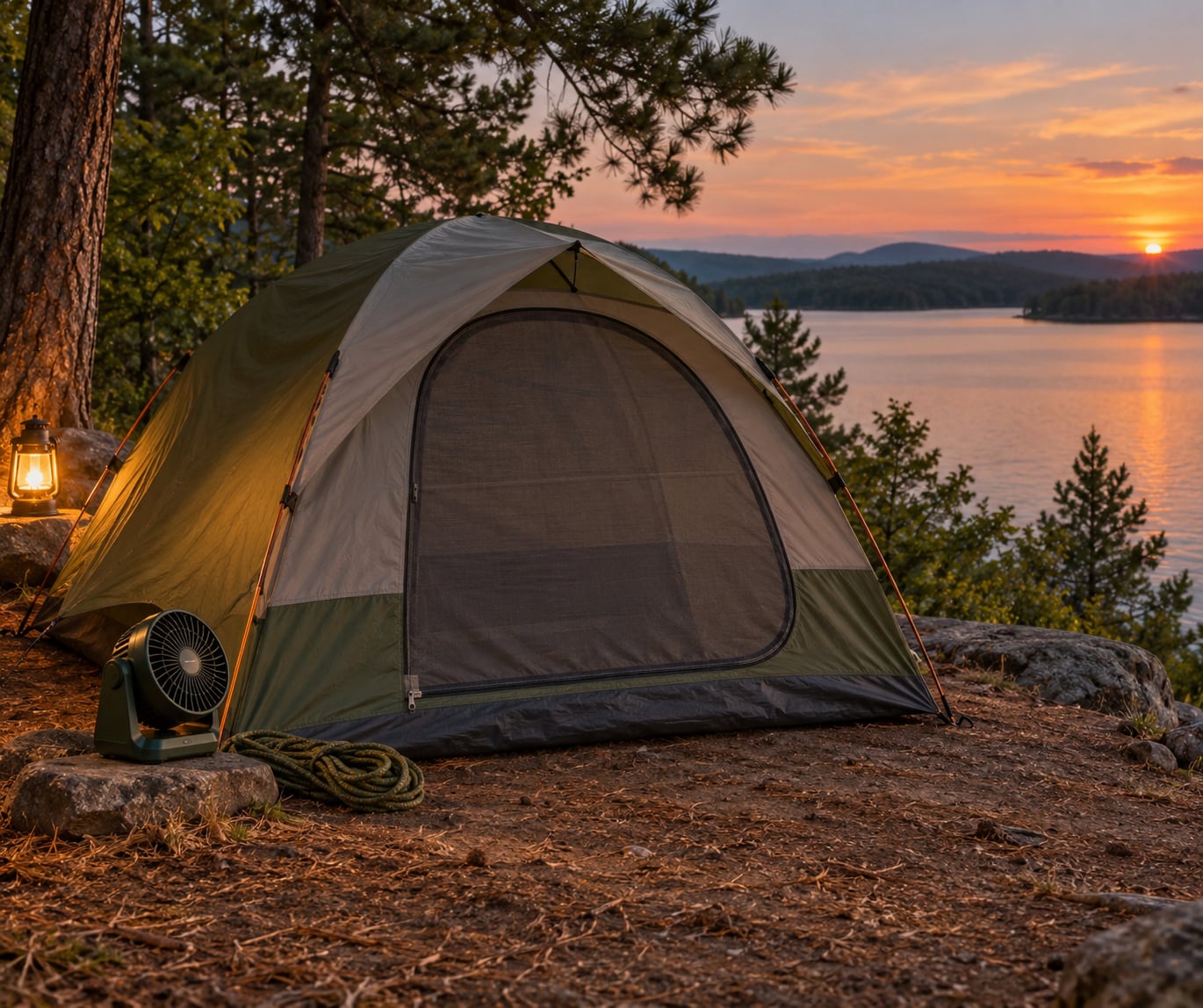
Mosquitoes navigate partly by light and are poor fliers in any moving air. A small battery fan pointed outward through the door or vestibule pushes them away from your face and buys you a few more hours. Larger setups reported on camping forums, a box fan with a screen over the intake, work on the same principle at camp rather than inside a tent.
For light, a warm-coloured lantern hung low and pointed downward attracts less than a bright white one pointed at the doorway. Inside the tent, keep lamps off or on low. It makes a difference more than most campers expect.
Clothing does more than many people give it credit for. Long sleeves, long trousers, socks over the trouser cuffs and a head net for sleep will protect you when the repellent wears off, which is always earlier than you planned. Light colours matter less outdoors than in a yard, but loose woven fabric is still harder for mosquitoes to reach through than a thin skin-tight layer.
Keep Food, Trash, and Sweat Away
Insects are hunting for two things inside your camp: food and you. Food is the one you can manage. Store everything in sealed containers or a cooler away from the tent, rinse eating surfaces after every meal, take trash out or hang it well away from camp, and never keep snacks in a tent pocket overnight.
Scented soap, scented detergent, deodorant and perfume pull insects toward the shelter from a long way off. Unscented products for the first two days of a trip make a measurable difference at a busy site.
Sweat is the third one and nobody plans for it. Insects find carbon dioxide, and hard exercise produces plenty of it, so a towel in the tent matters more than it sounds. Change out of a sweaty shirt before you get in and wash the skin that is not covered, which also cuts the mosquito attraction down.
Do a Final Nighttime Check
Run this walk-around once you have set up, and again after you close the door for the night. It takes two minutes.
Run your hand along the full length of the door zipper to confirm it is closed and the pull is seated at the bottom. Push the fly down where it has lifted. Check each floor corner and the groundsheet edge. Look up at the ceiling mesh and the mesh behind the gear wall in a flashlight beam, which reveals holes that daylight never shows.
Finally, listen. A hum that follows you around the tent is outside, and a hum that stays in one corner near the floor is inside. Confirm which one it is before you settle down, because finding the breach after dark with a headlamp is far harder than finding it in daylight.
Common Mistakes That Let Bugs Into a Tent
Almost every tent that fails to keep bugs out fails in one of a handful of predictable ways.
Leaving the door open. A propped-open flap or a door left unzipped during a bathroom trip accounts for most of the bugs in most tents. The fix is the two-stage open and close routine, and it works.
A rain fly that stops short of the ground. You have built a ramp straight to the sleeping bag. Weigh the fly corners down and check the gap along the entire edge, not just the corners.
Treat the tent once and never again. Permethrin fades with washing, sunlight and seasons, so a tent that worked last season may be doing nothing now. Re-treat when the water no longer beads on the fabric, and re-treat after washing the fly.
Expecting a treated tent to stop a swarm. Permethrin only works on contact. Insects that never land on the tent are unaffected by it, which is exactly why the campsite, fan and clothing layers still matter.
Skin repellent on the fabric. DEET and picaridin can damage tent fabrics and never belong on anything but skin.
Over-concentrated permethrin. Too strong a mix is the reason some campers end up with a faded fly that leaks. Follow the label and test on a hidden panel if you are unsure.
What Does Not Work
A few things get recommended constantly and do almost nothing. Citronella candles only affect insects within a few feet, for a few minutes, and there is usually far more air between the candle and you than that. Ultrasonic repellers have no reliable evidence behind them for outdoor use. Dryer sheets tucked in pockets have never been shown to repel mosquitoes outdoors. Vanilla extract, scented soaps and similar scent tricks attract rather than repel in many campsite conditions.
None of that makes the items bad. They just make them accessories. Layered protection is the whole idea: sealed tent, treated fabric, protected skin, clean camp.
If you want the short version to take with you, work the order in this article rather than shopping for another gadget. Inspect and patch the tent, pick a high dry pitch, treat and dry the fabric, close every entry point, then manage light, food and sweat inside. That sequence handles more types of bugs than any single product on the market.
Frequently Asked Questions
What is the best way to keep bugs out of a tent?
Start at the fabric, not the spray can. Check and patch every mesh panel and zipper, treat the tent and your clothing with permethrin, pitch on high dry ground away from standing water, then keep the door zipped and food sealed. Repellent on skin is the last layer rather than the first, because a treated tent stops insects long before a repellent stops bites.
Will a tent fan keep mosquitoes away?
A fan does not repel anything. It moves air so mosquitoes struggle to fly and pushes them away from the opening. Point it outward through the door or vestibule so airflow carries insects away from you. Forum campers report a large box fan with a screen on the intake works well at camp, but inside a tent a small battery fan is safer and far easier to run all night.
Should I spray insect repellent on my tent?
Skin repellent and fabric treatment are not interchangeable. DEET and picaridin belong on skin only and can damage nylon and polyester. What goes on the tent is permethrin, a contact insecticide, diluted exactly as the label says, sprayed on dry fabric and left to dry fully before you pitch. Never apply permethrin to skin, and keep treated fabric away from campfires.
How do I stop flies from getting into a tent?
Flies follow food and scent rather than body heat, so the fix is camp hygiene instead of repellent. Keep food and trash in sealed containers away from the tent, wipe the table and your hands, skip scented soap and deodorant, and keep the door zipped once you are inside. A fly that gets in usually leaves on its own, and a swatter near the sleeping bag handles the rest.
How can I keep bugs out of a tent with a baby or young child?
Put the child sleeping area in the centre of the tent and drape a fine mesh mosquito net over the cot or pad, tucked under the mattress on all sides. Children should not have repellent on their hands or face, so treat the clothing, the cot and the tent fabric instead, and follow the age limits printed on any repellent label. Ask your pediatrician before using repellent on an infant.
Why are bugs still getting inside my tent?
Nine times out of ten it is one of four openings: a door zipper left partly open, a gap where the rain fly meets the groundsheet, a torn or stretched mesh panel, or a bathtub floor corner that lifted when you pitched. Permethrin also fades after a few trips and washes, so a tent that worked last summer may be doing nothing now. Recheck all four points and re-treat the fabric.
Conclusion
Knowing how to keep bugs out of a tent is a layered job, and the layers do different work. Sealing the tent stops them entering, permethrin kills whatever lands on the fabric, and a clean camp with low light and protected skin removes the reason they came.
If you do one thing before the next trip, check your tent in daylight and hold it up to the light. Patch the mesh, treat the fabric and let it dry, then seal the four points and keep the door zipped. Most bad nights in a tent trace back to one of them.