To put out a campfire completely, drown it, stir it and feel for heat. Pour water over every coal, log and patch of ash until the hissing stops, mix the wet ash with a shovel so buried embers come to the surface, then hover the back of your hand over the ashes, the fire ring rocks and the ground around them. Everything has to be cool to the touch before you walk away.
A full shutdown takes 10 to 15 minutes for an ordinary campfire ring. Give it longer if you built a large fire, the ground is bone dry, or wind is gusting. The US Forest Service, the National Wildfire Coordinating Group and Smokey Bear campaigns all teach the same three-part method, because each step catches what the one before it missed.
No visible flame is not the same as no fire. Ash acts like insulation around embers that can stay hot enough to ignite dry brush for up to 24 hours, and one gust can bring a dead-looking ring back to life while you are packing the tent.
Table of Contents
- 1What You Need
- 2Water, Sand, Dirt, or a Metal Lid?
- 3How to Put Out a Campfire Completely: Step-by-Step
- 41. Stop Adding Fuel and Let the Flames Settle
- 52. Pour Water Over All Coals and Ash
- 63. Stir the Wet Ash and Exposed Embers
- 74. Add More Water Until Steam Stops
- 85. Check for Heat and Repeat as Needed
- 96. Leave the Area Clean and Cold
- 10Common Mistakes
- 11Tips for Different Campground Conditions
- 12Fire Pits, BBQs, and Wood-Fired Ovens Are Different
- 13Frequently Asked Questions
- 14What is the correct way to extinguish a campfire?
- 15How do I smother a campfire without water?
- 16At what point can you leave a campfire?
- 17How long does it take to put out a campfire completely?
- 18Can I bury the embers with dirt instead of using water?
- 19Is a campfire out when it is raining or freezing?
- 20Conclusion
What You Need
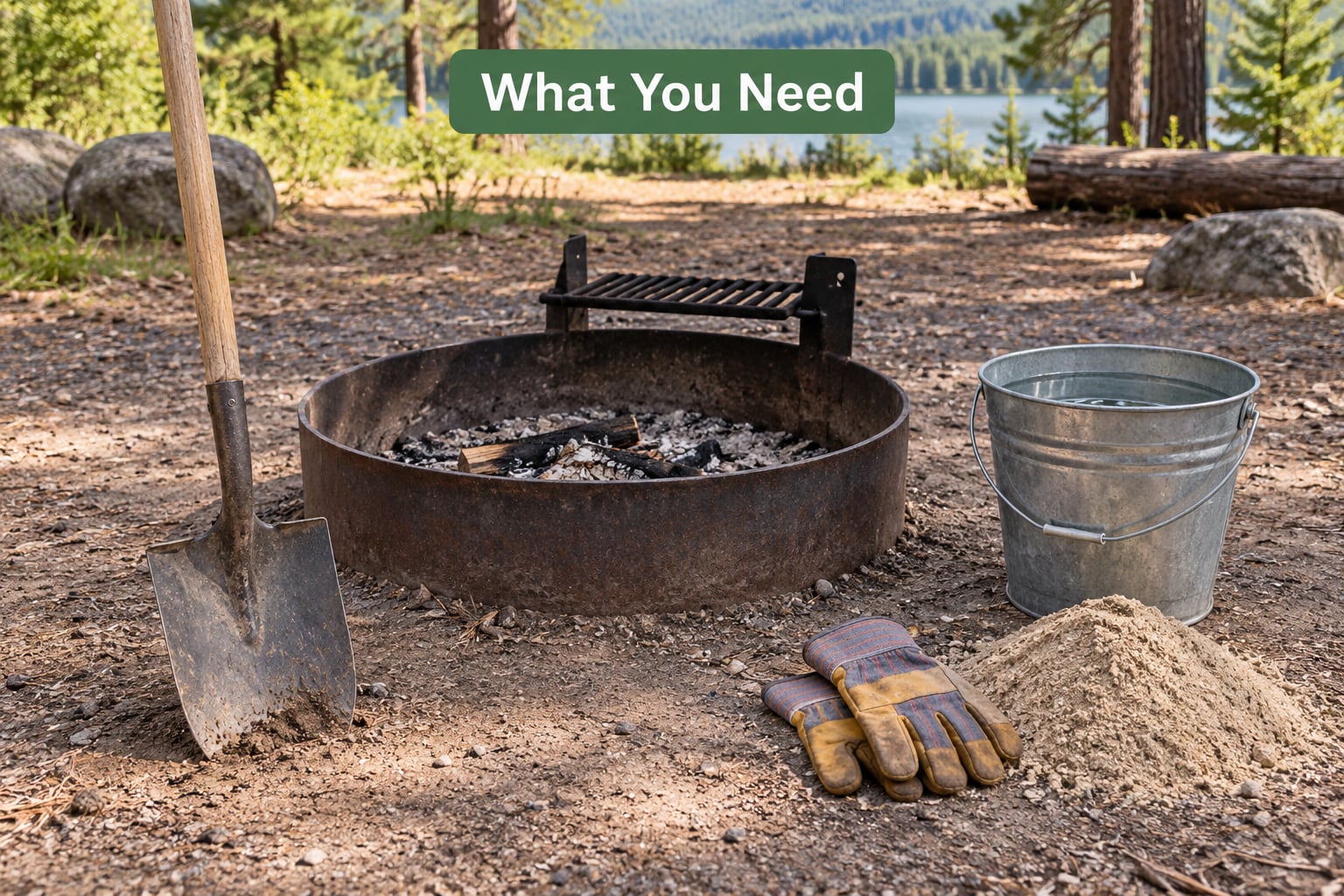
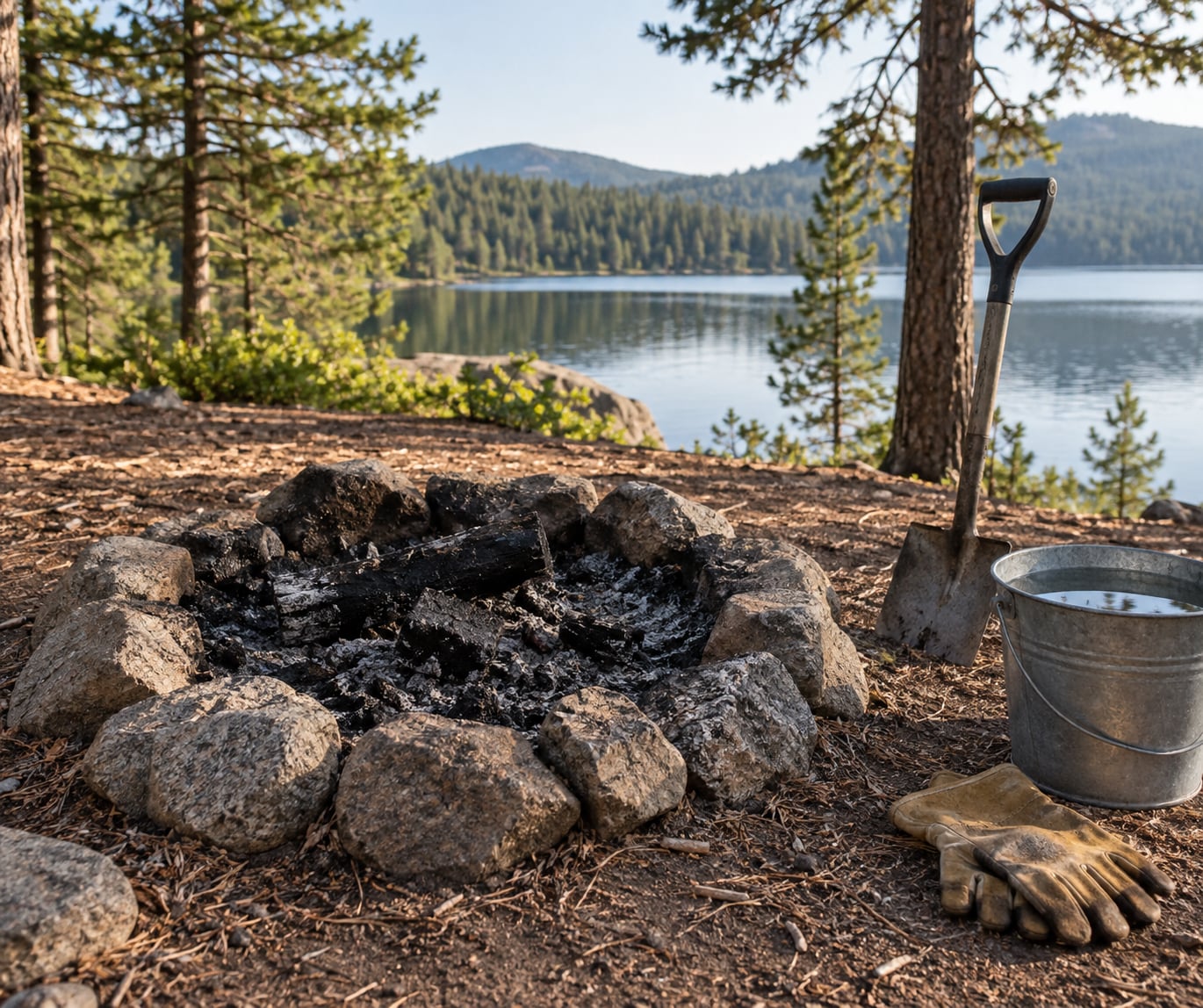
Everything here is cheap, light, and worth carrying in before you need it. Most campsites have a fire ring and sometimes a water spigot, but nothing else is guaranteed.
- Water. A bucket, a gallon jug, a camp sink, or a hose at the site. The fuller the better, because you will use more than you expect.
- A shovel or long metal stick for stirring and breaking apart ash clumps.
- Gloves that you can dunk in water, since your hand is the heat gauge at the end.
- Dirt or sand from the edge of the ring for a backup smother.
- A metal lid or snuffer if you brought a portable fire pit. Optional everywhere else.
A fire extinguisher belongs in the safety kit too, but treat it as a flare-up tool, not a shutdown tool. Chasing Class A extinguisher powder around your fire ring leaves a chemical mess that needs more water afterward anyway.
If you are camping somewhere without a spigot, refill every water container before you start cooking rather than after. In the desert and on dispersed public land, that means hauling the water to the ring first, because carrying a bucket back from a creek in the dark is how a lot of campfires stay lit.
Water, Sand, Dirt, or a Metal Lid?
Water kills fire fastest. It soaks the fuel, cuts off the combination of heat, oxygen and fuel that combustion needs, and it is the only option that reaches a hot ember buried under an inch of ash.
| Method | How it works | Watch out for |
|---|---|---|
| Water | Soaks fuel and steam-quenches embers on contact | Rusts an untreated metal pit; needs volume and repeat pours |
| Sand or dirt | Smothers by cutting off oxygen | Buried embers can insulate under the sand and cook for hours; compact it and check again |
| Metal lid or snuffer | Halts combustion instantly in a closed pit | Leaves a hot pit that needs hours to cool before moving or packing |
| Grass or green brush | Smothers with a dense mat | Can hold enough heat to dry out and ignite; never use dry grass |
Sand is the fallback when water is scarce, not a replacement. The usual campground wisdom among experienced campers is douse, bury, then douse again, because the first douse soaks the fuel, the dirt seals it away from oxygen, and the final douse soaks the dirt itself.
How to Put Out a Campfire Completely: Step-by-Step
1. Stop Adding Fuel and Let the Flames Settle
Push unburned sticks, logs and split wood away from the ring first, moving each piece along the ground rather than tossing it, so you do not fling embers into dry brush. Get the kids and the dog back a good 10 feet, then stop feeding the fire.
Let the flames burn down on their own until you have mostly embers and small flames. Dousing an open blaze scatters steam and ash in every direction and is less effective than waiting two or three minutes for the fire to collapse into coals you can actually soak.
2. Pour Water Over All Coals and Ash
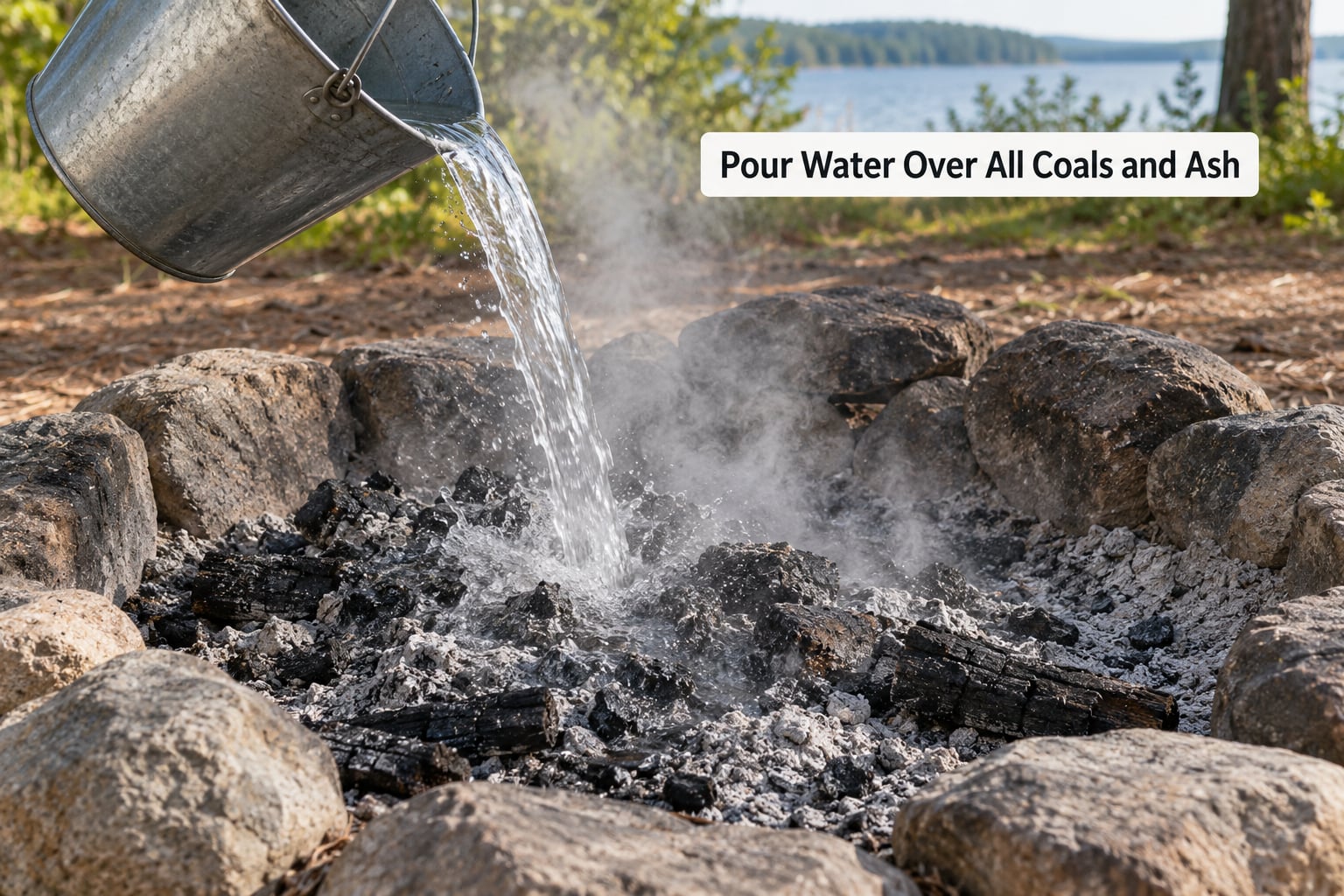
Stand upwind and pour slowly, starting at the far edge and working toward the near edge, so steam rises away from you. Cover every visible coal and log and every patch of ash, including the ring edges and the coals sitting underneath a half-burnt log where water running over the top never reaches.
Listen. Water hitting a live ember makes a sharp hissing noise, and you want that hissing to fade out completely. Keep pouring until the hissing stops, then wait a beat, because heat moving inside a wet log will bring it back.
3. Stir the Wet Ash and Exposed Embers
Break the fire apart with your shovel or stick. Turn every log, break apart ash clumps and scrape along the bottom of the ring, because ash is a decent insulator and a solid grey dome can hide a glowing core from the top while it stays hot inside.
Mixing wet ash with dry ash spreads the water through the middle of the fire bed. This step is what separates a fire that looks out from one that is out, and skipping it is the single most common reason a wildfire starts hours after the campers left.
4. Add More Water Until Steam Stops
Pour another round over the stirred bed, working slowly so you do not blast ash out of the ring. Add it in controlled amounts, watching for steam, and stop when the steam fades and the ash is dark and heavy rather than light and dry.
On dry sandy ground, be deliberate about where the runoff goes, especially near a shoreline, since ash and charcoal slurry carried into the water is both ugly and suffocating to fish. Enough water to kill the fire is not the same as enough to wash your fire ring down the bank.
5. Check for Heat and Repeat as Needed
Hover the back of your hand several inches above the ash first, then the fire ring rocks, then the partially burned wood, and only then make light contact. Any warmth at all means you are not finished.
If you find steam, hissing, smoke or warmth, go back to step 2 and run the whole cycle again. Fire watchers describe the process as drowning, stir, drown, stir, drown, stir, feel, and then drowning some more. Expect two or three full cycles on a ring that was well fed.
The rule that settles arguments: if it is too hot to touch, it is too hot to leave. Everything is cool to the touch means the ash, the embers, the rocks, the charred wood and the ground on all sides of the ring.
6. Leave the Area Clean and Cold
Spread the dead ash flat and thin so any remaining heat has no cover. Do not heap it, since a pile of warm ash under a shovel and a bag can hold heat for hours and can ignite the bag or the wood next to it.
Dispose of the ash and debris according to the rules where you are. Many developed campgrounds want ash scattered inside the ring, and some pack-it-in, pack-it-out areas want everything carried out. When in doubt, ask campground staff or a ranger, since they will know the local habit and the current fire restrictions.
Walk a slow circle around the site before you load the truck. Look for stray coals, sparks on the ground, smoldering leaves and warmth in the grass beyond the ring, and note that wind can carry embers well outside the ring you were watching.
Common Mistakes
Each of these looks reasonable and leaves fire behind.
Leaving before it is cold. Going to bed or breaking camp with the fire still hissing is when most escaped fires start, and it is the moment people rush. Budget the full 10 to 15 minutes even if you are tired, or shut the fire down earlier in the evening instead.
Using too little water. A single splash leaves a dry core under the wet crust. It is better to use too much water than too little, and you can always pour more later.
Skipping the stir. Water runs downhill and off the top. Without stirring, the embers in the middle stay dry and hot underneath a sealed grey dome.
Burying hot coals and calling it done. Dirt cuts off oxygen, but a buried ember cooks under the soil where you cannot see or feel it, and wind moves loose soil without you noticing. If you bury, drown first, compact it, then drown again.
Trusting rain or cold weather. A light drizzle cools the surface and does nothing for a coal under a log, and freezing weather can leave a warm core insulated by ash. Weather is not a substitute for the full method.
Scattering warm ash into the woods. Throwing hot ash into brush to make the fire look finished moves the danger rather than ending it, and it is a fast route to a spot fire.
Checking only the middle. The ring rocks and the ground at the rim are usually the last warm parts, because the ash bed is deepest and wettest in the center while the edges dry out first.
Tips for Different Campground Conditions
Windy or gusty. Wind feeds oxygen to the fire and can blow embers out of the ring entirely, so add more water and extend the window. Do not begin shutdown in a gust if you can wait for it to ease, and check the surrounding ground downwind before you leave.
Dry or drought conditions. Expect the longest shutdown of the trip. Start with more water than seems reasonable, stir more often, and if a fire ban is posted, the safest version of this whole exercise is not lighting one.
Sandy beach and shoreline fires. Sand insulates well, so dig down into the actual ember bed rather than flooding the top. Pull wet debris away from the waterline so ash does not wash into the lake, and keep the bucket close so runoff stays small.
Wooded sites. Clear a wide gap around the ring and sweep the ground beyond it, because leaf litter hides embers easily. If you cannot get at the underside of a log with a shovel, keep pouring until it hisses and then softens.
High elevation and cold nights. Thin, dry air dries fuel faster and cools coals unevenly, so trust the hand test rather than the air temperature. A fire that feels fine at 8,000 feet in the dark can still have a warm core at dawn.
When a fire is spreading, or an escaped ember starts a spot fire beyond the ring, put in a call to the local fire district or dispatch line first and only fight it yourself if it is small and you have water. Do not leave a report for the next camper.
Fire Pits, BBQs, and Wood-Fired Ovens Are Different
A metal fire pit is easier and different from an open ring. Because water will rust an untreated steel pit and pile mud inside it, most pit owners cover the fire with a metal lid or snuffer to halt combustion, then leave the pit alone for hours, only opening it when the lid can be touched comfortably. That is a legitimate method, but it means a pit that is warm at bedtime may still be cooling at midnight, so never put a warm pit in a garage, a vehicle or a tent, where carbon monoxide collects.
A BBQ gets the same treatment with a different tool. Close the vents and lid to cut off oxygen, then confirm later that the coals are cool to the touch, since a closed lid holds heat in and a light on the gas valve does not put out a charcoal fire. For a wood-fired oven, close the door and let it burn down completely, then open it carefully, since a thin removable door can warp or melt from trapped heat that you would not see from outside.
Frequently Asked Questions
What is the correct way to extinguish a campfire?
The correct way is the Drown, Stir, Feel method used by the US Forest Service. Let the flames burn down to embers, pour water over every coal and patch of ash until the hissing stops, stir the wet ash to expose buried embers, add more water, then confirm that the ash, embers, rocks and surrounding ground are all cool to the back of your hand before you leave.
How do I smother a campfire without water?
Dirt or sand is the practical answer. Spread it thickly over the entire fire bed, compact it with a shovel to cut off oxygen, and treat it as a first step rather than a finish, because buried embers insulate under the soil and stay hot. If you have a metal lid or snuffer for a portable pit, that works even faster. Always follow up with water when any becomes available, and check for heat again after 15 minutes.
At what point can you leave a campfire?
Only when nothing is warm. There should be no flames, no smoke, no steam and no hissing, the ash should be dark grey or white rather than glowing, and the back of your hand should feel no heat when held close to the ash, the partially burned wood, the fire ring rocks and the ground around the ring. If it is too hot to touch, it is too hot to leave.
How long does it take to put out a campfire completely?
About 10 to 15 minutes for a normal campfire ring, with several full drown, stir and check cycles. Large fires, dry ground, sandy soil and gusty wind all extend that, and some people work a pit for 30 minutes before it is genuinely cold. Ash can insulate an ember hot enough to ignite dry brush for up to 24 hours, which is why leaving is only safe once the heat test passes.
Can I bury the embers with dirt instead of using water?
Burying alone is the wrong default. Dirt does cut off oxygen, but it also seals embers in, where they insulate and cook with no visible sign. Water first, bury second, then douse the dirt itself, compacting it and rechecking for heat after a while. Sand on a beach works the same way and needs the same repeat check.
Is a campfire out when it is raining or freezing?
No. Rain wets the top of the fire bed while a coal under a log stays hot and dry, and freezing air cools your hands long before it cools the center of the ash. Wind can strip ash off a smoldering fire and blow live embers into new fuel. Weather never replaces drowning, stirring and the heat test.
Conclusion
Start the shutdown early rather than when you are already packed. Let the fire burn to coals, drown every ember from edge to center, stir until the ash is dark and wet, and add water until the steam stops. Then hover the back of your hand over the ash, the rocks and the ground on every side. If nothing is warm, you can put the shovel down and walk away from a fire that is truly out.
Updated for 2026. Follow posted fire bans, check with campground staff about local rules, and keep at least a bucket of water within reach of the ring for the whole evening.