If a flush toilet exists, use it — that is the whole answer for most campground trips. When there is no toilet, you walk about 200 feet (roughly 70 steps) from water, trails and camp, dig a hole 6 to 8 inches deep, go, pack out your toilet paper, fill the hole in and disguise it. Learning how to go to the bathroom while camping takes one afternoon of practice at home, and it is the difference between a comfortable trip and a miserable one.
Nobody talks about it much, which is exactly why it feels awkward. The truth is that every camper on the trail is doing the same thing, most of them badly, and the ones doing it well stayed quiet about it.
Here is what actually works, whether you are car camping with a family of four or walking into a drainage with a trowel.
Table of Contents
- 1What You Need
- 2How to Go to the Bathroom While Camping: Step-by-Step
- 3Step 1: Check for a Toilet or Designated Waste Area
- 4Step 2: Choose the Right Place Outdoors
- 5Step 3: Create Privacy Without Damaging the Site
- 6Step 4: Handle Urine and Stool Correctly
- 7Step 5: Clean Up and Wash Your Hands
- 8Common Mistakes When You Go to the Bathroom While Camping
- 9Frequently Asked Questions
- 10What can I do if I have to pee at night while camping?
- 11How do I handle the bathroom when camping with a toddler?
- 12How do you manage periods while camping?
- 13What if I get diarrhea in the backcountry?
- 14What do I do if there is no toilet anywhere near my campsite?
- 15Conclusion
What You Need
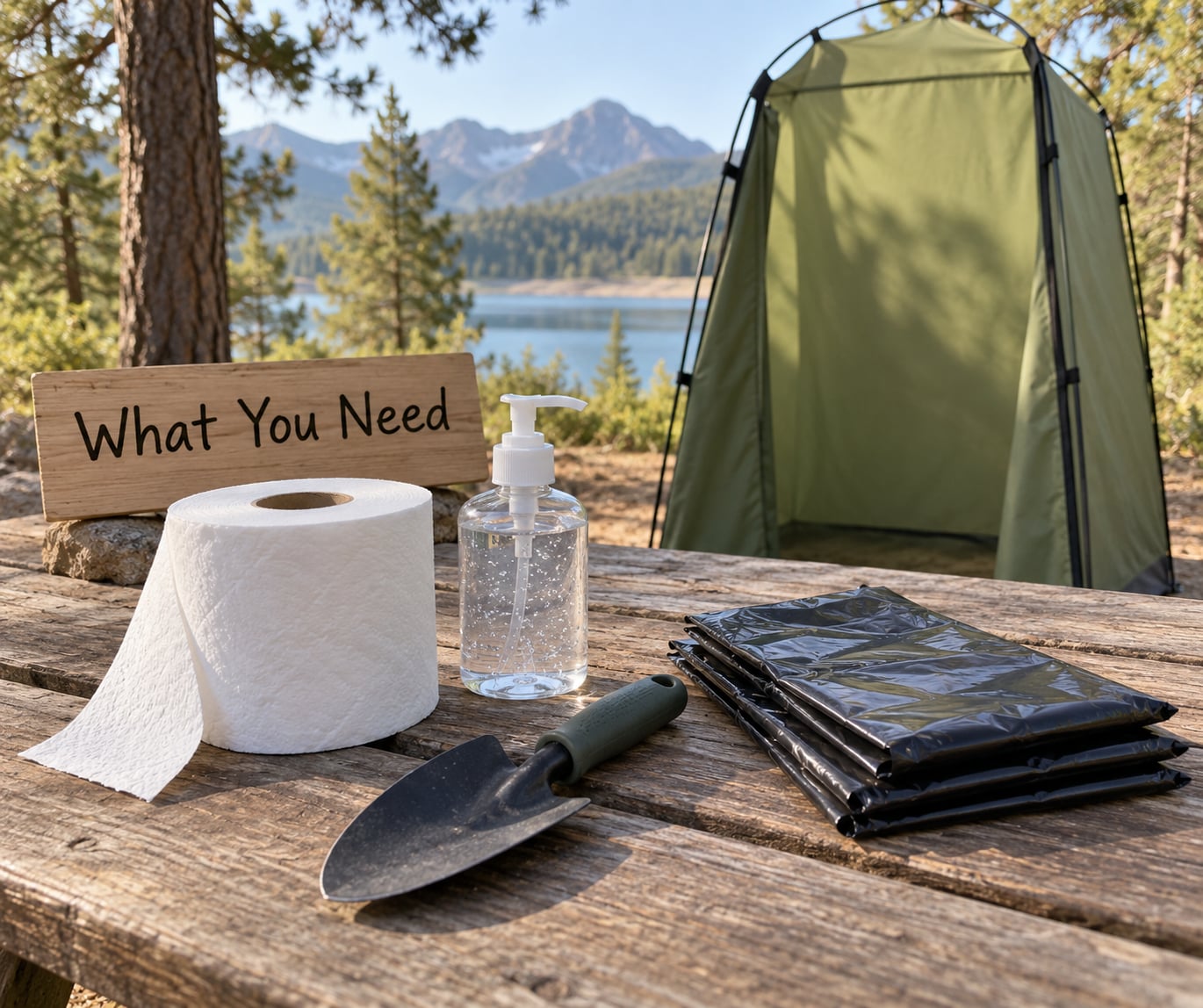
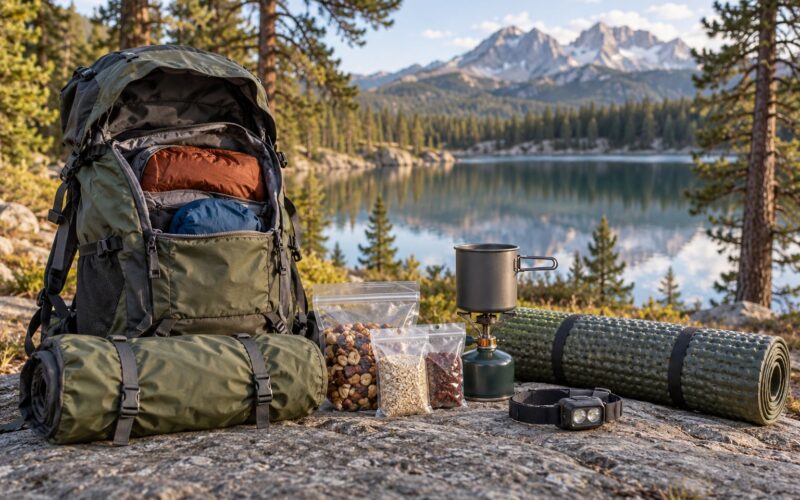
Most of the gear is cheap, light and fits in a side pocket. Pack it before you leave, not after you need it.
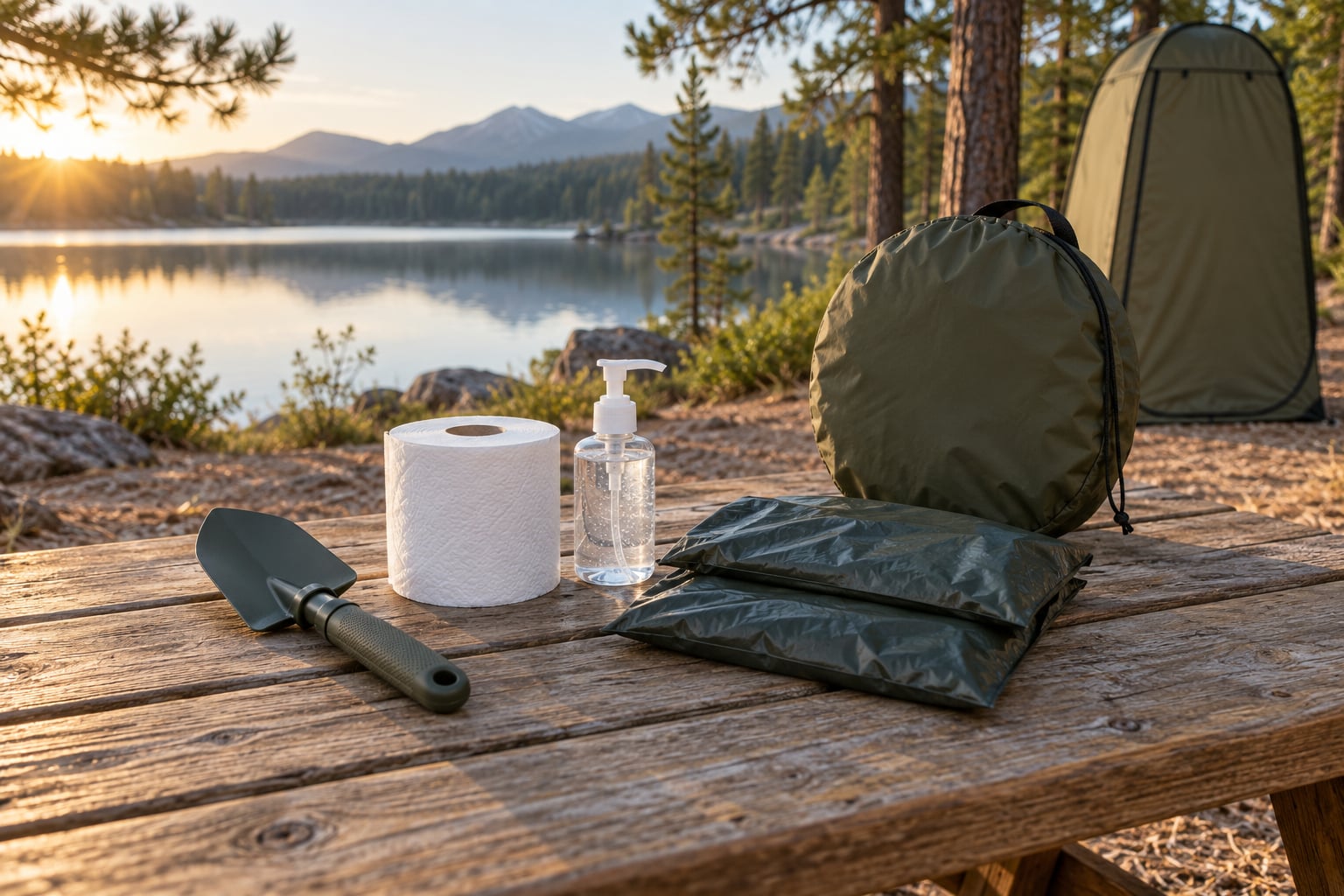
- A trowel. A short, sturdy one with a wide blade. The folding plastic kind works; a long military entrenching tool also works if that is what you have.
- Toilet paper, plus a few extra sheets in a plastic bag so it stays dry.
- Hand sanitizer with at least 60% alcohol, plus a small amount of soap or a wet wipe if you have one.
- A sealed waste bag or two — heavy-duty, tied tight, kept where a curious animal cannot reach it.
- A privacy method. A pop-up toilet tent, a packable shower curtain, or simply knowing which trees and boulders block the view from the trail.
- A water plan. Know where you will refill your bottle or bottle up before you go, so you are not carrying water to the bathroom.
If your campground has a pit or vault toilet, a shovel of kitty litter in a lidded bin next to it does more for camp morale than anything else in your gear bag.
How to Go to the Bathroom While Camping: Step-by-Step
Step 1: Check for a Toilet or Designated Waste Area
Use an available flush toilet, vault toilet or designated waste station first. No digging, no thinking, no risk.
Maintained facilities and user-managed pits are not the same thing. A flush toilet has water and a lid. A vault toilet is a concrete or plastic-lined pit that someone else empties, and it may or may not have toilet paper. A user-managed pit, common at primitive campgrounds, often has no service at all between the start and end of a season — you may be asked to add a bucket of wood shavings or a layer of dirt after you use it. Read the sign at the site. When in doubt, ask the host or ranger; their rule beats whatever the last camper did.
Step 2: Choose the Right Place Outdoors
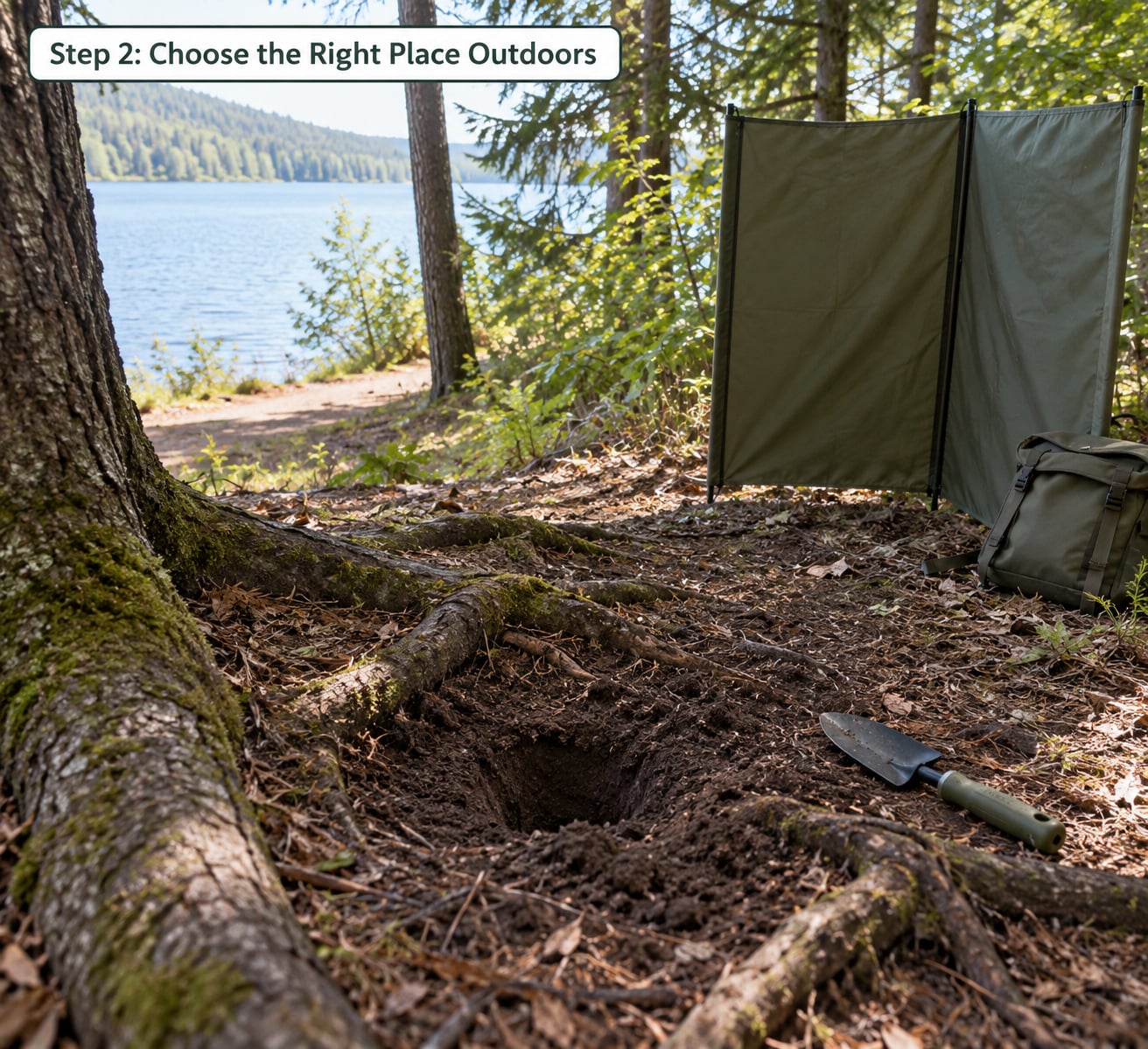
Walk at least 200 feet from lakes, streams, springs and the shoreline of any water you might drink from. Then walk another 200 feet if you can, because runoff moves downhill and contamination travels further than most people expect.
Stay well away from camp, the trail itself, other campsites, tents, food storage, drainage channels, game trails, and anywhere water could flow over the spot in a storm. Pick ground that is stable and level — loose scree, saturated mud and active talus slopes will not hold a hole. Solid soil with some vegetation roots is ideal.
Follow local rules. National parks, national forests, BLM land and most state parks publish their own human waste policy, and some high-use or sensitive areas require you to pack out everything. When a sign says pack out, pack out — arguing with it is not worth the fine or the reputation.
In alpine terrain above the tree line there may be no soil at all. Urinating on bare rock is acceptable there, and burying waste is often impossible, so those places usually require you to carry waste out with you.
Step 3: Create Privacy Without Damaging the Site
Privacy first comes from distance, not from fabric. Back far enough that nobody on the trail can see you, and position yourself facing away from the most travelled direction.
A pop-up privacy tent or a poncy shower curtain hung from a tree gives you real coverage in a busy campground. A vehicle works as a windbreak and screen in some parking areas, though many campgrounds ask you not to use them. What you should not do is dig a shelter, carve steps into a hillside, break branches or move rocks to build a windbreak. Leave the site exactly as you found it.
If digging is genuinely not an option for you or someone you are camping with, say so out loud and use a pack-out bag instead. That is a completely legitimate method, not a compromise.
Step 4: Handle Urine and Stool Correctly
Urine. Pick a durable surface such as rock, gravel, or dry soil away from water and camp. Urinating on vegetation kills plant roots, which matters a great deal on alpine tundra where growth takes decades to recover. Many campers carry a small bottle for the night so they do not have to walk far in the cold, and a wide-mouth funnel makes standing up without wetting everything a non-issue.
Stool. Dig a cathole with your trowel: roughly 4 inches wide and 6 to 8 inches deep, with a small mound of soil on the downhill side so nothing runs into the hole. Do your business, add a small amount of water and loose soil to speed decomposition, then pack out your toilet paper — every sheet of it, in a sealed bag.
Desert camps are the exception to the depth rule. Because soil is dry and slow to break down waste, many desert areas ask for a shallower cathole of 3 to 4 inches so heat can work on it, and some require full pack-out instead.
Toilet paper. Burying it is not recommended and it does not break down the way people expect. Pack it out every time. The same applies to wet wipes, feminine products, diapers and anything else that does not disappear in a season.
Pack-out bags, often called WAG bags after their gelling chemical, are the answer in high-use alpine, desert, snowy or enclosed camps, and anywhere a sign requires it. Unzip, position, sit, close the seal, and the whole thing goes back into your pack until you find a proper disposal point. They are heavy to carry out for a week, so weigh that against a trowel when you decide which method fits the trip.
Step 5: Clean Up and Wash Your Hands
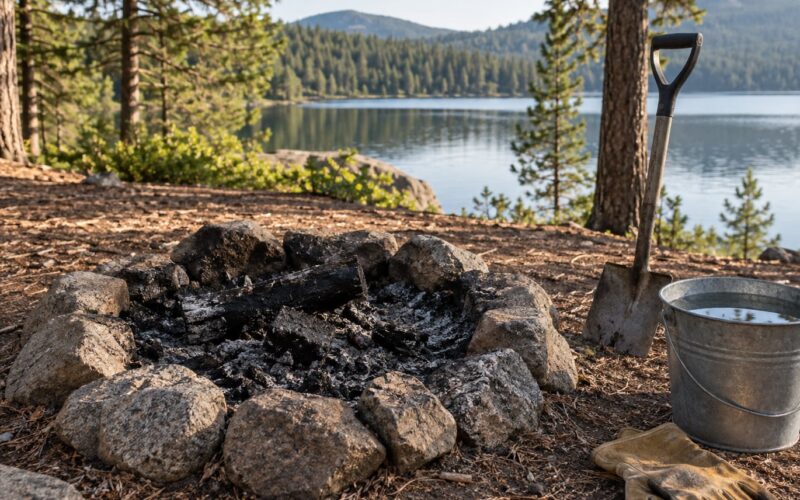
Fill the cathole in with the soil you dug out, mixing the loose dirt back in first. Pat the top flat with the trowel blade so it looks untouched, scatter leaves or a few handfuls of the original duff across it, and move on.
Put your trowel back, take your privacy screen down, and check that you left nothing: no paper, no bags, no wet wipes, no glove. Scrub your hands with water and soap if you carried a small amount out with you, or use hand sanitizer thoroughly — 20 seconds, until dry. Clean hands before you handle food, and always before eating in bear country, where human scent on anything is a real problem.
Common Mistakes When You Go to the Bathroom While Camping
- Going too close to water. Fix: count steps. About 70 normal steps gets you near 200 feet, and doubling that is safer on steep ground.
- Leaving toilet paper behind. Fix: bag it and carry it out. It does not biodegrade in a weekend.
- Burying waste where it is banned. Fix: read the site rules before you dig, and default to packing out when you are not sure.
- Ignoring private land. Fix: on private property, ask the owner. Never use a bathroom on land you do not have permission to be on.
- Relying on a thin waste bag in rain. Fix: double-bag into a sealed container, or use a purpose-made gelling bag, and keep it upright and away from your food.
- Skipping hand washing. Fix: water and soap if you have it, sanitizer if you do not, every single time, before food.
- Waiting too long. Fix: go when you need to. Holding it is how a simple trip turns into a 3 a.m. emergency.
Frequently Asked Questions
What can I do if I have to pee at night while camping?
Keep a wide-mouth bottle or a urine jug beside the bed so you never have to unzip a tent in the cold. Empty it into a toilet, a cathole or a waste bag in the morning. A wide-mouth funnel makes standing outside in the dark far easier. Headlamp on, shoes on, and go before you are desperate rather than half asleep.
How do I handle the bathroom when camping with a toddler?
Carry a portable travel potty and empty it into a campground toilet or vault where one exists. In the backcountry, treat it exactly like adult waste: a cathole 6 to 8 inches deep, away from trails and water. Bring a small shovel, expect accidents, and treat mess as normal rather than failure. Practising the potty at home before the trip prevents most problems.
How do you manage periods while camping?
Tampons and sanitary pads must be packed out; burying them is never acceptable. A menstrual cup is the lowest-waste option since it can be emptied into a cathole or toilet and rinsed with water. Bring a sealed bag for used products and any wipes. Plan changing and cleaning up in daylight where you can, and pack extra underwear and a dry bag for clothing.
What if I get diarrhea in the backcountry?
Move at least 200 feet from camp and water sources before digging, and bury stool in a cathole 6 to 8 inches deep. A pack-out bag is the better option when you are far from others. Keep hand sanitizer close and wash before you touch anything in camp. With severe illness, hydration matters more than hygiene, and you should turn around and get help.
What do I do if there is no toilet anywhere near my campsite?
Check with the camp host or ranger first; many sites have a facility that is not advertised or is closed to day use. Otherwise use a trowel and cathole, or bring a pack-out bag if the land rules require one. A DIY bucket toilet with a seat and kitty litter works well for car camping. The method matters less than the distance from water, camp and trails.
Conclusion
Use the designated facility whenever one exists. If there is none, follow the rules for that specific piece of land, walk far enough away, dig your hole or pack the waste out, take everything with you that you carried in, and clean your hands before you eat.
Practise how to go to the bathroom while camping outdoors once in your own yard before you go. Ten minutes of rehearsal makes the real thing boring, and boring is exactly what you want from this part of a camping trip in 2026.