The trick to cooking over a campfire without burning your food is patience: build the fire 45 to 60 minutes ahead of time, let the flames die back to a bed of glowing coals, then cook on the coals. Flames scorch, coals cook evenly. Give it 30 minutes of attention and a cast iron skillet, and this becomes the easiest meal on the trip.
The first time I burned dinner, the fire was roaring and I put a pan of vegetables right in the flames. The outside went black while the centers stayed cold. Once I moved everything down onto the coals and treated the fire like a stove with zones I could turn down, the same food came out fine every time after.
If you only remember one thing from this guide: you control heat by moving the food, not by guessing at flame height. The rest is prep, patience and a thermometer.
Table of Contents
- 1What You Need
- 2Fire and heat control
- 3Tools and safety
- 4Prep gear that does half the work
- 5Scale down for a lakeshore site
- 6Step by Step: How to Cook Over a Campfire Without Burning Food
- 7How to Cook Over a Campfire Without Burning Food by Building a Manageable Fire
- 8How to Cook Over a Campfire Without Burning Food by Controlling the Heat
- 9How to Cook Over a Campfire Without Burning Food by Choosing the Right Method
- 10Cast iron skillet or griddle
- 11Grill grate over the coals
- 12Foil packets in the coals
- 13Dutch oven with coals on the lid
- 14Skewers and green sticks
- 15How to Cook Over a Campfire Without Burning Food by Checking Doneness
- 16How to Cook Over a Campfire Without Burning Food When Serving and Cleaning Up
- 17Common Mistakes
- 18Frequently Asked Questions
- 19How do I stop food from burning on a campfire?
- 20Can you cook over a campfire with a cast iron skillet?
- 21What foods are easiest to cook over an open fire?
- 22How do you know when meat is cooked through without cutting it?
- 23Is it safe to use a campfire grill grate?
- 24How hot should the coals be before cooking on them?
- 25Conclusion
What You Need
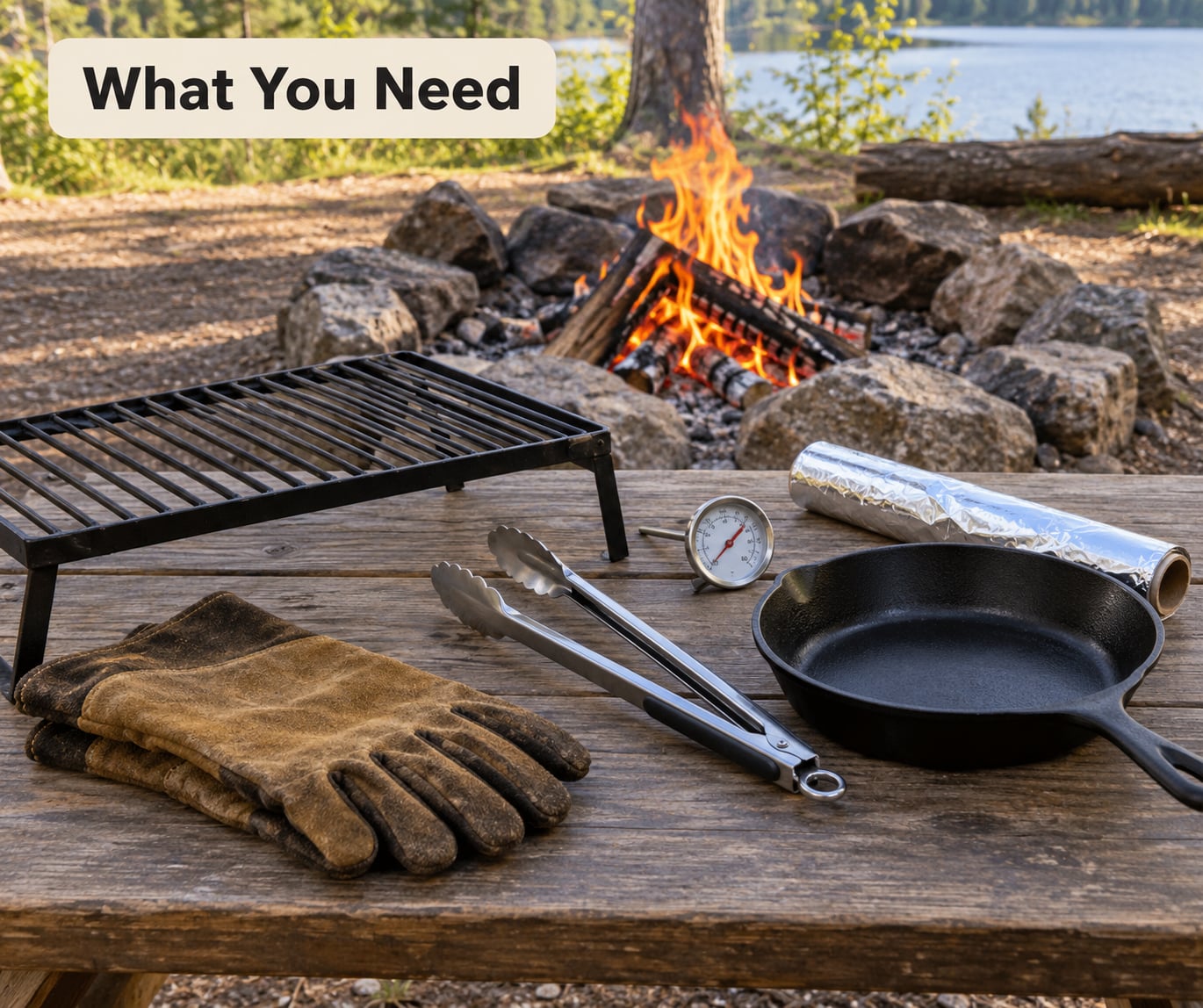
Campfire cooking needs less gear than people think, and most of it is already in your camp kitchen box. What you cannot skip is a way to control heat and a way to check doneness.
Fire and heat control
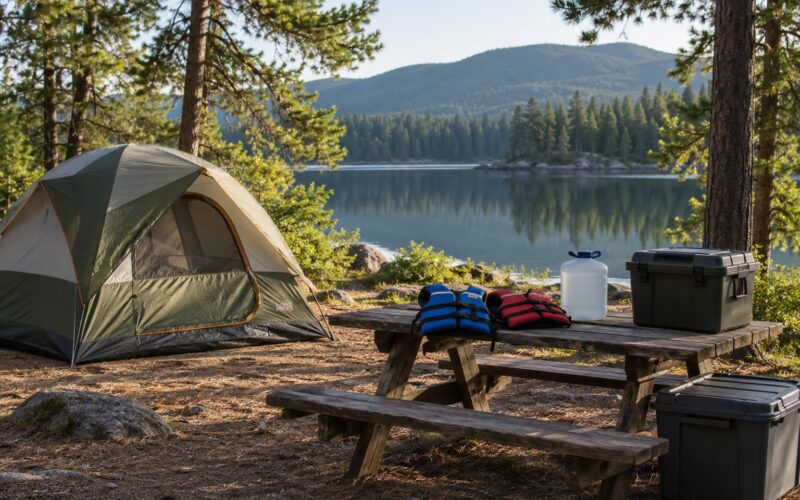
- A fire ring or cleared, bare ground, well away from dry brush, tents and overhanging branches
- Wood about wrist-thickness. Split anything larger and let it dry at home
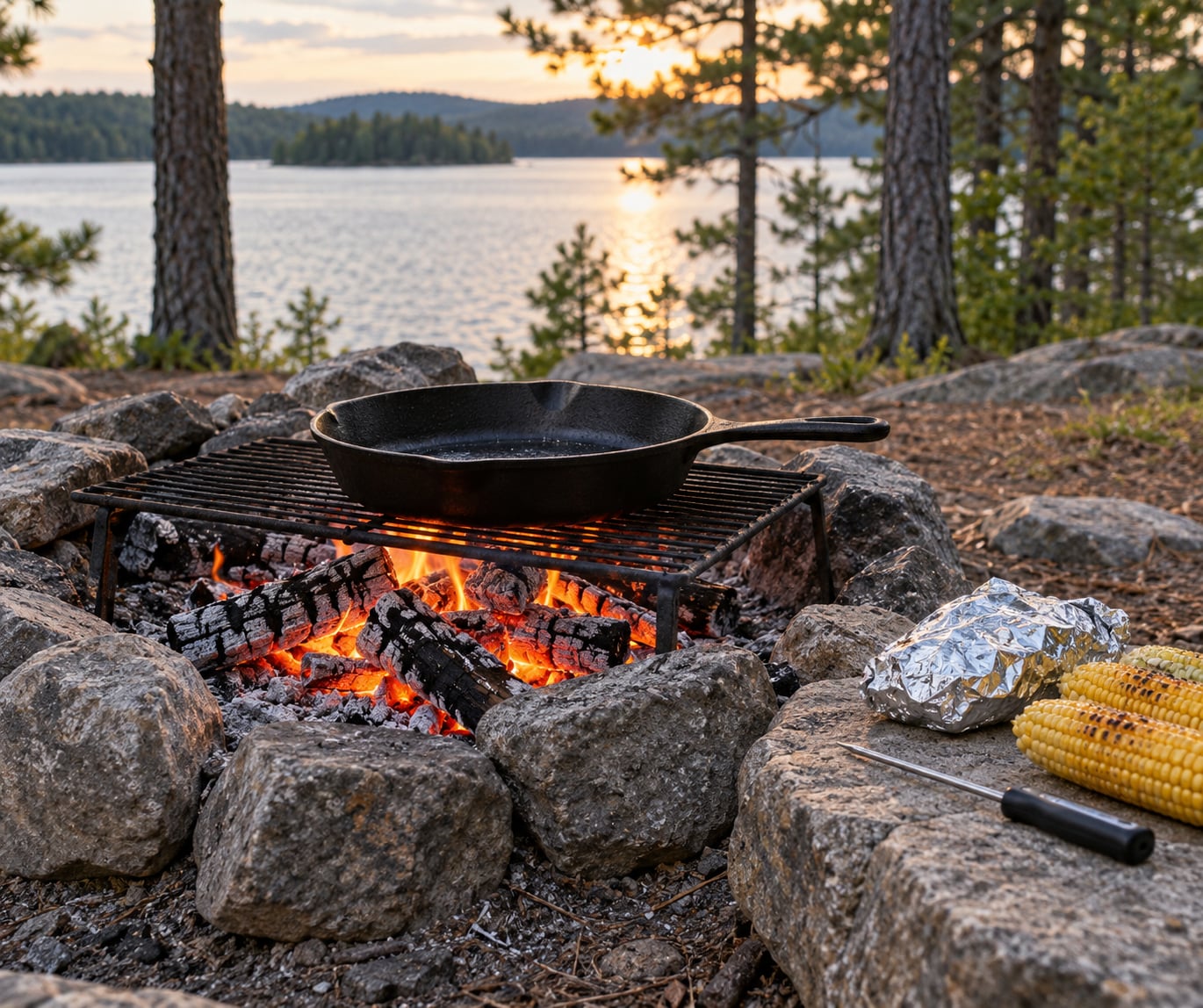
- A grill grate, wire rack or sturdy metal cooking grate that spans the ring
- A cast iron skillet or griddle for direct cooking, and a Dutch oven with feet for slower heat
- Heavy-duty foil and a small drip pan if you are cooking over coals
Tools and safety
- Long-handled tongs and a spatula that reach further than your arms
- Heat-resistant gloves you trust, plus closed-toe shoes
- An instant-read thermometer left in the fire kit, not the car
- A squirt bottle of water for flare-ups, and a bucket or shovel of water or sand to finish
Prep gear that does half the work
Chop and bag vegetables at home, mix pancake and egg batter in a sealed container, and marinate meat in the cooler rather than at the fire. Campers on r/CampfireCooking call pre-mixing batter a repeatable hack, and it is right: the fewer decisions you make beside a flame, the better the food turns out.
Scale down for a lakeshore site
Campground fire rings vary in size and depth, which is the single most common complaint in camping forums about cooking at someone else’s ring. Bring your own grate instead of trusting the one on site. Near water, wind arrives without warning, so a small starter fire in a sheltered spot beats a big one that will not hold its heat. Check your state, county and park fire restrictions before you light anything; many shoreline areas close fire seasons earlier than inland ones.
Step by Step: How to Cook Over a Campfire Without Burning Food
How to Cook Over a Campfire Without Burning Food by Building a Manageable Fire
Build a small, stable fire and give it 45 to 60 minutes to burn down to coals before any food goes near it. A tall flame looks impressive and cooks badly.
- Clear the ring of debris and wet material. Make sure nothing overhead can catch.
- Loosely pile small sticks and pencil-width kindling in the center for airflow.
- Add wrist-diameter splits leaning in a teepee, leaving gaps so air can move through.
- Light the kindling from the bottom and let it catch on its own. Feed it slowly.
- Wait. During the burn-down the flames shrink and a bed of gray ash forms with orange glow underneath.
- Rake the coals together into an even layer, or spread them into piles and bare spots to create zones.
The fire is ready when most of the wood has turned to ash and coals, flames are low and steady, and you can see glow across the whole bed rather than in one hot spot. Under a bed of ash the heat stays even for over an hour, which is why patience pays off.
Splitting large logs and using only dry wood cuts the smoke that makes food taste bitter. Wet wood also burns cooler and slower, so it never builds the coal bed you need.
How to Cook Over a Campfire Without Burning Food by Controlling the Heat
Hold your hand a few inches above the coals and count the seconds you can comfortably keep it there. That number maps to a heat zone you can move food through.
| Seconds your hand lasts | Heat level | Best use |
|---|---|---|
| Under 2 seconds | Direct heat | Seared steak, toasting bread, browning |
| About 4 to 5 seconds | Medium heat | Burgers, chops, fish fillets, sliced vegetables |
| About 8 to 10 seconds | Low or indirect heat | Eggs, pancakes, potatoes, foil packets, simmering |
Touch above the coals, never on them, and never put water on a hot coal bed to test it. The ash layer hides live embers that will sting.
Flames are the real enemy. They spike far hotter than your food needs, deposit soot and flare when fat drips. If a flame licks up, spread the coals, add unlit wood carefully or shift the grate higher. You cannot lower a flame, but you can feed it something unlit to finish burning instead of food.
How to Cook Over a Campfire Without Burning Food by Choosing the Right Method
Matching the method to the food removes most burn risk, because each one puts the heat somewhere forgiving.
Cast iron skillet or griddle
Preheat on the medium zone for several minutes, add a thin layer of oil, then cook. Cast iron holds heat well and forgives an uneven bed, so preheating matters more than constant fussing. Corn, chops, sausages and pan-fresh trout all do well here.
Grill grate over the coals
Oil the grate before it heats up so food does not weld to it. Oil the food instead of spraying near flames, or drops flare up instantly. Cook burgers and hot dogs on the medium zone and move them off before they char. Keep the grate where you can reach it without leaning over the flames.
Foil packets in the coals
This is the least likely method to burn anything, and the most forgiving for beginners. Build foil around the food, add a splash of oil or sauce, crimp the seams tightly, and poke two or three small vent holes so steam can escape. Set the packets on the coals or bury them just under the ash. Turn the pile once with tongs and check in 20 minutes. Thicker items like whole potatoes take 40 to 60 minutes.
Do not drop packets into open flames. That is how you get one burnt side and one raw side.
Dutch oven with coals on the lid
The Rule of 3s makes it repeatable: 3 coals on the bottom, 3 on top, 12 on each side, 6 around the pot. That gives even, slow heat like an oven. Add or remove coals to slow or speed things up, and always keep the iron feet clear so air can move underneath. Check the food from 45 minutes onward.
Skewers and green sticks
Soak wooden skewers for 30 minutes so they do not go to charcoal before the food does. Leave a hand’s width of bare skewer as a handle. Cook over medium heat and turn often. Cut green hardwood sticks from live branches and leave a foot of clean wood below the food for the same reason.
These two methods are the only ones most campers trust over open flames, because nothing ever actually touches the flame.
How to Cook Over a Campfire Without Burning Food by Checking Doneness
Stop cooking on a timer and start checking food early instead. Every extra minute over direct heat costs you moisture.
- Look and press first. Meat should spring back slightly, and juices run clear rather than pink or bloody. Vegetables should be tender when a knife tip slides in with no resistance.
- Then confirm with a thermometer. Push it into the thickest part, away from bone and away from the grate. Thick steaks and chops need 145°F (63°C) with a three-minute rest. Ground meat and burgers need 160°F (71°C). Poultry, including ground poultry, needs 165°F (74°C).
- Rest before slicing. Pull meat 3 to 5 degrees short of target, then let it rest under loose foil while you set the table. The internal temperature keeps climbing and the juices stay in the meat.
- Keep batches small. A crowded grate drops its temperature and cooks unevenly. Cook in batches rather than piling everything on at once.
Opening a Dutch oven lid costs you heat every time. Add coals to the lid, put it back on, and check every 10 to 15 minutes rather than looking constantly.
How to Cook Over a Campfire Without Burning Food When Serving and Cleaning Up
Cooking is the easy part; the last ten minutes are where fires get away from people.
- Let cooked meat rest covered so it does not dry out while you eat.
- Never return cooked food to the plate it sat on raw. Use a clean board or a clean section of foil.
- Keep perishable food out of the 40°F to 140°F (4°C to 60°C) range for more than two hours, or one hour when it is above 90°F (32°C) outside. A cooler packed with ice keeps that window open much longer.
- Once you are done, spread the coals, drown them with water, stir the ash and soak again until everything is cold to the touch. Move the cold ash only after it is fully out.
- Before you leave, feel the ashes with the back of your hand held close. Nothing warm, nothing left.
At a lakeshore site, remember that water is your best extinguisher and your worst way to test coal heat. Keep the bucket full and close before you need it.
Common Mistakes
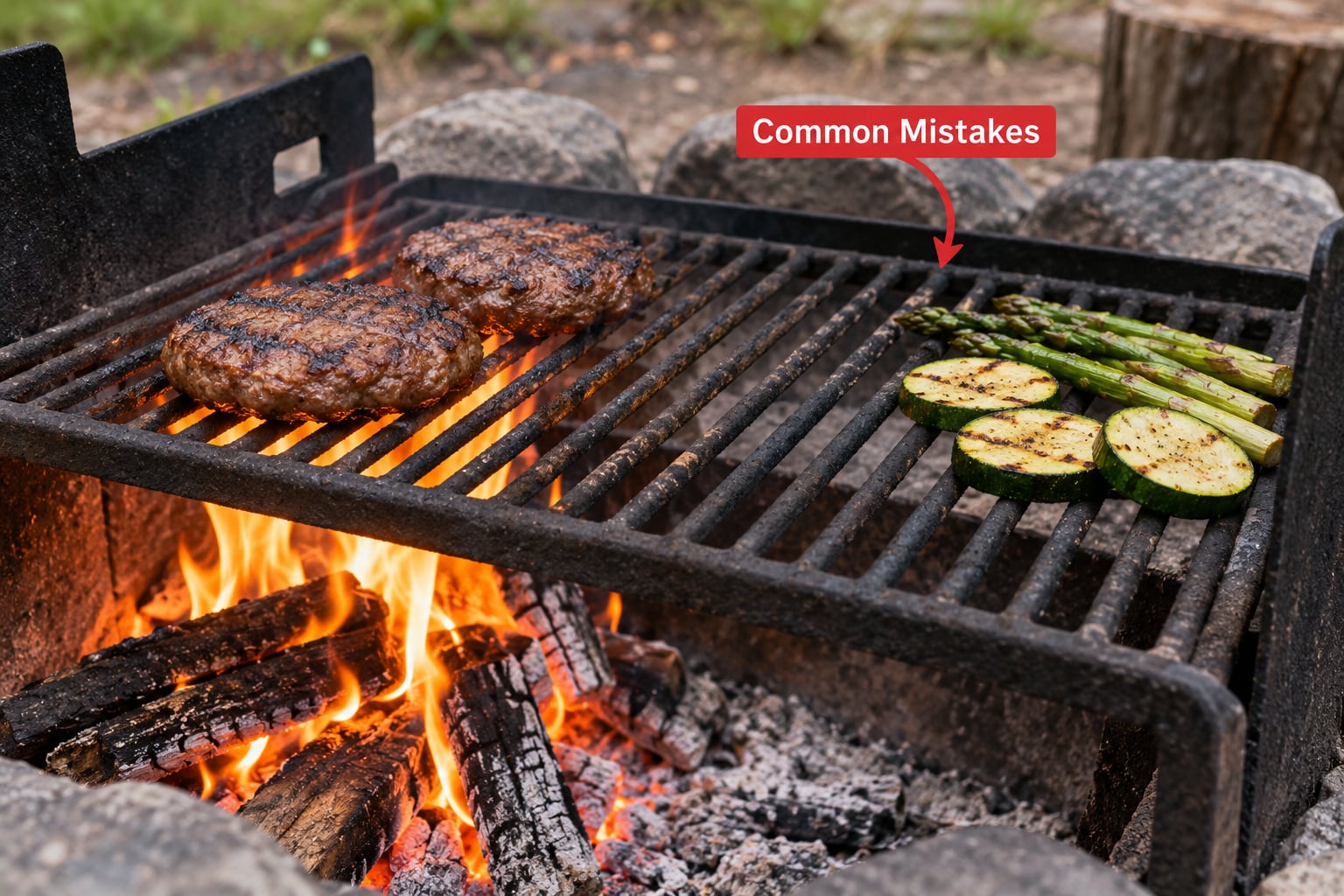
Almost every burned campfire meal traces back to one of a handful of fixable habits. Here is what to look for.
- Cooking in the flames. Open flame spikes and flares. Move the food down onto the coals and spread them out.
- Grate set too low. If the coals are touching the underside of the grate, raise it. Then lower the heat by moving food to a cooler zone.
- Too many flames, not enough coals. Add unlit wood and wait. Coal quality matters more than flame size.
- Crowding the grate. Overloading drops the temperature and leaves the middle undercooked. Cook in batches.
- Thin or small foods over direct heat. Fish, shrimp, sliced vegetables, hot dogs and tortillas go straight to the low zone or into foil.
- Spraying oil near a flame. Aerosolized oil ignites on contact. Oil the food away from the fire and use a controlled drizzle.
- Letting fat drip into the coals. Expect flare-ups. Trim the excess fat and keep a drip pan under burgers.
- Turning constantly. Frequent flipping dries food out and never improves browning. Turn once or twice and let it sit.
- Adding fresh wood during cooking. New wood means flames and smoke. Add coals, not logs.
- Wet or green wood. It smokes instead of cooking and keeps temperatures low. Split and season wood at home.
One quick diagnostic when food is browning badly: ask whether the heat is even. Scrape a small channel through the coals and drag your skillet back and forth across zones as it cooks, the way a grill moves sideways over a burner. Uneven bed, uneven food.
If smoke starts pouring off the food, move it off the heat first, then deal with the fire. That order matters more than it sounds.
Frequently Asked Questions
How do I stop food from burning on a campfire?
Move it off the heat first, then fix the source. Cook on a bed of coals instead of open flames, spread the coals so the heat is even, and keep your grate high enough that coals never touch the underside of the pan. Use the hand test to find the right zone, cook in smaller batches, and hold your food in the low-heat area until it is almost done before bringing it back up. Trim excess fat so it stops dripping into the fire.
Can you cook over a campfire with a cast iron skillet?
Yes, and it is one of the best tools for the job. Cast iron heats evenly, holds temperature and works in every zone of the fire. Set it on medium heat, not direct flame, give it several minutes to preheat, add a thin coat of oil, then cook. Corn, chops, sausages, trout and hash browns all work well. Never pour cold water into hot cast iron, which can crack it, and wipe it with a little oil once it is cool.
What foods are easiest to cook over an open fire?
Start with forgiving foods that need modest heat and short cooking times. Burgers, hot dogs, sausages, corn on the cob and foil-packet vegetable dinners are almost impossible to ruin. Add trout or any white fish, sliced vegetables, and pancakes or eggs cooked low and slow over coals. Roasting whole potatoes in ash takes longer but needs almost no attention. Leave steaks, thin bread and anything with sugar or heavy glaze for later, when you trust your heat control.
How do you know when meat is cooked through without cutting it?
Use an instant-read thermometer instead of cutting, which lets juices out and speeds drying. Push the tip into the thickest part, away from bone or the grate. Whole cuts of beef, pork, lamb, veal and fish reach 145°F (63°C) with a three-minute rest. Ground meat and ground poultry need 160°F (71°C), and poultry, including whole chicken and turkey, needs 165°F (74°C). Pull five degrees early and let the meat rest before slicing.
Is it safe to use a campfire grill grate?
A grate is a safe way to cook if yours is designed for it: sturdy metal, stable across the fire ring, and no paint or coating that can flake into food. Check your state, county and park restrictions first, since burn bans near lakes and shorelines are common and strictly enforced. Wear gloves and closed-toe shoes, keep long hair and loose sleeves away from flames, keep water on hand, and never leave a cooking fire unattended, even for a minute.
How hot should the coals be before cooking on them?
Wait until the flames have died back to a bed of coals with gray ash on top and steady orange glow underneath, usually 45 to 60 minutes after lighting. Test by holding your hand a few inches above the coals: under two seconds means direct heat for searing, four to five seconds is medium heat for burgers and fish, and eight to ten seconds is low indirect heat for eggs, potatoes and foil packets. Green ash with no glow underneath means the fire is not ready yet.
Conclusion
Build your fire 45 to 60 minutes before anyone expects to eat. That single step does more to prevent burned food than any technique that follows.
Then cook on coals rather than flames, run the hand test, spread the coals into direct, medium and low zones, and move your food between them the way you would adjust a stove burner. Check early with a thermometer, target 145°F (63°C) for whole cuts and fish, 160°F (71°C) for ground meat and 165°F (74°C) for poultry, and rest the meat before slicing.
Pack a grate you trust, gloves, water and a thermometer. Learn to cook over a campfire without burning food once and you will not go back to a plain camp stove.